Households that mainly use an indoor airer
If you dry clothes inside your home, spin performance and drying time matter just as much as drum capacity. ADEME also recommends taking account of the moisture produced when clothes are air-dried indoors.


If you dry your laundry indoors, start by choosing based on the space you have and how much you actually need to dry. Then compare spin performance, cycle times and energy use. A washer-dryer can save you from having to fit two appliances, but its drying capacity may be lower than its washing capacity; a separate tumble dryer needs its own dedicated space. If you use an indoor airer, a suitable spin cycle can help clothes dry faster, while ADEME highlights the moisture this method adds to the air indoors.
If you dry clothes inside your home, spin performance and drying time matter just as much as drum capacity. ADEME also recommends taking account of the moisture produced when clothes are air-dried indoors.
If you only have room for one appliance, a washer-dryer is worth considering. However, compare its washing and drying capacities separately: they differ on the 8/5 kg and 9/6 kg models shown by Miele and Bosch.
If you regularly need to dry several loads, actual drying capacity and cycle times become key considerations. A separate tumble dryer may be an option if you have the space and are happy with the maintenance it requires.
Start by working out where and how much laundry you usually dry. Then compare the figures for the cycle you’ll actually use: washing only, a complete wash-and-dry cycle, or drying in a separate appliance.
| Priority | What to check before you buy | What matters to shoppers |
|---|---|---|
| How damp clothes are after spinning | Compare the spin-drying efficiency class and, if listed, the residual moisture level. ADEME says that an effective spin cycle can help clothes dry faster. | If I dry clothes on an airer at home, I want to reduce the amount of water left in them before hanging them up. Around 31% of shoppers would put this concern first. |
| Space available | Check the dimensions and the space needed to open the door, then compare the washing and wash-and-dry capacities of the washer-dryer in kg. | When I can only fit one appliance, I want to combine washing and drying without assuming I can dry a full wash load in one go. Around 31% of shoppers would put this constraint first. |
| Load size | Compare drying capacity in kg, cycle times and the space needed for a separate appliance or a compatible stacked set-up. | If I do frequent or large loads, I want to avoid having to split the laundry every time I dry it. Around 23% of shoppers would prioritise this capacity. |
| Energy use and maintenance | Check the stated energy and water use, along with the duration of the relevant cycles; also look at the maintenance tasks listed in the manual. | If I often use a tumble dryer, I want to compare its day-to-day running costs and the maintenance it requires. Around 15% of shoppers would put this first. |
The maximum spin speed doesn’t tell you everything about spin performance, cycle time, water and energy use, or the noise level of the programme you’re comparing.
For the models you’re considering, compare the spin-drying efficiency class with the other figures on the label and product page, using the same programme as a basis.
Washer-dryers from Bosch and Miele are listed at 9/6 kg and 8/5 kg respectively. This means a maximum wash load may need to be split before drying.
Compare your usual load with the wash-and-dry capacity of the exact model, not just its washing capacity.
For a washer-dryer, the figures for washing alone don’t tell you everything about a complete cycle that includes drying.
Check the stated figures for both cycles and compare the ones that match how you plan to use the appliance.
Air-drying avoids using an electric tumble dryer directly, but ADEME identifies air-dried laundry as a significant source of moisture indoors.
If you regularly hang laundry to dry inside your home, take this moisture into account when planning how to dry your clothes and choosing a spin setting, but don’t use it to draw conclusions about your home.
To assess the capacity trade-off of a front-loading washer-dryer, Bosch lists the WNG24400FR at 9 kg for washing alone and 6 kg for washing and drying.
If you only have space for one appliance, Miele’s washer-dryer range includes the WTD160 WCS, with an 8 kg washing capacity and a 5 kg drying capacity.
LG France’s range includes both 9/6 kg washer-dryers and a WashTower that combines a 12 kg washing machine with a 10 kg tumble dryer.
For a separate heat-pump tumble dryer, Beko describes a system that recovers heat and condenses moisture.
These appliances offer two ways to dry laundry mechanically indoors: using a separate tumble dryer or an appliance that combines washing and drying. To compare them, focus on the amount of laundry they can actually dry, the space they need and the figures for the cycle you plan to use.
 Image unavailable
Worth considering if you have space for a separate tumble dryer and want to compare a model listed with an 8 kg capacity.
The product name indicates a D energy rating. Check the energy use, cycle times, dimensions and installation requirements for this model before choosing it.
 Image unavailable
If you want to dry regular loads in a dedicated appliance, compare its listed 8 kg capacity with the amount of laundry you usually wash.
Before comparing its energy use with another model, check the energy label for the exact model; also check the cycle times and dimensions.
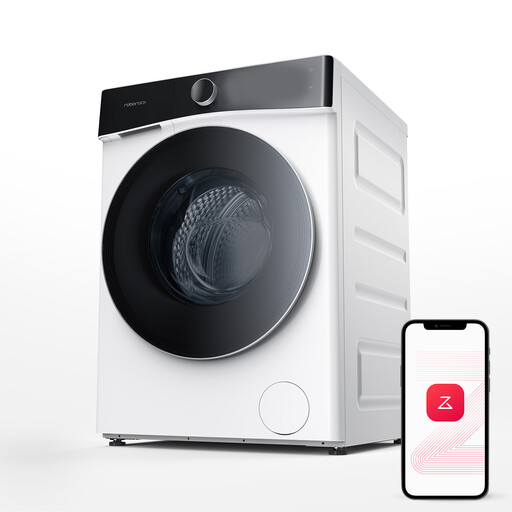 Image unavailable
If you want to combine washing and drying in one appliance, compare your usual loads with its listed capacities: 10 kg for washing and 6 kg for drying.
A full wash load may therefore need to be split before drying. Also check the complete cycle time, energy use, dimensions and installation requirements.
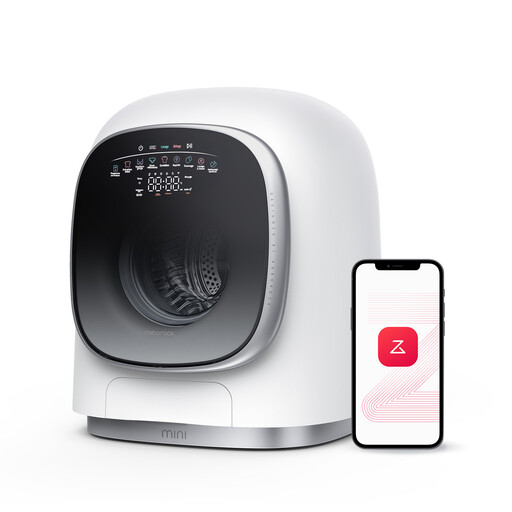 Image unavailable
This model is designed for very small loads, with a listed capacity of 1 kg for washing and 0.5 kg for drying. It won’t meet the same needs as an appliance designed for large loads.
Check the cycle times, energy use, dimensions and installation requirements before deciding whether it’s right for your home.
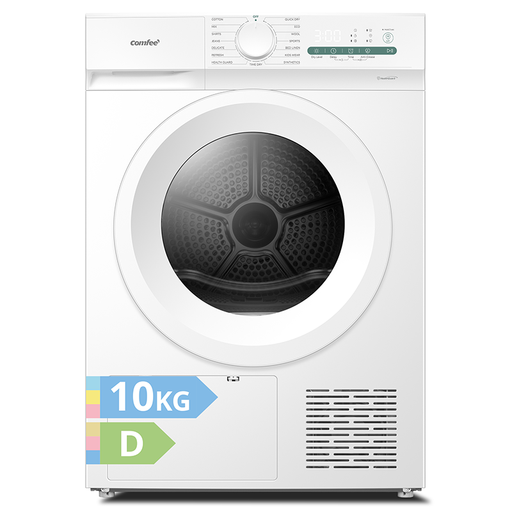 Image unavailable
Worth considering if you’re looking for a separate heat-pump tumble dryer. Check the capacity of the exact model before buying to make sure it’s suitable for your loads.
The product name indicates a D energy rating. Also compare the stated energy use, cycle times, dimensions and installation requirements.
Check the spin-drying efficiency class, as well as the capacity, energy and water use, cycle time and noise level listed for the reference programme. ADEME notes that an effective spin cycle can help clothes dry faster, so the energy rating alone doesn’t cover all the factors that matter for this use.
Not always: check the washing capacity and wash-and-dry capacity separately. Bosch lists the WNG24400FR at 9 kg for washing and 6 kg for washing and drying, while Miele lists the WTD160 WCS at 8 kg and 5 kg respectively. With these models, a full wash load may need to be split before drying.
Follow the maintenance instructions in the manual for the model you choose, and check that the parts requiring attention are easy to access. Beko notes that this technology can mean longer cycles and more maintenance; compare these requirements with how often you expect to dry laundry.
No, it’s not as simple as a blanket ban: air-drying avoids directly using an electric tumble dryer, but it adds moisture to the air indoors. ADEME identifies air-drying laundry as an activity that releases a particularly large amount of moisture. Take this into account in light of your home and how often you do laundry, but don’t use it to draw conclusions about health risks.