If you can hang your washing out to dry and ventilate the room, start by comparing washing machines’ spin-drying efficiency classes. ADEME recommends choosing class A when you need clothes to dry quickly indoors, although this doesn’t replace ventilation. A washer-dryer could suit you if you only have space for one appliance and your loads fit its drying capacity. For frequent or larger loads, consider a separate tumble dryer, taking into account the space it needs and its maintenance requirements.
Who is this choice for?
Households that air-dry clothes at home
If you use a clothes airer, compare spin-drying efficiency to reduce the water left in your washing, while making sure you can ventilate the room. ADEME recommends choosing spin-drying efficiency class A when you need clothes to dry quickly indoors.
Households with space for just one appliance
A washer-dryer combines washing and drying in a single appliance. Compare its washing and drying capacities separately against the loads you usually do; UFC-Que Choisir points out that drying capacity is lower than washing capacity on the models concerned.
Households that do laundry frequently
If you need to dry large or frequent loads, consider cycle capacity and duration, as well as the space available for a separate appliance. UFC-Que Choisir recommends taking your laundry frequency and the type of washing into account when choosing a suitable capacity.
What should you compare?
Washing machine and clothes airer
Worth considering if: you have room to hang your washing out and can ventilate your home.
Bear in mind: spinning removes some of the water left in fabrics, but it doesn’t dry them or replace fresh air.
Washer-dryer
Worth considering if: you only have space for one appliance and the load fits the capacity specified for the drying cycle.
Bear in mind: drying capacity is generally lower than washing capacity, and cycle times and energy use vary by model and programme.
Washing machine and separate tumble dryer
Worth considering if: you often dry large loads and have the space and installation set-up you need.
Bear in mind: two appliances take up more space and each has its own maintenance instructions.
For households that air-dry their washing, ADEME recommends checking the spin-drying efficiency class rather than relying solely on the maximum spin speed. Your choice will then depend on the space available, your usual loads and the cycle you’ll actually use.
| Concern |
What to check before buying |
Who is most affected? |
| Residual moisture and clothes airers |
Spin-drying efficiency class; noise level during spinning. |
If I air-dry my washing at home, I want to reduce the moisture left in fabrics without forgetting to ventilate the room. Around 33% of consumers prioritise reducing the moisture in clothes after spinning. |
| Space and drying without an airer |
Separate washing and drying capacities; dimensions and clearance needed to open the door. |
When I only have space for one appliance, I want to wash and then dry my clothes without moving them. Around 27% of consumers prioritise having just one space for their appliance. |
| Laundry volume and frequency |
Usual load; capacity and duration of the full cycle; whether you can install a second appliance. |
If I do laundry frequently or have large loads, I want to know whether they can be dried without disrupting the household routine. Around 20% of consumers prioritise handling large or frequent loads. |
| Energy use and maintenance |
Energy-use figures for comparable cycles; appliance type and maintenance instructions. |
I want to compare energy use and maintenance tasks for the way I’ll actually use the appliance, rather than comparing different cycles. Around 20% of consumers prioritise managing energy use and maintenance. |
Mistakes to avoid
-
Assuming washing capacity is the same as drying capacity
On appliances listed as 9/6 kg, the washing load may be larger than the load that can be dried in one go. LG France and Electrolux France list the two capacities separately for the models concerned.
Compare the load you want to dry with the drying programme’s capacity, not just the washing capacity.
Depending on the load, you may need to remove some clothes or split the drying across several cycles.
-
Confusing maximum spin speed with spin-drying efficiency
The spin speed in revolutions per minute doesn’t tell you the spin-drying efficiency class on its own. Miele France lists a maximum speed of 1,400 rpm and spin-drying class B for the WCA120 WCS 8kg Active.
Check the spin-drying class as well as the programmes suited to the fabrics you wash.
-
Comparing energy use for different cycles
A wash-only cycle and a complete wash-and-dry cycle don’t offer the same service. The units and cycles shown on the EU energy label help you distinguish between them.
Compare figures for the cycles you’re actually considering, taking their capacities and units into account.
-
Assuming efficient spinning means you don’t need to ventilate
Spinning reduces the water left in your washing, but air-dried clothes still release moisture into your home. ADEME also recommends refreshing the air and removing moisture.
Choose your appliance and plan how you’ll dry your clothes with the room’s actual ventilation in mind.
Brands to consider for these needs
LG
LG France lists the F964R35WR washer-dryer with a washing capacity of 9 kg and a drying capacity of 6 kg.
- The capacities listed make it easy to check whether your usual load will fit the drying programme.
- The manufacturer’s efficiency claims aren’t an independent comparative assessment of this model.
Electrolux
The French product listing for the SteamCare 700 EW7IW4966BG gives a washing capacity of 9 kg and a drying capacity of 6 kg.
- The listing distinguishes between energy class A for washing only and D for the wash-and-dry cycle.
- The fabric-care features presented by the manufacturer don’t, on their own, prove that it dries better than other models.
Miele
The WCA120 WCS 8kg Active front-loading washing machine is listed with an 8 kg capacity and a maximum speed of 1,400 rpm.
- Miele lists spin-drying efficiency class B, which is different from the stated maximum speed.
- A lifespan claim in Miele’s marketing doesn’t guarantee the lifespan of every appliance.
Bosch
The French product listing for the WGG244F1FR front-loading washing machine gives a capacity of 9 kg and a maximum speed of 1,400 rpm.
- These specifications let you compare the stated capacity and maximum speed in the product listing.
- Bosch notes that the maximum speed may be reduced if the load is unbalanced; spin speed alone doesn’t tell you the spin-drying class.
Joybuy products related to this topic
This selection brings together conventional washing machines to compare if you air-dry your clothes, and washer-dryers if you only have space for one appliance.
 No image available
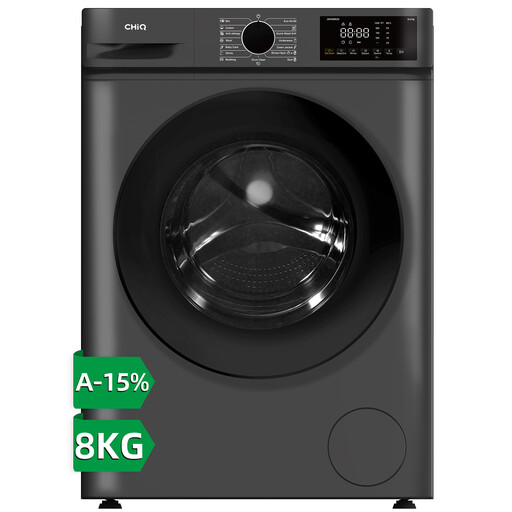
CHiQ JW85883G, 8 kg washing machine
Worth comparing if you air-dry your washing at home and want a conventional washing machine; check the spin-drying class, as the maximum speed alone doesn’t tell you what it is.
Washing capacity: 8 kg. Stated maximum speed: 1,400 rpm. 16 programmes. Dark grey.
View on Joybuy
 No image available
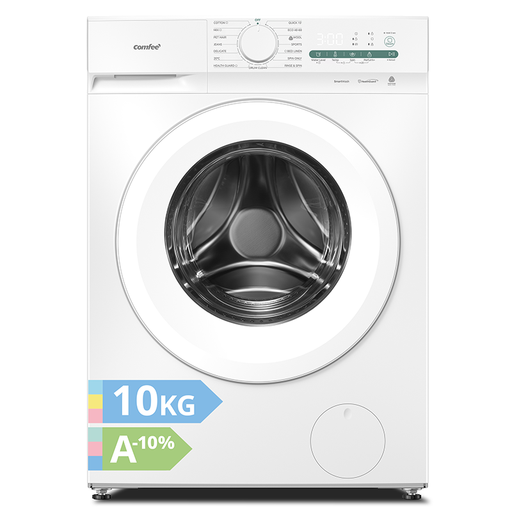
Comfee CF10EWP05W-HR, 10 kg washing machine
Worth considering if your usual laundry loads suit a washing capacity of 10 kg. For indoor drying, also check the model’s spin-drying class in the product listing.
Washing capacity: 10 kg. 16 programmes. The product name indicates a steam function and a pet-hair programme.
View on Joybuy
 No image available
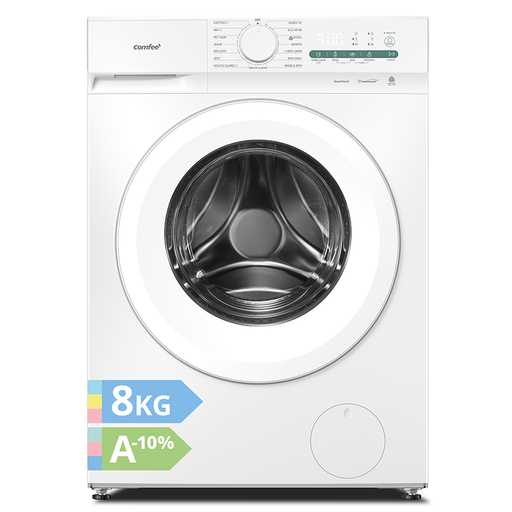
Comfee CF08EWP05W, 8 kg washing machine
Worth comparing for your usual loads if they fit within 8 kg and you air-dry your clothes; check the spin-drying class and programmes suited to your fabrics.
Washing capacity: 8 kg. 16 programmes. The product name indicates a steam function and a pet-hair programme.
View on Joybuy
 No image available
Samsung WD11DG6B85BEU3, 11/6 kg washer-dryer
Worth considering if you only have space for one appliance and want to run a wash followed by a drying cycle; the load must stay within the stated drying capacity.
Washing capacity: 11 kg. Drying capacity: 6 kg. Class D shown in the product name.
View on Joybuy
 No image available
Samsung WD10HG6U34BEU3, 10/6 kg washer-dryer
Worth comparing if you’re looking for a single appliance. To dry the washed load without removing any clothes, it must stay within the stated 6 kg drying capacity.
Washing capacity: 10 kg. Drying capacity: 6 kg. Class D shown in the product name.
View on Joybuy
Frequently asked questions
Does a spin speed of 1,400 rpm guarantee clothes will dry quickly on an airer?
No. Maximum spin speed alone isn’t enough to assess spin-drying efficiency. ADEME recommends choosing class A when you need clothes to dry quickly indoors; the programme and fabrics matter too.
Can you wash 9 kg and then dry all 9 kg in a model listed as 9/6 kg?
No, not in a single drying cycle if the load weighs 9 kg: the stated drying capacity is 6 kg. To run both stages without removing any clothes, follow the capacity limit and instructions for the drying programme you choose.
How can you reduce humidity when drying clothes indoors?
Efficient spinning reduces the water left in fabrics, but it doesn’t replace fresh air. ADEME recommends opening the windows wide for 5 to 10 minutes each day and highlights the role of ventilation in removing moisture from your home.
How should you compare the energy use of a washer-dryer and a conventional washing machine?
Compare cycles that do the same job: a wash-only cycle on one appliance and a complete wash-and-dry cycle on the other. Check their kWh per 100 cycles and litres per cycle, as well as the capacities these figures relate to.
What maintenance does a separate tumble dryer need?
Check the appliance manual for instructions on cleaning the filters and condenser. UFC-Que Choisir points out that a build-up of dirt can reduce the performance of heat-pump tumble dryers; this doesn’t automatically apply to all washer-dryers.


