Who is this choice for?

You often dry laundry at home

You’re looking for extra support when damp levels rise during laundry days, and can compare the stated extraction rate, tank and available space. ADEME points out that ventilation continuously removes moisture from the home.

You want to clear the room sooner

Your priority is not having wet laundry taking up space on an airer. A ‘laundry’ mode on a dehumidifier and a tumble dryer address this need in different ways; space, fabrics and maintenance matter too.

You suspect there’s a problem with your home

If damp persists between laundry days, or you suspect poor ventilation or water ingress, look for the cause first. ANIL points out that the standards for a rented home to be considered fit for habitation include adequate ventilation and suitable removal of moisture.

What should you consider before buying?

Portable dehumidifier

Consider it if: damp is mainly linked to laundry and the room allows you to set up the appliance in line with the instructions.

Bear in mind: noise, electricity use and maintenance; the appliance doesn’t bring in fresh air or fix water ingress.

Tumble dryer

Consider it if: your priority is to remove wet laundry from the room and you have enough space.

Bear in mind: capacity, compatible fabrics, installation, maintenance and the model’s energy label.

Check the ventilation

Consider it if: damp persists even when no laundry is drying, or you suspect water ingress.

Bear in mind: you may need to find the cause or seek advice; an appliance for extra support won’t fix the building itself.

What matters to you What to check before buying Who it matters most to
Damp during laundry days Compare the stated extraction rate in L/24 h only when the measurement temperature and relative humidity are the same. Also check the space and settings available. If you’re mainly looking for extra support while laundry dries, around 33% of consumers with this concern prioritise managing occasional damp.
Drying time and space For a tumble dryer, check the capacity, compatible fabrics and energy label. For a dehumidifier, check whether it has a stated ‘laundry’ function. Their capacities don’t measure the same thing. When wet laundry takes up the room for too long, around 27% of consumers with this concern prioritise faster drying and freeing up space.
Persistent damp Check whether it appears outside drying periods and inspect any accessible ventilation systems. If you suspect water ingress, seek appropriate advice. If the problem continues when no laundry is drying, around 20% of consumers with this concern prioritise identifying a cause in the home.
Noise, drainage and maintenance Check the stated noise level for the mode you’ll use, the tank capacity, drainage options and the clearances specified in the instructions. If the appliance will run regularly in a room, around 20% of consumers with this concern prioritise manageable use and maintenance requirements.

Pitfalls to avoid

  • Assuming the stated capacity guarantees the same results at home

    For the DDSX220, De’Longhi states 20 L/24 h at 30 °C and 80% relative humidity. This figure doesn’t automatically reflect the extraction rate in a cooler room.

    Compare the measurement conditions and, if they’re provided, see how they match those in the room where you’ll use the appliance.

    Depending on the conditions, the appliance may run for longer than expected without delivering the results you had in mind.

  • Using a portable appliance to mask an ongoing problem

    ADEME explains that ventilation continuously removes moisture, while ANIL also covers problems with water ingress and ventilation in the home.

    If damp appears even when no laundry is drying, take the appropriate steps to find the cause rather than relying solely on a dehumidifier.

  • Confusing extraction rate, tank capacity and laundry capacity

    L/24 h describes the stated extraction rate, litres describe the tank’s storage capacity, and kilograms for a tumble dryer refer to a load of fabrics. These measurements aren’t interchangeable.

    First decide whether you want to manage damp in the room or get laundry off the airer, then compare the specifications relevant to the solution you’re considering.

  • Choosing without checking placement and drainage

    Clearance, plug and drainage requirements vary by model. An unsuitable hose or location can make it harder to use the appliance as intended.

    Before buying, read the instructions and check what’s included with the specific model. Then make sure the socket, clearances and drainage route will work in your room.

    Depending on the model, you may need to buy a hose separately. Also check whether regular emptying will suit the way you plan to use it.

Brands to consider for different needs

De’Longhi

The Tasciugo AriaDry Multi DDSX220 is a compressor dehumidifier with a stated laundry function.

  • For this model, De’Longhi states 20 L/24 h at 30 °C and 80% RH, as well as a humidistat and continuous drainage.
  • The stated noise level is 42 to 47 dB(A); the stated extraction rate doesn’t guarantee the same results in a cooler room.

Wood’s

The MRD20G is positioned for drying laundry in a utility room or another heated room.

  • Wood’s states that it has an adjustable air outlet, a 3,8 L tank, a timer and a hose connection.
  • The manufacturer’s claims about speeding up drying aren’t based on independent comparative measurements.

Meaco

The Arete Two 20L is another portable dehumidifier option, with connected controls stated on the French-language European page.

  • Meaco states that this model has castors and comes with a five-year commercial warranty.
  • Check the warranty terms and availability with your chosen retailer; the stated specifications aren’t based on independent testing.

Rowenta

Rowenta France presents the Extrême Dry Compact+ as a compact dehumidifier with a laundry-drying function.

  • The brand states that this model has a capacity of 16 L/day.
  • This figure isn’t directly comparable with the 20 L/24 h stated for the DDSX220 under specific conditions by De’Longhi.

Bosch

The Series 6 WQG24502FR heat pump tumble dryer, stated to have an 8 kg capacity, offers an alternative to an airer and portable dehumidifier.

  • This option may be worth considering if your priority is drying laundry in an appliance rather than in the room.
  • Check the model’s energy label, condensation efficiency, dimensions and maintenance requirements. Kilograms of laundry aren’t comparable with a dehumidifier’s L/24 h.

Joybuy products for these needs

These products cover two different needs: managing damp with a portable dehumidifier or drying laundry in a tumble dryer.

Comfee MDDN-10DEN7 dehumidifier, 10 L/24 h, for around 40 m³ (16 m²)

Comfee MDDN-10DEN7, 10 L/24 h

Worth considering if you’re looking for an appliance to provide extra support in a utility room; it doesn’t replace ventilation or fix water ingress.

The product name states a capacity of 10 L/24 h and suitability for around 40 m³ (16 m²).

Joybuy

Hotpoint CHD84MWBSEE heat pump tumble dryer, 8 kg, white, C rating

Hotpoint CHD84MWBSEE, 8 kg heat pump tumble dryer

Worth considering if you want to dry laundry in an appliance rather than leave it on an airer in the room; this solution won’t address damp that’s present between laundry days.

The name states an 8 kg capacity, a white finish and a C rating.

Joybuy
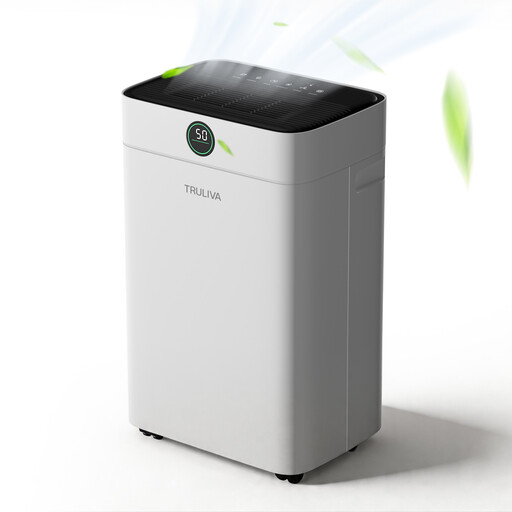
TRULIVA dehumidifier with laundry-drying function, 25 L/day, 2,8 L tank

TRULIVA 25 L/day, laundry drying, 2,8 L tank

Worth considering for extra support on laundry days; bear in mind that a portable dehumidifier won’t fix poor ventilation or water ingress.

The name states a capacity of 25 L/day and a 2,8 L tank, and mentions a hose for continuous drainage.

The product instructions specify around 25 cm of clearance around the appliance.

Joybuy
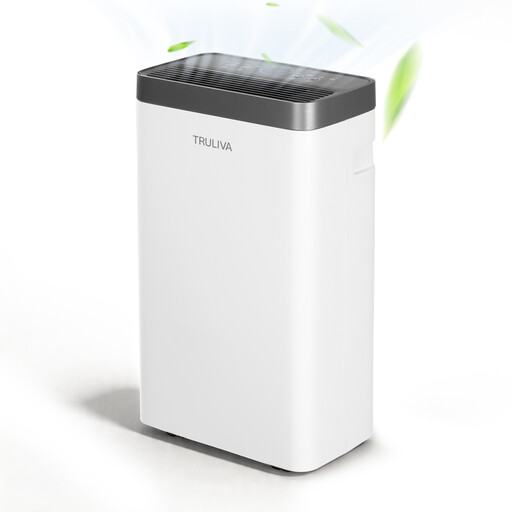
TRULIVA AP10-2012EE dehumidifier, laundry drying, continuous drainage

TRULIVA AP10-2012EE, dehumidifier with laundry-drying function

Worth considering if you’re looking for extra support when drying clothes indoors; it doesn’t replace ventilation or fix water ingress.

The name states that it’s suitable for an area of around 32 m², with a 24-hour timer and continuous drainage, and mentions automatic defrosting.

The product information states that the tank holds 1,35 L; continuous drainage is also mentioned.

Joybuy
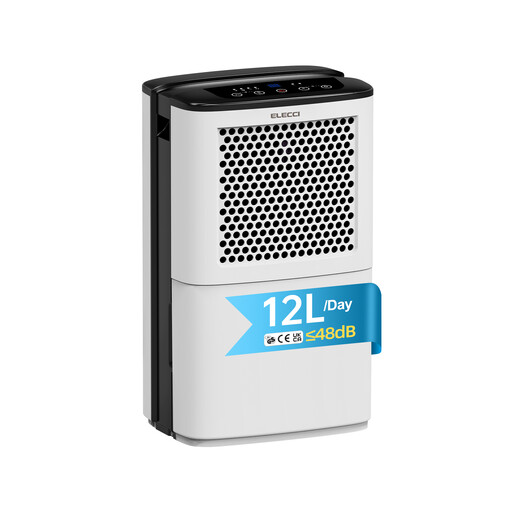
ELECCI dehumidifier, 12 L/day, 3,8 L tank and drainage hose

ELECCI 12 L/day, 3,8 L tank

Worth considering if you’re looking for extra support on laundry days; like other portable dehumidifiers, it doesn’t replace ventilation in the home.

The name states a capacity of 12 L/day, a 3,8 L tank and a drainage hose.

Joybuy

Frequently asked questions

Does a dehumidifier replace ventilation in the home?

No. ADEME describes mechanical ventilation as a way to continuously remove moisture and pollutants, alongside airing rooms. A portable appliance won’t fix faulty ventilation. If damp persists outside drying periods, get the cause checked.

How should I set up a dehumidifier near laundry?

Follow the instructions for your model on positioning, clearance around the appliance, plugging it in, drainage and filter maintenance. For the DryFlow Max, the product information consulted specifies plugging it directly into a socket without an extension lead, at least 30 cm of clearance and a room larger than 4 m²; these aren’t universal requirements for other models.

How do I compare the energy use of a dehumidifier and a tumble dryer?

For a dehumidifier, consider its stated power, how long you’ll actually use it and the maintenance it needs. Don’t estimate energy use from a single L/24 h capacity figure. For a tumble dryer sold in the European Union, check the applicable energy label, rated A to G since 1 July 2025, as well as the model information; the two appliances don’t do the same job.

In a rented home in France, is an appliance enough if the ventilation isn’t working properly?

No. For a home rented as a main residence, ANIL points out that the standards for fitness to live in include adequate ventilation and suitable removal of moisture for normal occupancy. This doesn’t make it possible to assess a particular home remotely; document the situation and find out what steps to take or where to get suitable advice.

Does CE marking mean a dehumidifier is the right choice for my room?

No. DGCCRF explains that CE marking represents the manufacturer’s declaration that the applicable requirements have been met; it isn’t a certification mark. It doesn’t compare noise levels or extraction rates, or determine whether the appliance is suitable for your room.