What should you consider before buying?
First, decide whether the room is suitable for drying clothes, then think about what you want to change: drying time, the space taken up or electricity use. A good spin cycle can help both before clothes go on a drying rack and before they go in a tumble dryer.
| Criteria |
What to check |
Who it matters to |
| Humidity and ventilation |
Is the room large enough and well ventilated, or does it have a mechanical ventilation extract vent? If ventilation doesn’t seem to be working properly, an appliance won’t remove the need to get it checked. |
If I’m keeping a drying rack, I want to choose a room where moisture from the washing can be removed. Managing humidity is the main concern for around 29% of consumers. |
| Drying time |
Check your washing machine’s spin efficiency. For a tumble dryer, compare its capacity with your usual loads and check the duration of the reference programme. |
When I do laundry frequently, I mainly need to avoid having wet washing waiting around for a long time between loads. Around 29% of consumers prioritise drying time. |
| Available space |
Measure the space and clearances required in the instruction manual. Stacking appliances requires compatible models and a manufacturer-approved stacking kit. |
When a drying rack encroaches on my living space, I also need to know where I could install or store the appliance I’m considering. Available space is the main concern for around 21% of consumers. |
| Electricity use |
Compare tumble dryer energy consumption figures using equivalent energy labels, and take your frequency of use into account. Also check the specifications of any dehumidifier you’re considering. |
If I dry clothes often, I want to understand how much electricity the appliance uses, rather than rely on a general claim about energy savings. This is the main priority for around 21% of consumers. |
Products for different ways of drying clothes
This selection includes dehumidifiers to consider alongside a drying rack, and a tumble dryer for drying clothes in the drum. For dehumidifiers, compare the conditions behind their stated capacities. For all appliances, check the space available and ventilation in the room where you’ll dry your clothes.
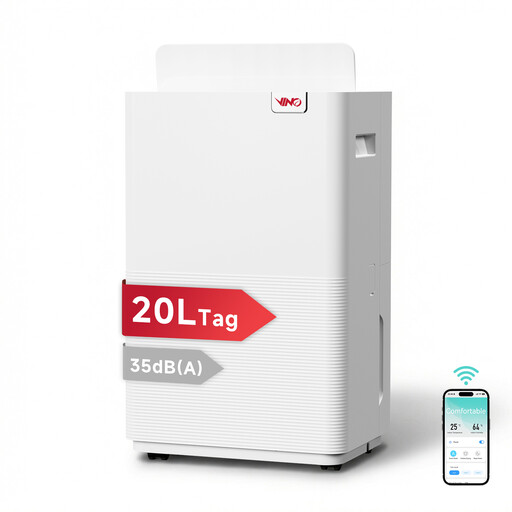 Image unavailable
VINO 20L Smart, 2.5 L tank
Worth considering if you’re keeping a drying rack and want to manage humidity in the room. The product description lists automatic, drying and sleep modes, Wi-Fi control and a 2.5 L tank.
Check the conditions behind the stated capacity, along with the dimensions and noise level in the mode you’ll use. Extraction capacity alone doesn’t determine drying time.
View on Joybuy
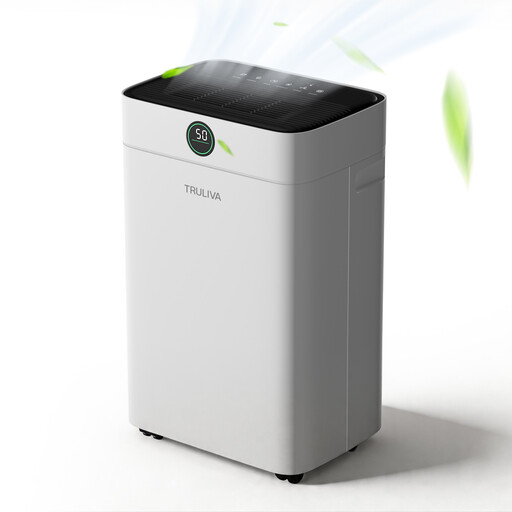 Image unavailable
TRULIVA 25 L/day, laundry mode, 2.8 L tank
Designed to complement a drying rack in a room where you can install the appliance. The product title mentions a laundry mode, a 2.8 L tank and a continuous drainage hose.
Check the measurement conditions for its 25 L/day capacity, and allow for the clearances specified for installation.
View on Joybuy
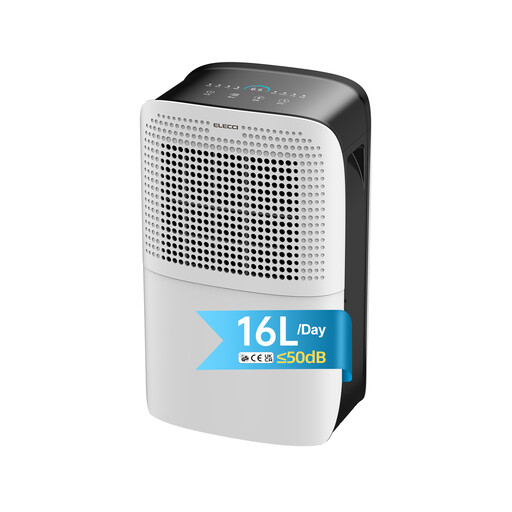 Image unavailable
ELECCI 16 L/day, 3.1 L tank
Consider this for managing humidity in the room where you keep your drying rack. The product title lists a 3.1 L tank, continuous drainage and a 24-hour timer.
Check the measurement conditions behind the stated capacity, and make sure the noise level and dimensions suit the space you have in mind.
View on Joybuy
 Image unavailable
Hotpoint CHD84MWBSEE, 8 kg heat pump tumble dryer
For drying loads in the drum instead of hanging them around the room. The product title lists an 8 kg capacity and energy rating C.
Before deciding where to put it, check the dimensions and required clearances. Consult the model’s energy label to compare the duration and energy consumption of the reference programme.
View on Joybuy
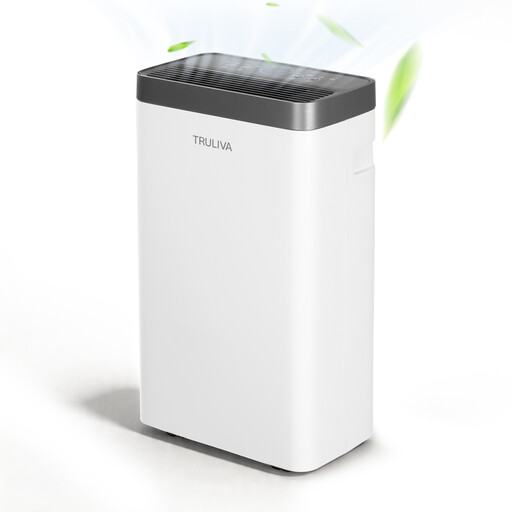 Image unavailable
TRULIVA AP10-2012EE dehumidifier with laundry mode
Worth considering if you’re keeping your drying rack and want an appliance with a laundry mode. The product title mentions a 24-hour timer and continuous drainage.
Check the room size this model is designed for and the conditions behind its extraction capacity before comparing it with other models.
View on Joybuy
Frequently asked questions
Can a dehumidifier replace ventilation in your home?
No. A dehumidifier works in the room where it’s used, but it doesn’t replace air circulation throughout your home. For drying clothes indoors, ADEME recommends a large, well-ventilated room or one with a mechanical ventilation extract vent. If the ventilation seems faulty, have it checked separately.
What should you look for in a washing machine if you dry clothes indoors?
First, check its spin efficiency class on the energy label. ADEME recommends choosing spin efficiency class A when clothes need to dry quickly indoors or in a tumble dryer. You should also choose a capacity that suits your usual loads.
How do you compare the energy use of two tumble dryers?
Compare the energy labels and reference programme figures for appliances in the same category, then take your frequency of use into account. According to the European Commission, the revised A to G energy label has applied to the tumble dryers covered by the scheme in the European Union since 1 July 2025. Don’t compare an old rating directly with one from the new scale.
When should you get your ventilation checked instead of buying an appliance?
If air inlets or outlets seem to be missing, blocked or ineffective, have your home’s ventilation system checked. A tumble dryer or dehumidifier can’t confirm that it’s working properly. You can then choose a drying solution that suits the room and your laundry routine.


