Households that often dry clothes on an airer
If you dry several loads of washing indoors each week, start by checking the room’s airflow and ventilation. A dehumidifier does not replace the air circulation recommended by ADEME.


Before buying a dehumidifier for drying clothes indoors, check the room’s ventilation and airflow. ADEME recommends drying clothes in a large, well-ventilated room or one with an extractor fan. If humidity remains a concern when you dry clothes regularly, you could consider a dehumidifier as an addition, but it should never replace ventilation. Your choice will depend mainly on how you drain the water, noise levels, room temperature and the conditions used to determine the stated extraction capacity.
If you dry several loads of washing indoors each week, start by checking the room’s airflow and ventilation. A dehumidifier does not replace the air circulation recommended by ADEME.
In a utility room or living space without a suitable drainage point, tank capacity and the option to use a pump are particularly important. A drainage hose will only be practical if it can be fitted appropriately in the room.
If the appliance will run near a bedroom or in a living room you use regularly, check the noise level of the mode you intend to use, as well as the weight and how easy it is to move. A high extraction capacity alone won’t answer these questions.
Start here: before buying anything, check that the room is suitable for drying clothes and that air inlets and extractor vents are clear.
Bear in mind: you may need to change rooms or rearrange things, but this addresses air circulation, which a dehumidifier cannot replace, as ADEME points out.
Worth considering: as an addition if you regularly dry clothes in a ventilated room and humidity remains a concern.
Bear in mind: you’ll need to position the appliance as instructed, manage the collected water and consider noise and energy use while it’s running.
Another option: if you want to dry clothes in a drum and have a suitable installation for the appliance you’re considering.
Bear in mind: before changing how you dry clothes, check the space available, any necessary connections and the energy use for your intended usage.
For people who regularly dry clothes indoors, the right option depends on what matters most to them; the proportions below are approximate.
| Consideration | What to check before buying | Who it matters to |
|---|---|---|
| Room ventilation | Check airflow, that the mechanical ventilation system is working, and that air inlets and outlets are not blocked. ADEME recommends drying clothes in a large, well-ventilated room or one with an extractor fan. | If clothes are drying in a poorly ventilated room, I’d first want to know whether an appliance could mask a ventilation problem. Around 36% of consumers would put this check at the top of their list. |
| Water management | Compare tank capacities and check whether a hose or pump can be fitted in accordance with the instructions. | If I do a lot of washing, I don’t want to keep stopping to empty the tank; around 29% of consumers would make draining their top priority. |
| Noise and moving the appliance | Check the noise level in the mode you plan to use, the appliance’s weight and whether you can move it between rooms. | In a room I use regularly, I want an appliance that fits around my activities in terms of both noise and size. This would be the main concern for around 21% of consumers. |
| Operating conditions | Compare stated capacities only alongside their test conditions, then consider the room temperature and how long you expect to run the appliance. | If I’m comparing a dehumidifier with another way of drying clothes, I want to understand what using it will involve in my room. Around 14% of consumers would prioritise this trade-off. |
Removing water from the air does not circulate fresh air around your home. ADEME points out that ventilation continuously removes moisture and pollutants.
Before buying, check the air inlets, extractor vents and that the mechanical ventilation system is working. Never block these openings.
A stated capacity depends on the test conditions. For example, De’Longhi gives 16 L/24 h at 30 °C and 80% relative humidity for the DEXD216RF. This figure alone does not tell you how the appliance will perform in your room.
Check the conditions given for each figure, then consider drainage, noise and the temperature of the room where you’ll dry your clothes.
Having to empty a tank frequently can make regular drying more of a chore. Moving the appliance matters too: Les Numériques reports that the Duux Bora 20L DXDH20 weighs 14.5 kg.
Decide whether you’ll use the tank, a drainage hose or a pump, then check the weight and the route you’ll need to take if the appliance has to be moved between rooms.
Water and the electrical setup in a bathroom make it especially important to position a portable appliance correctly. A product description that mentions “bathroom” is not enough to determine whether a particular spot is suitable.
Before using the appliance in this room, check the model’s instructions, its ingress protection rating and the electrical installation.
These models illustrate different ways of managing water and controlling a dehumidifier; their specifications don’t guarantee the same results in every home.
Wood’s presents the MDX20P as suitable for a heated room, particularly where a floor drain is not available.
The Bora 20L DXDH20 combines humidity settings and operating modes with app control, making it an option for a utility room or living space.
The Tasciugo AriaDry Multi DEXD216RF has a dedicated laundry function and continuous drainage. Consider whether it suits the setup in your room.
These dehumidifiers are described as having a laundry-drying function. Consider them as additions in a properly ventilated room, and compare their drainage options and where you could place them before choosing.
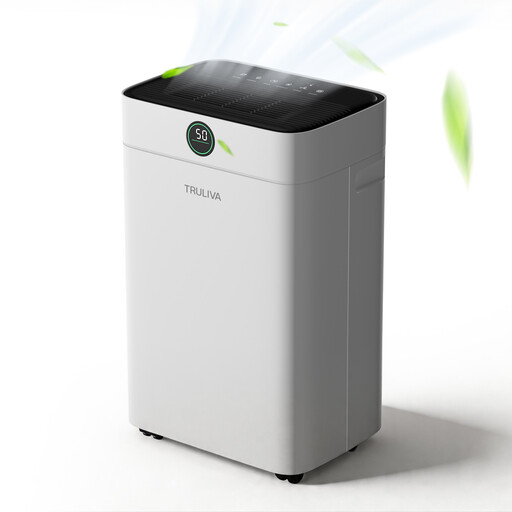 Image unavailable
For regularly drying clothes on an airer, this model combines a laundry function with a tank and a continuous drainage hose.
The product title states a capacity of 25 L/day, automatic defrosting and the use of R290. Check the conditions for the stated capacity and whether you can fit the hose in your room.
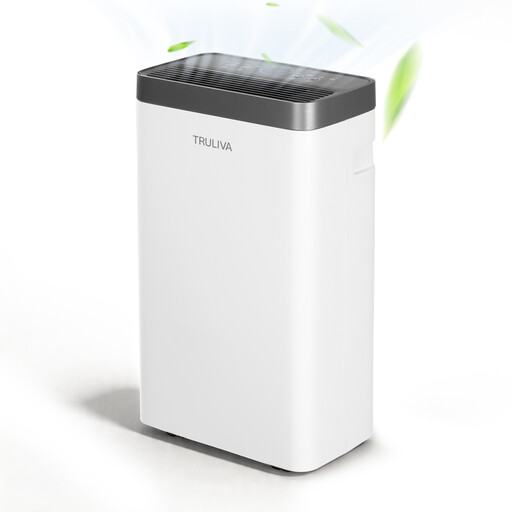 Image unavailable
If you’re considering continuous drainage for drying clothes indoors, check that the connection will work where you plan to put the appliance.
The product title states that it has a 24-hour timer, automatic defrosting and coverage of around 32 m². This stated coverage doesn’t remove the need to check the conditions in your room.
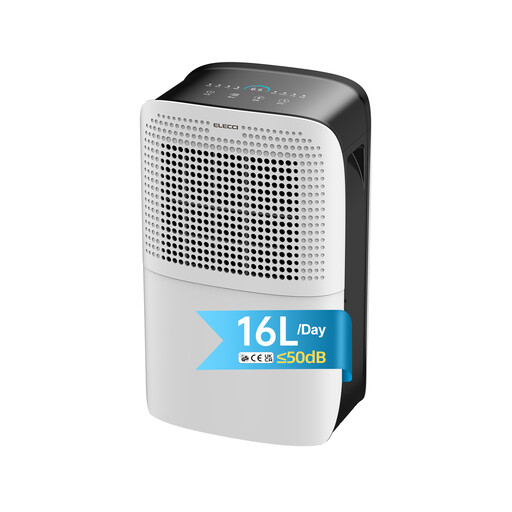 Image unavailable
For frequent washing, the stated 3.1 L tank and continuous drainage offer two ways to manage the water, depending on what your setup allows.
The product title mentions four modes, a 24-hour timer and a 32 m² room. Compare the 16 L/day capacity with its test conditions rather than treating it as a guaranteed result in your home.
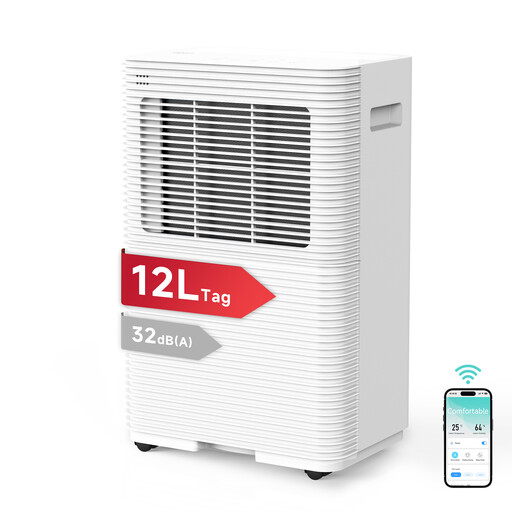 Image unavailable
If remote controls appeal to you for a room you use regularly, this model is described as having Wi-Fi control and Auto, Dry and Sleep modes.
The product title states that it is suitable for a 24 m² room and has a 1.8 L tank. Before using it near a space where you sleep, check the noise level for the mode you plan to use; the noise information given for this model varies.
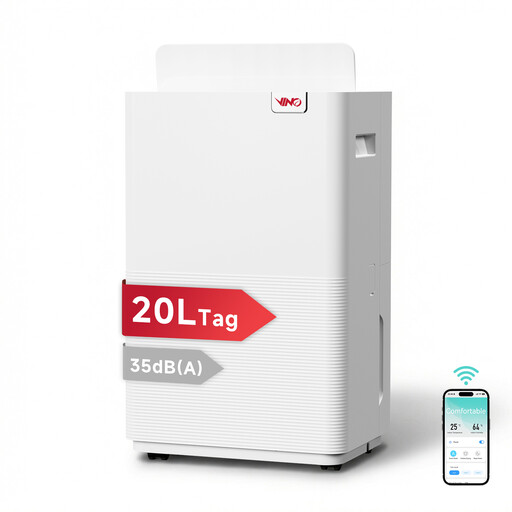 Image unavailable
When drying clothes indoors, consider the Dry function and 2.5 L tank in light of how often you do the washing and what drainage options are available.
The product title states that it is suitable for a 40 m² room and has Auto, Dry and Sleep modes. Check the conditions for the stated capacity and the noise level of the mode you actually plan to use; the noise information given for this model varies.
No. A dehumidifier does not replace the fresh air supplied by a properly working ventilation system. ADEME recommends never blocking air inlets or extractor vents. When drying clothes, choose a large, well-ventilated room or one with an extractor fan.
Start by considering how you’ll manage the water with your setup, then compare extraction capacity alongside its test conditions. For example, De’Longhi’s stated 16 L/24 h for the DEXD216RF applies at 30 °C and 80% relative humidity, which may not match the conditions in your room.
Check whether continuous drainage is suitable for your room and allowed by the model’s instructions. If a floor drain isn’t suitable, a built-in pump, such as the one specified for the Wood’s MDX20P, may be another option to consider.
Place it on a stable surface and leave the clearances specified in the instructions, without blocking its openings or those of your home’s ventilation system. The Duux Bora instructions require at least 50 cm of clearance around the appliance; check the guidance for any other model.
It depends on the appliance and where it will be placed in relation to water. Before using a portable model in a bathroom, check its instructions, ingress protection rating and the room’s electrical setup. A product title that simply mentions “bathroom” is not enough.