Households short on space
You regularly put up an airer in a living room or small room. The space it takes up while your clothes dry matters just as much as the permanent space an appliance would need.


If you have a large, well-ventilated room, an airer is still worth considering, as long as you can live with it taking up space temporarily and with the time needed for clothes to dry. If you do the washing frequently and need more predictable drying times, compare tumble dryers that will fit your space. A dehumidifier can be used alongside an airer when humidity rises, but it does not replace ventilation in your home. ADEME points out that drying clothes indoors releases a lot of moisture, and recommends using a large, well-ventilated room or one with mechanical ventilation extraction.
You regularly put up an airer in a living room or small room. The space it takes up while your clothes dry matters just as much as the permanent space an appliance would need.
You’ve noticed condensation or clothes taking a long time to dry. You want to tell the difference between moisture from a load of washing and an ongoing ventilation problem that needs investigating.
You do the washing frequently or need to know when your clothes will be dry. Available space, noise and maintenance are all factors to consider when choosing a tumble dryer.
Ventilation matters whichever option you choose: removing moisture from the air with a dehumidifier does not bring in fresh air. ADEME’s guidance on drying clothes indoors and Qualitel’s advice on persistent damp can help you distinguish between extra support for doing the washing and a problem with your home.
Consider this if: you have a large, well-ventilated room or one with mechanical ventilation extraction where you can put your washing, and you’re happy with the drying time.
Bear in mind: the airer takes up space while your clothes dry. ADEME describes indoor clothes drying as a significant source of moisture.
Consider this if: frequent washing or the space taken up by an airer makes a permanently installed drying appliance worthwhile.
Bear in mind: you’ll need to plan for its location, power supply and maintenance. UFC-Que Choisir points out that, unlike this type, a vented model needs an opening to the outside or access to a suitable duct.
Consider this if: you want to keep using an airer and can manage the collected water, with a dehumidifier as an extra in the room where your clothes are drying.
Bear in mind: the appliance takes up space and needs maintenance. A laundry mode, if available, won’t guarantee a set drying time and does not replace ventilation.
| Factor | What to check | Who it matters to |
|---|---|---|
| Humidity and ventilation | Check how well the room is ventilated and look for signs of persistent damp before relying on an airer or an extra appliance. | If condensation appears while I’m doing the washing, I want to avoid mistaking moisture from clothes for an ongoing problem with my home; around 31% of consumers would make this distinction their priority. |
| Drying time | Compare the tumble dryer’s capacity and programmes with your usual loads, then check which fabrics are suitable. | When I have one load after another, the main thing I need to know is when my clothes will be dry; a predictable drying time would come first for around 31% of consumers. |
| Available space | Measure the space for the appliance or the room needed to put up an airer, and remember to allow access to the door and maintenance parts. | In a small living space, I might be happy to reorganise how I dry my clothes to keep walkways clear; around 23% of consumers would prioritise having enough space. |
| Energy use and maintenance | Check the energy information for the model you’re considering and find out what’s involved in maintaining its filters, tank or outlet. | If I dry clothes often, I want to be comfortable with the electricity use and day-to-day maintenance; around 15% of consumers would put these considerations first. |
It can remove moisture from the room it’s used in, but it doesn’t bring in fresh air. If condensation or damp patches persist, Qualitel recommends getting an appropriate assessment.
Check the ventilation and ask the right professionals to investigate any ongoing signs of damp, rather than expecting an extra appliance to solve the problem on its own.
Using one also involves electricity, maintenance and dealing with the water it collects.
According to UFC-Que Choisir, this type of tumble dryer needs an opening to the outside or access to a ventilation duct.
Check the room’s layout before choosing this type of appliance. If there’s no suitable outlet, compare condenser tumble dryers and their installation requirements instead.
A capacity quoted for a particular model under specific operating conditions isn’t enough on its own to predict how well it will work in your room.
Also check the conditions attached to that figure, where you could place the appliance, whether it has a laundry mode, and how to empty or drain the collected water.
In a tight space, removing a filter or accessing the tank may be less straightforward than it seems. Electrolux points out that the filter and condenser are among the parts to consider for maintenance, depending on the model.
Read the instructions and check you’ll be able to reach the parts you need once the appliance is installed, particularly for cleaning and handling water.
You’ll need to carry out these tasks regularly, even if the appliance fits in the space available.
Bosch offers heat pump tumble dryers, with features that vary by model.
Miele’s range includes heat pump tumble dryers, with programmes that vary between models.
Electrolux offers heat pump tumble dryers, with fabric-care features available on selected models.
Rowenta dehumidifiers are worth comparing as an extra to use alongside an airer, but they don’t replace fresh-air ventilation.
These appliances suit two different needs: drying clothes in a drum with a tumble dryer, or keeping your airer and considering a dehumidifier as an extra. Their inclusion here doesn’t change the need for suitable ventilation.
 Image unavailable
Worth considering if you’d rather dry loads in a drum than leave an airer up. Check the dimensions, clearance and access needed for maintenance in the space you have planned.
 Image unavailable
Another option for drying regular loads in a drum. Before setting aside space for it, check its dimensions, installation instructions and programmes for your fabrics. The words ‘rapid drying’ don’t, on their own, guarantee a particular drying time for every load.
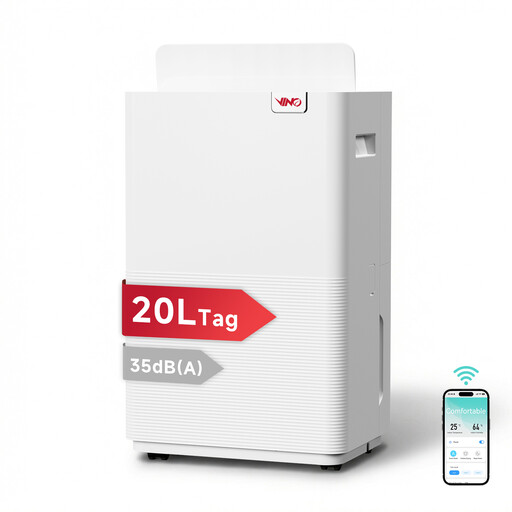 Image unavailable
Worth considering as an extra to use with an airer in the room where your clothes are drying, rather than as a replacement for ventilation. The title also mentions Auto and Sleep modes, as well as Wi-Fi control; check the dimensions and the stated noise level under the conditions that matter to you.
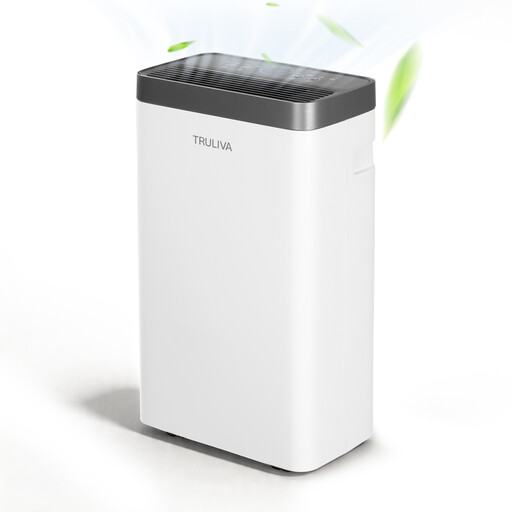 Image unavailable
This model can be used alongside an airer if you can place it in the room where your clothes are drying and manage the collected water. The title mentions a 24-hour timer; check the noise level before planning to use it near a living area or overnight.
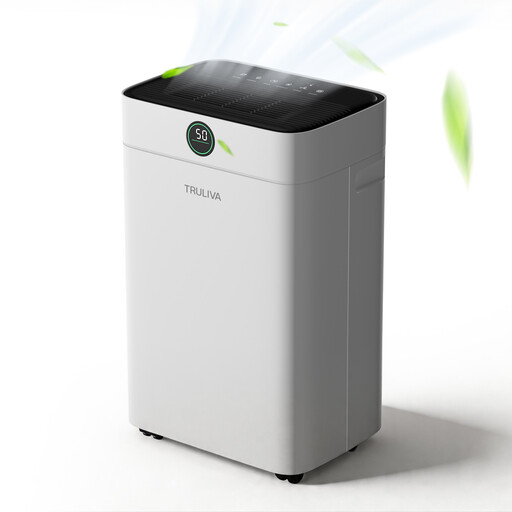 Image unavailable
Worth comparing as an extra for drying clothes on an airer if managing the collected water is important to you. The title mentions a continuous drainage hose; the 25 L/day figure is a stated capacity, not a promise of how well it will work in your room. Also check the recommended temperature and clearance requirements for the appliance.
No. A dehumidifier removes moisture locally, while ventilation brings in fresh air. ADEME recommends drying clothes on an airer in a large, well-ventilated room or one with mechanical ventilation extraction.
You could consider it as an extra if humidity rises while your clothes are drying and the appliance can be used in that room according to its instructions. Check whether it has a laundry mode, the conditions behind its stated capacity, and how to manage the collected water; it doesn’t remove the need for suitable ventilation.
Compare condenser tumble dryers, particularly heat pump models, rather than a vented appliance. UFC-Que Choisir explains that a vented dryer needs an opening to the outside or access to a ventilation duct. In all cases, check the installation instructions and how the model you choose handles water.
Don’t expect a new appliance to solve persistent damp on its own. Qualitel recommends getting an appropriate assessment: the cause may go beyond drying clothes and should be investigated in your home.