You air-dry every wash
You want to dry your clothes indoors without immediately adding a second appliance. Spin performance and the space available for an airer are important factors.


If using an airer suits your routine, start by comparing your washing machine’s capacity and spin efficiency, and consider whether you have a suitable room for drying clothes. If you regularly need to dry full loads, it’s worth comparing heat pump tumble dryers. If you only have space for one appliance, consider a washer-dryer, taking account of its drying capacity and the energy used by a complete wash-and-dry cycle.
You want to dry your clothes indoors without immediately adding a second appliance. Spin performance and the space available for an airer are important factors.
If your airer is still in use when it’s time for the next load, compare capacity, cycle times, energy consumption and the space needed for a separate appliance.
You want to wash and sometimes dry your clothes using a single appliance. Check the usable drying capacity and the figures for a complete cycle.
Choose this if: you have space to air-dry your loads and mainly want to remove more water from your laundry after washing.
Bear in mind: spinning doesn’t replace drying; you’ll still need a suitable space to hang your clothes.
Choose this if: you regularly have a load to dry and space for a separate appliance.
Bear in mind: allow for the space and electricity it needs, and follow the maintenance instructions in the manual. Also check how condensed water is handled.
Choose this if: you need to fit washing and drying into one space, and your loads are within the appliance’s drying capacity.
Bear in mind: drying capacity is usually lower than washing capacity; compare the figures for a complete cycle too.
Choose this if: your routine gives you time to clear the airer before the next wash and you have a suitable room.
Bear in mind: damp laundry stays in your home while it dries. ADEME recommends using a large, well-ventilated room or one with mechanical extraction.
| What matters to you | What to check | Who is it for? |
|---|---|---|
| Spend less time air-drying | Spin efficiency rating, suitable capacity and noise level if the appliance is near your living areas. | If I want to keep air-drying, I’m looking to get laundry out less wet without changing my routine. Around 33% of consumers prioritise spin performance before air-drying. |
| Dry loads regularly | Tumble dryer capacity compared with the loads you wash, space for the appliance and its current energy label. | If I have loads one after another, I want to free up the airer without waiting for clothes to dry naturally. Around 27% of consumers prioritise regular tumble-drying. |
| One space for two functions | Dimensions, separate washing and drying capacities, and energy consumption for a complete cycle. | If I can only install one appliance, I check that it can dry my usual load without me having to take some clothes out. Around 20% of consumers prioritise having just one appliance. |
| Avoid adding another drying appliance | Space for an airer, room ventilation or extraction, and the time before the next wash. | If my routine allows, I’d rather keep air-drying than add another appliance. Around 20% of consumers prioritise air-drying without a new appliance. |
Its drying capacity may be lower. For example, a model advertised as having a 9 kg washing capacity may only be able to dry 6 kg. You may therefore need to split a full wash load or air-dry some of it.
Size your loads according to the drying capacity and compare energy consumption for a complete cycle.
If you exceed the drying capacity, you’ll need to remove some clothes, air-dry them or dry the load in batches.
For tumble dryers, the energy label used in shops and online has followed the A to G scale since 1 July 2025. An old A+++ rating therefore can’t be compared directly with a rating on the new scale.
When comparing tumble dryers, check the current label and the product information sheet for each model.
Not needing an air duct to the outside doesn’t resolve how condensed water is handled or whether the appliance is suitable for your chosen space or for stacking.
Check the dimensions, access to the water tank or drain and the installation instructions in the manual. If you want to stack the appliances, also check that the stacking kit and both models are compatible.
Stacking may require a compatible kit and you’ll need to allow for a suitable space.
Air-drying avoids using an electric drying cycle, but your laundry stays in your home while it dries.
If your routine allows you to air-dry your clothes, check the spin efficiency and choose a large, well-ventilated room or one with mechanical extraction, as recommended by ADEME.
Worth comparing for a washing machine with documented spin performance or a heat pump tumble dryer. Assess each model individually.
Worth considering if you need a washer-dryer to combine both functions in one space.
Worth comparing if you’re looking for a washer-dryer. Pay close attention to the separate capacities for each function.
Worth considering if you’re looking for a heat pump tumble dryer. Check the specifications and installation requirements for the specific model.
Worth comparing if you’re considering tumble dryers in the T1 and T2 ranges. Capacities and features vary by model.
This selection includes heat pump tumble dryers, washing machines to use with an airer, and a washer-dryer for homes where there’s room for just one appliance.
 Image unavailable
Worth considering if you regularly want to dry a load mechanically using a separate appliance.
The product information lists an 8 kg capacity, energy class C and a noise level of 64 dB. It also mentions the option of connecting the drain hose.
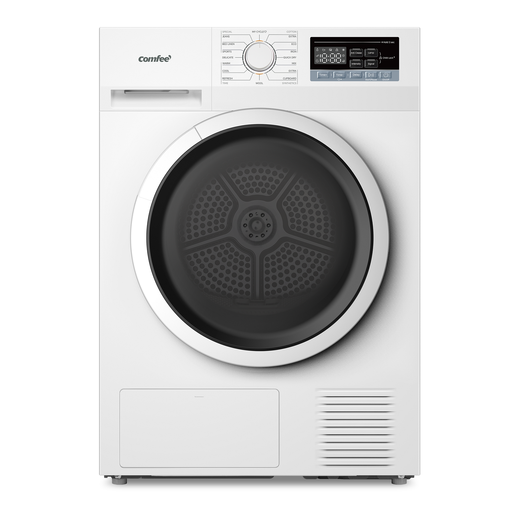 Image unavailable
Worth considering if you’re looking for a separate tumble dryer with several drying levels.
The product information lists an 8 kg capacity, energy class D, 16 programmes and three drying levels. It specifies installation in a room of at least 4 m², a 220–240 V earthed socket and cleaning the fluff filter after every cycle.
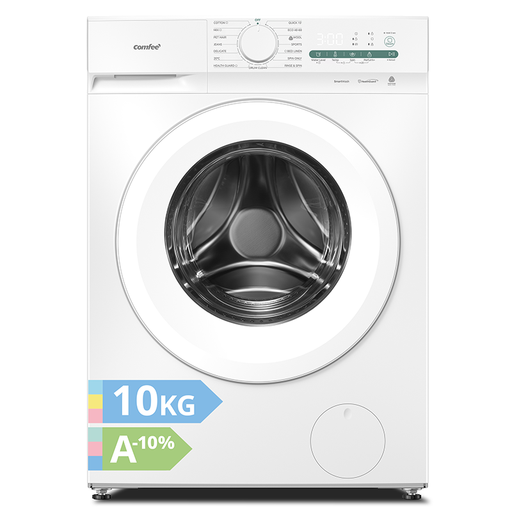 Image unavailable
Worth considering if you wash loads of up to 10 kg before air-drying them indoors.
The product title lists a 10 kg washing capacity and an A-10% energy class.
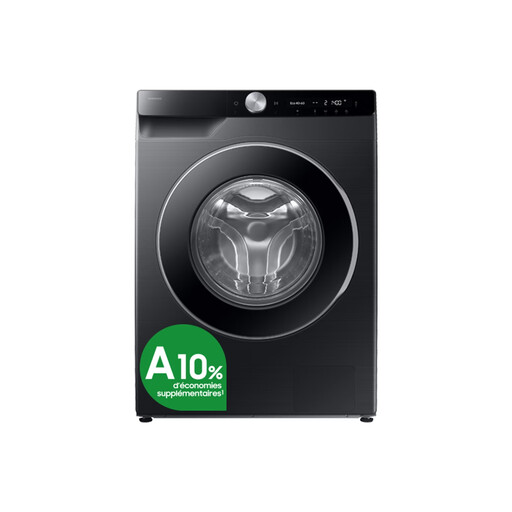 Image unavailable
Worth considering if you wash loads of up to 9 kg before air-drying them indoors.
The product information lists a 9 kg capacity, a spin speed of 1 400 rpm, a spin efficiency class of B and a noise level of 72 dB during spinning.
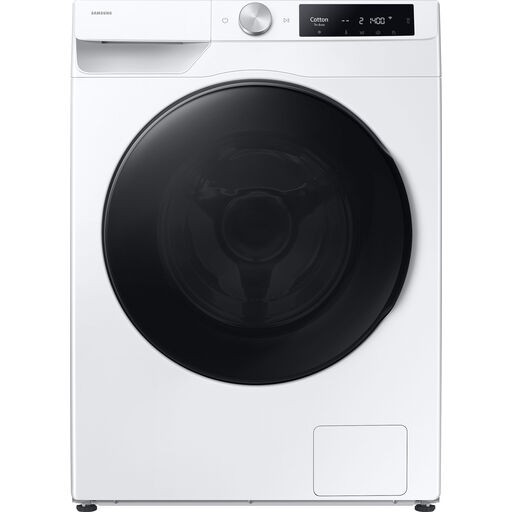 Image unavailable
Worth considering if you need to combine washing and drying in one space and its drying capacity suits your loads.
The product information lists an 11 kg washing capacity and a 6 kg drying capacity, spin class B and wash-and-dry cycle class D. The stated duration for this cycle is 7 h 32.
Since 1 July 2025, tumble dryer energy labels have used the A to G scale in shops and online, according to the European Commission. Compare models on the same basis; washer-dryers have a separate energy labelling category.
A vented model needs an air outlet to the outside, while a condenser model collects water in a tank or can direct it to a drain. Even so, check the model’s manual for instructions on where to put it and how to ventilate the room.
Check the washing and drying capacities separately, as they may differ. If you want to run both functions one after the other without removing any clothes, size your load according to the drying capacity and check the figures for a complete cycle.
No. Check that both models and the intended stacking kit are compatible. Bosch recommends checking the manuals and using a qualified professional for installation; this doesn’t mean that all appliances can be stacked.
Follow the model’s manual to clean the relevant parts and, if water is collected in a tank, empty it as instructed. Don’t assume that a condenser described as self-cleaning needs no maintenance at all.