In a flat that’s already damp, a separate tumble dryer can reduce the need to dry clothes indoors, provided you have a suitable space for it and can keep it properly maintained. If you can only fit one appliance, a washer-dryer saves space, but its drying capacity is lower than its washing capacity. An airer is still an option for loads that suit the space available, as long as the ventilation can effectively remove the moisture.
Which option is right for you?
Households dealing with damp
If you’re already seeing condensation or damp patches, it’s worth rethinking whether to dry laundry regularly in your living space. A separate tumble dryer can reduce indoor drying if you can install one, but it won’t replace proper ventilation. The QUALITEL Association advises checking your ventilation and avoiding indoor clothes drying in a damp home.
Households doing back-to-back loads but without room for two appliances
A washer-dryer combines both functions in one appliance. However, you’ll need to plan loads around its drying capacity, which is often lower than its washing capacity, and check the figures for the full cycle. UFC-Que Choisir also highlights drying times and water consumption as factors to consider with this option.
Smaller households with a well-ventilated space for an airer
A washing machine and an airer may be all you need if your laundry volume leaves enough time and space for each load to dry. For laundry dried indoors, ADEME recommends checking your washing machine’s spin-drying efficiency. You’ll still need to make sure your home is well aired and ventilated.
What should you check before choosing?
Washing machine and airer
Worth considering: if your loads fit the space available for drying and your home’s ventilation is working properly.
The trade-off: your laundry takes up space while it dries and releases moisture into your home.
Washer-dryer
Worth considering: if you only have room for one appliance to wash and dry your clothes.
The trade-off: you may need to split a full wash load before drying it. UFC-Que Choisir also notes that drying cycles can be long and use water.
Separate tumble dryer
Worth considering: if you do laundry frequently or drying clothes indoors is a problem, provided you have a suitable space for the appliance.
The trade-off: you’ll need space for a second appliance and must consider how to manage the water, as well as the maintenance instructions in the manual.
| Priority | What to check | Think about your needs |
|---|
| Damp |
If you dry clothes indoors, check your washing machine’s spin-drying efficiency and make sure your ventilation is working. ADEME recommends a class A spin-drying efficiency rating when laundry is dried indoors or in a tumble dryer. |
I get condensation at home: I need to consider the moisture released by drying clothes indoors, rather than choosing based only on the space the appliance takes up. |
| Space and capacity |
Measure the space, clearance and connections required. For a washer-dryer, compare the washing and drying capacities separately: UFC-Que Choisir points out that the latter is lower than the former. |
I only have room for one appliance, but I want to know how much laundry it can dry after a full wash. |
| Cycles and noise |
Compare the label figures for the cycle you’re interested in: energy, water and duration for wash-and-dry cycles, as well as the stated noise level. The European Commission provides this information for washer-dryers. |
If the appliance is near your living space, the cycle duration and noise level matter just as much as its stated capacity. |
| Installation and maintenance |
Check the type of tumble dryer and read the manual for information on venting, the water tank and access to the filters. The European Commission notes that vented models need an outlet to the outside, unlike condenser models. |
I want to be able to install the appliance in the space I’ve chosen and carry out maintenance without struggling to reach it. |
What mistakes should you avoid?
-
Looking only at a washer-dryer’s washing capacity
Its drying capacity may be lower, so you may not be able to dry a full wash load in one go, as UFC-Que Choisir points out.
Compare both capacities with the amount of laundry you want to dry after each wash.
-
Assuming that drying clothes indoors has no effect on your home
In a flat where condensation or damp patches are already an issue, drying clothes indoors adds moisture that needs to be removed. The QUALITEL Association recommends paying attention to ventilation.
Check that it’s working properly and look for signs of damp before relying on an airer as your main solution.
-
Comparing only the letters on two generations of energy labels
The European Commission says tumble dryer labels have been rescaled from A to G, so a single letter isn’t enough to compare labels from different generations.
Check which version of each label you’re looking at and compare consumption and cycle figures on a like-for-like basis.
-
Forgetting about venting and access to parts that need maintenance
A vented tumble dryer needs an outlet to the outside. A condenser model collects water in a tank or, depending on the model, can drain it away. You’ll also need access to the filters and any other parts mentioned in the manual.
Before you buy, measure the space and check the manual for connection and maintenance requirements.
A few brands to consider
These examples of product ranges can help you identify features to compare. Specifications and functions vary by model.
Bosch
Bosch offers heat-pump tumble dryers, among other appliances. The WQG13500FR product sheet lists a capacity of 9 kg and a noise level of 62 dB.
- Bosch says the AutoDry function stops the cycle once the selected level of dryness is reached.
- Check the product information for the model you’re considering to confirm its features, noise level and maintenance instructions.
LG
LG’s washer-dryers combine washing and drying in one appliance. The French product sheet for the F964R56MBRS lists a 9 kg washing capacity and a 6 kg drying capacity.
- The two capacities shown help you plan how much laundry you can dry.
- Having both functions in one appliance doesn’t mean you can skip comparing water and energy use, cycle duration and noise levels for the cycle you’ll use.
Miele
Miele’s range includes heat-pump tumble dryers, including the TEA525WP, which the brand describes as an 8 kg model.
- The TEA525WP product sheet specifies heat-pump technology.
- Miele’s claims about consumption and gentle drying don’t replace comparing the labels and maintenance requirements of the specific models you’re considering.
Electrolux
Electrolux offers heat-pump tumble dryers in its DelicateCare range.
- Electrolux says DelicateCare adjusts the temperature and drum movements to suit the type of fabric.
- For the appliances it applies to, Electrolux’s published maintenance procedure recommends checking the condenser and its compartment at least once a month. Check the manual for the model you choose.
Washing and drying appliances on Joybuy
These appliances show two ways to reduce the need to dry clothes on an airer in a flat: choose a washer-dryer if space is limited, or a separate heat-pump tumble dryer if you have room for a second appliance.
 Image unavailable
Samsung WD11DG6B85BEU3, 11/6 kg washer-dryer
Wash and dry with one appliance: the title lists an 11 kg washing capacity and a 6 kg drying capacity. If your wash load exceeds the drying capacity, you’ll need to reduce it before starting the drying cycle. Also check the dimensions and the label figures for the full cycle.
View on Joybuy
 Image unavailable
Hotpoint CHD84MWBSEE, 8 kg heat-pump tumble dryer
This separate 8 kg tumble dryer could be an option if you can make space for it rather than drying every load around your flat. The title lists a class C rating. Check the dimensions, cycle durations and how water is managed with your installation.
View on Joybuy
 Image unavailable
Samsung WD10HG6U34BEU3, 10/6 kg washer-dryer
This model combines both functions in one appliance, with a stated washing capacity of 10 kg and a drying capacity of 6 kg. If you wash a full load, check how much you’ll be able to dry in one go. Also compare the label figures for the wash-and-dry cycle and the space needed for installation.
View on Joybuy
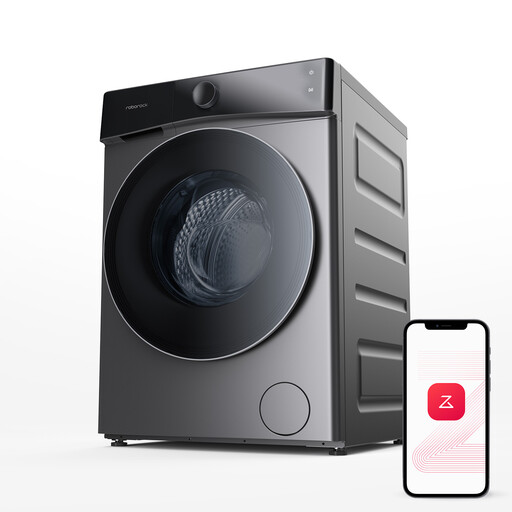 Image unavailable
Roborock Zeo Lite grey, 10/6 kg washer-dryer
This combined appliance is designed for homes with space for just one appliance. The title lists a 10 kg washing capacity and a 6 kg drying capacity, as well as 27 wash programmes and app control. Check that the app control is compatible with your devices, along with the dimensions and label figures for the cycle you want to use.
View on Joybuy
 Image unavailable
Comfee CD08EHP05W-HR, 8 kg heat-pump tumble dryer
This separate 8 kg tumble dryer could take the place of an airer if you have room for a second appliance. The title lists a class D rating. Check the dimensions, noise level and cycle durations, as well as how condensate is collected or drained away.
View on Joybuy
Frequently asked questions
Does a tumble dryer always need an outlet to the outside?
No. The European Commission says a vented tumble dryer needs an outlet to the outside, while a condenser model collects water in a tank or can drain it away. Check the connection requirements in the manual for the model you choose.
Why are washing and drying capacities different?
A washer-dryer may be able to dry less laundry than it can wash. For example, a model listed as 9/6 kg has a washing capacity of 9 kg and a drying capacity of 6 kg, so you’ll need to reduce a larger wash load before drying it. UFC-Que Choisir highlights this trade-off with combined appliances.
What should you compare on the energy label?
Compare the figures for the cycle you’ll use. For washer-dryers, the European Commission lists information including energy consumption per 100 cycles, water use per cycle, cycle duration and noise level. For tumble dryers, also check the capacity and which generation of label is used so you can compare like-for-like figures.
Does a heat-pump tumble dryer need maintenance?
Yes, depending on the maintenance requirements for the model. Check the manual for access to the filters and condensation components. For the appliances covered by its guidance, Electrolux recommends checking the condenser and its compartment at least once a month.


