
Livraison le jour même ou le lendemain

Qualité garantie

Débloquez vos offres de bienvenue: Livraison GRATUITE | Jusqu'à -80 % | 30 jours d'essai gratuits à JoyPlus
Téléchargez l'application
After sterilisation, many adult cats experience changes in their lifestyle, appetite or body shape. Choosing dry food for sterilised cats is not simply a matter of relying on a claim printed on the packaging. Recipes vary in their protein, fat and fibre content, as well as in their ingredients and packaging.
Here are the criteria to consider when choosing suitable food for a sterilised cat, based on your pet’s individual needs, without being swayed by marketing claims that can sometimes be difficult to interpret.
Claims such as “weight control”, “digestion” or “urinary health” indicate the recipe’s intended benefits, but they do not replace reading the label. A dry food described as light can still be high in calories if portions are not adapted to the cat’s activity level.
So compare the analytical constituents: protein, fat, fibre and crude ash. This information makes it easier to objectively distinguish a weight-control dry food for sterilised cats from a standard recipe for adult cats.
Grain-free dry food for sterilised cats may suit some households, particularly if you are looking for a recipe without wheat, maize or rice. However, “grain-free” does not automatically mean lower in calories, easier to digest or better accepted by every cat. Pulses, potatoes and other starches can also provide carbohydrates.
The ingredients list is therefore essential. It helps you identify the main sources of protein, as well as the ingredients used to give the dry food its structure.
A 12 kg bag may be worthwhile for a household with several cats, or for a product your pet already enjoys eating. To try a new food, it is better to start with a 300 g to 1.5 kg pack. This will help minimise waste if your companion turns its nose up at the new recipe. This precaution is particularly useful when choosing between beef, chicken, salmon or trout recipes.
Look for the words “complete pet food” and information matching your animal’s age and status. The products featured here are intended for sterilised or neutered adult cats, generally from 1 year of age. They are not suitable for kittens or pregnant or nursing queens where the label excludes them.
A complete recipe can form the basis of a sterilised cat’s diet, provided you follow the recommended quantities and take your pet’s actual activity level into account.
Protein helps maintain muscle mass, but its percentage should always be considered alongside the recipe’s overall composition. Among the products selected:
These figures are not enough to predict how well an individual cat will tolerate a recipe. They mainly provide an objective basis for comparing the different products.
Dry food contains very little water. A clean bowl, refreshed regularly, should therefore always be available. You can also occasionally include a complete wet food, such as Ultima jelly chunks in 85 g pouches, depending on your cat’s needs and habits.
The presence of additives such as ammonium chloride or DL-methionine is part of the recipe’s formulation; it does not guarantee protection against urinary problems. If your cat has difficulty urinating, has blood in its urine or suddenly changes its behaviour, consult a vet promptly.
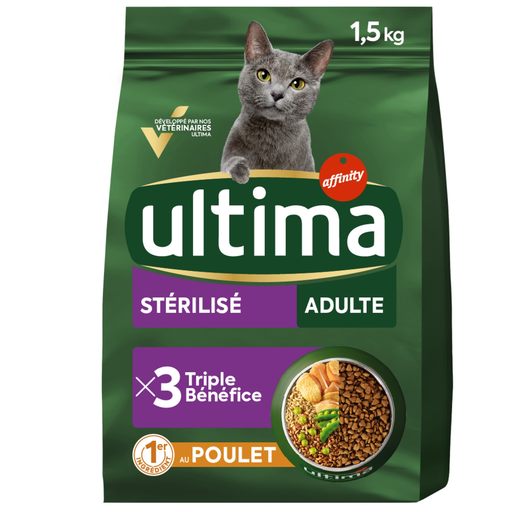
Why this product suits this profile : The 1.5 kg pack lets you try a chicken recipe without building up too much stock. The product information states that it contains 35% protein and 12% fat.
The stated nutritional values and feeding guide are clearly provided. You therefore do not have to rely solely on the word “sterilised”.
17% chicken, 4% fibre, 1,100 mg/kg taurine and a recommended transition period of 7 to 10 days.
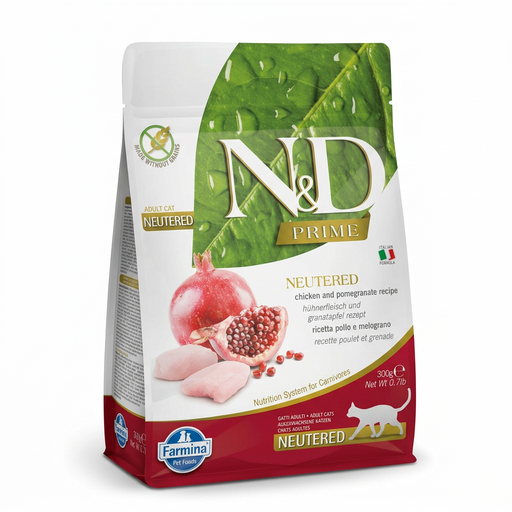
Why this product suits this profile : Its small pack size is ideal for making gradual comparisons. The product information describes a grain-free recipe based on chicken and dehydrated chicken.
The detailed ingredients list lets you check that it is grain-free, rather than assuming that premium-looking packaging guarantees better tolerance.
The product information states that it contains 46% protein, 11% fat, 5.1% fibre and 5,000 mg/kg taurine.
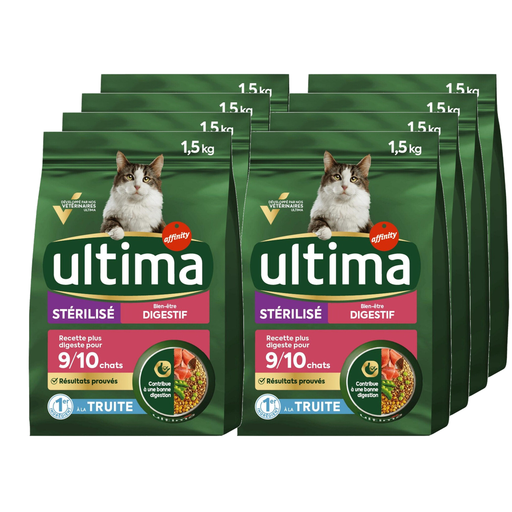
Why this product suits this profile : The large pack is intended for households that already know and trust the recipe and want to avoid having to restock too frequently.
It is best to reserve this pack size for a recipe your cat already enjoys. That way, you will not be left with a substantial amount of unwanted stock.
16% trout, 35% protein, 12.5% fat, 3% fibre and 5 g/kg ammonium chloride, as stated on the product information.
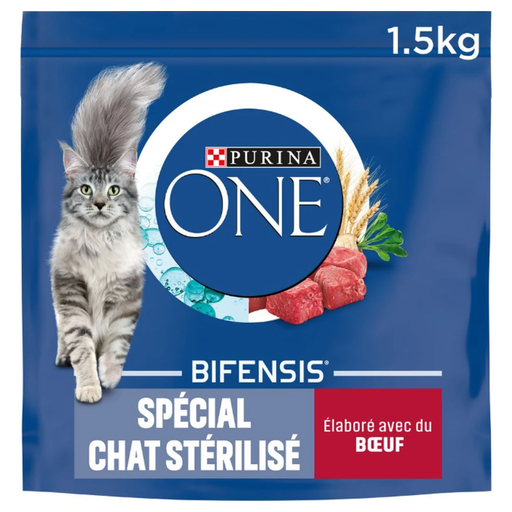
Why this product suits this profile : The 1.5 kg bag is a practical compromise for an adult cat that enjoys beef and needs a gentle transition.
The product information lists the ingredients in detail and recommends a 7-day transition, rather than an abrupt change of food.
37% protein, 13% fat, 4% fibre, 2% chicory root and heat-treated Lactobacillus bacteria, as stated on the product information.
We have put together a complete, regularly updated selection of products that meet these demanding criteria as well as European safety requirements.
The recommended portion depends on the animal’s weight, activity level, age and body condition. As a guide, some Ultima product information recommends 25 to 40 g per day for a cat weighing 2 to 3 kg, then 50 to 60 g for a cat weighing 4 to 5 kg. Start by following the table on the packaging, then adjust the amount with your vet’s help if your cat’s weight changes.
Yes, provided you take the total amount given each day into account. Jelly chunks provide more water than dry food, but they must be included when calculating the daily ration. Serve them at room temperature and refrigerate any opened portion according to the manufacturer’s instructions.
The shelf life depends on the use-by date shown and the storage conditions. Seal the bag carefully after each use and keep it somewhere cool and dry. Also check the smell and texture of the dry food, as well as your cat’s appetite. If your pet eats slowly, choosing a smaller pack can help reduce loss of freshness.