If you dry laundry often and have space for two appliances, compare separate heat pump and condenser tumble dryers by their capacity, stated energy consumption and installation requirements. If you can only install one appliance, a washer-dryer can save space, provided its drying capacity is enough for your loads: this may be lower than its washing capacity. In all cases, not needing an external vent does not mean you can skip checking the room’s ventilation and how condensate is handled in the model’s manual.
Who are these appliances for?
The space you have, how often you do laundry and the size of your loads all help determine whether a separate appliance or a washer-dryer is right for you.
Homes without an external vent
A condenser tumble dryer can avoid the need to install a duct to the outside, as Whirlpool explains for this technology. However, you’ll still need to collect or drain the water, depending on the model, and check the ventilation requirements in its manual.
Homes that dry several loads a week
If you regularly want to avoid hanging laundry up to dry, compare the usable drying capacity and stated energy consumption for equivalent cycles. Easy access to the filter and water tank also matters in everyday use; Bosch’s guide, for example, recommends cleaning the filter after every cycle.
Small homes with space for just one appliance
A washer-dryer combines both functions in one machine. However, check both capacities: Bosch, for example, lists 10.5 kg for washing but 6 kg for the wash-and-dry cycle on the WNG254ASFR.
What should you check before choosing?
First, work out whether you can install a second appliance. Then compare the load you need to dry and the room’s requirements before looking at energy consumption figures.
Heat pump tumble dryer
Worth considering: for regular drying if you have room for a separate appliance and want to compare models’ stated energy consumption.
The trade-off: you’ll need to set aside space for it and check the manual for ventilation requirements and how condensate is collected or drained.
Condenser tumble dryer
Worth considering: if you want a separate drying appliance without an external air vent.
The trade-off: no vent doesn’t mean no maintenance: the condensed water must be collected or drained, depending on the installation.
Washer-dryer
Worth considering: if you only have space for one appliance and your load fits within the stated drying capacity.
The trade-off: if you fill the machine to its washing capacity, you may need to split the load before drying.
| Factor |
What to check |
What I need |
| Installation |
Check the manual for ventilation, clearances and the model’s operating requirements. Find out how condensate is collected and which connections may be needed. |
I haven’t confirmed that I have an external air vent, so I need an appliance that’s suitable for my room—not just one advertised as ventless. |
| Drying capacity |
Compare the drying load with the size of your usual laundry loads. For a washer-dryer, check the washing and wash-and-dry capacities separately: Bosch lists 10.5 kg and 6 kg respectively for the WNG254ASFR. |
If I often fill my washing machine, I want to know whether I’ll need to take some clothes out before starting the drying cycle. |
| Energy consumption |
Compare figures for the same type of cycle and check the units. Electrolux lists 97 kWh per 100 cycles for the EW6HI5829SB; Whirlpool lists 4.72 kWh per cycle for the FFTBCM118XBFR. These figures alone don’t provide a like-for-like comparison. |
If I dry clothes often, I want to assess the energy consumption of the model and cycle I’ll use, rather than relying on the technology name alone. |
| Space and maintenance |
Measure the available space and the clearance needed in front of the door. Check access to the filter and the position of the water tank. If you’re considering direct drainage, check which connections the manual allows. |
I need to be able to open the appliance, take out the laundry and clean the filter without blocking the way or moving the machine. |
What mistakes should you avoid?
-
Assuming “no external vent” means “no installation requirements”
Whirlpool describes condenser drying as operating without an external air vent, but the water still needs to be collected or drained. The Bosch manual for the WQG2451SFR also says the installation area must be ventilated.
Before choosing, check the manual for the exact model for ventilation, clearances, the water tank and connection options.
-
Choosing a washer-dryer based only on its washing capacity
For the Bosch WNG254ASFR, Bosch lists a capacity of 10.5 kg for washing and 6 kg for the wash-and-dry cycle. So a full-capacity wash load won’t fit in a single combined cycle.
First, compare the drying capacity with the amount of laundry you plan to dry in one go.
-
Using one model’s energy consumption to judge an entire technology
Whirlpool’s stated figure of 4.72 kWh per cycle applies to the FFTBCM118XBFR. It doesn’t represent every condenser tumble dryer, or a cycle that can be directly compared with every other published figure.
Compare the figures for specific models and equivalent cycles, taking into account how often you’ll dry clothes.
-
Forgetting about access to the filter and water tank
You’ll need regular access to the filter and, on applicable appliances, the water tank. A machine that fits in its space with the door closed may still be awkward to use or maintain.
Measure the space in front of the door too, and check the manual to see how to access and maintain each component.
A guide to brands and models
These examples from product information and manuals can help you identify useful details. Their specifications won’t necessarily apply to other models from the same brand.
Bosch
Bosch’s documents help you distinguish between a washer-dryer’s capacities and the installation requirements for a specific tumble dryer.
- Bosch lists a washing capacity of 10.5 kg, a wash-and-dry capacity of 6 kg and dimensions of 848 × 598 × 590 mm for the WNG254ASFR.
- The ventilation requirement and information about the water drainage hose are in the manual for the WQG2451SFR. Check the manual for the model you’re considering.
Electrolux
The product information for the EW6HI5829SB heat pump tumble dryer details its capacity, water tank and direct drainage option.
- Electrolux lists an 8 kg capacity, 97 kWh per 100 cycles, a 5.32 L water tank and an optional compatible direct drainage kit for this model.
- Electrolux gives an operating temperature range of 5 °C to 35 °C for this model; these details don’t apply to the entire range.
Whirlpool
Whirlpool offers condenser tumble dryers and washer-dryers, which suit different space requirements.
- The brand lists an 8 kg capacity and 4.72 kWh per cycle for the FFTBCM118XBFR tumble dryer. It lists washing and drying capacities of 9 kg and 7 kg respectively for the FFWDB976258BCVFR.
- These capacity and energy consumption figures apply to the models mentioned. Check the product information for the appliance you’re considering.
Beko
Beko’s product information for the DCB816W condenser tumble dryer explains how water can be handled on this model.
- Beko lists an 8 kg capacity, a bottom-mounted water tank, a full-tank indicator and a direct drainage hose for the DCB816W.
- These features are specific to the model mentioned. Check the features and connection instructions for the tumble dryer you choose.
Appliances to consider on Joybuy
This selection includes washer-dryers for homes with space for one appliance and separate heat pump or condenser tumble dryers. Their inclusion here doesn’t replace the need to check each model’s capacity and installation instructions.
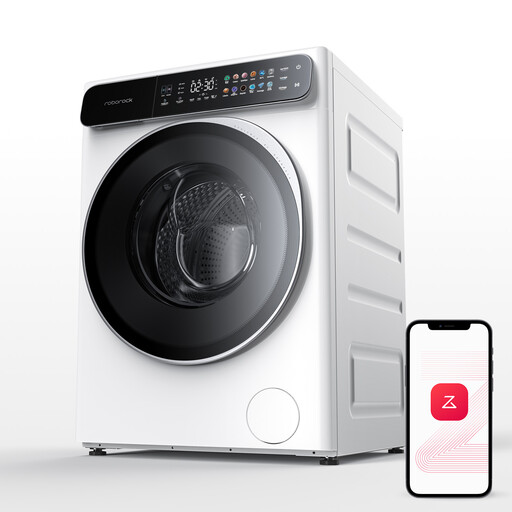 Image unavailable
Roborock Zeo One White, 10 kg/6 kg washer-dryer
If you have space for just one appliance to wash and dry your clothes, compare your usual load with the stated drying capacity of 6 kg, compared with 10 kg for washing. The model name mentions Zeo-Cycle, LintClear and automatic dosing; check its dimensions and installation requirements for your room.
View on Joybuy
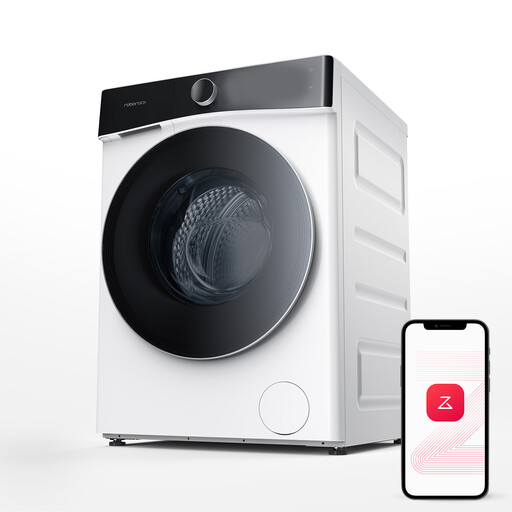 Image unavailable
Roborock Zeo Lite, 10 kg/6 kg washer-dryer
This washer-dryer has a stated capacity of 10 kg for washing and 6 kg for drying, so a full-capacity wash load will need to be split before drying. Its name mentions Zeo-Cycle, app control and LintClear; check the space it needs and the required connections.
View on Joybuy
 Image unavailable
Samsung WD10HG6U34BEU3, 10 kg/6 kg washer-dryer
The stated drying capacity of 6 kg, compared with 10 kg for washing, is the figure to compare with the size of your laundry loads if you want to dry everything without taking clothes out. The model name indicates a D energy rating; to see how it would work in your home, also check the connections and energy consumption of the combined cycle.
View on Joybuy
 Image unavailable
Hotpoint CHD84MWBSEE, 8 kg heat pump tumble dryer
This separate tumble dryer has a stated capacity of 8 kg and a C energy rating. If you’re planning to install it in a flat, check the manual for its dimensions, room ventilation and condensate handling, as well as the requirements for any optional drainage connection.
View on Joybuy
 Image unavailable
Electrolux EDH1018CD GentleCare, 8 kg condenser tumble dryer
The stated capacity of 8 kg makes it easy to compare this separate appliance with your usual load. The name mentions OptiSense and propane refrigerant; before choosing it for a room without an external vent, confirm the drainage requirements and clearances in the manual.
View on Joybuy
Frequently asked questions
Does a condenser tumble dryer need a vent to the outside?
Not with the internal condensation system described by Whirlpool: it works without an external air vent. However, you must follow the model’s ventilation requirements in the manual and make provision for collecting or draining the condensate.
Do you need to empty a water tank on a tumble dryer without an external vent?
Yes, if the condensate is collected in a tank and no direct drainage connection is fitted. For the EW6HI5829SB, Electrolux lists a 5.32 L tank and an optional compatible direct drainage kit; check the installation permitted for your chosen model.
Can you dry a whole load in a washer-dryer?
Only if the load is within its drying capacity, which may be lower than its washing capacity. Bosch, for example, lists 10.5 kg for washing but 6 kg for the wash-and-dry cycle on the WNG254ASFR. A full-capacity wash load needs to be split before drying.
What maintenance does a condenser tumble dryer need?
Clean the filter and, if the water is collected in a tank, empty it. Bosch’s guide recommends cleaning the filter after every cycle and also provides instructions for periodic cleaning; follow the guidance in your own model’s manual.


