How should you choose for your home?
Start by working out whether you can install a tumble dryer, whether you need to keep using a clothes airer and how the room can be ventilated. Then compare the practical requirements of each appliance.
Condenser tumble dryer
Consider this if: you regularly dry full loads and have a suitable space, but no outlet to the outside. The European Commission explains that condensed water can be collected in a tank or drained away, depending on the model.
Things to consider: you’ll need to allow for its size, noise level, energy consumption, water drainage and the maintenance specified in the instructions.
Dehumidifier and clothes airer
Consider this if: you want to keep using a clothes airer and can fit an appliance in the room, with a tank to empty or suitable drainage.
Things to consider: the appliance uses electricity and collects water, but it does not provide the ventilation recommended by ADEME.
Washing machine spin cycle
Consider this: before drying, particularly if you’re already replacing your washing machine or can adapt its programme to suit your fabrics.
Things to consider: laundry on an airer still releases moisture. The maximum spin speed may also be reduced if the load is unbalanced, as Bosch notes for the WAN2827TFR.
Air-drying without an appliance
Consider this if: you can move your laundry to a larger, well-ventilated room or one with an extractor, in line with ADEME’s recommendations.
Limitation: in the small, poorly ventilated room considered here, air-drying alone leaves moisture from the laundry in the indoor air.
| Priority |
What to check |
What you need |
| Moisture and ventilation |
Work out where your laundry will dry and how the air will be refreshed there. For a condenser tumble dryer or dehumidifier, check where the collected water will go. |
I need to dry laundry indoors without treating an appliance’s water collection as a replacement for the ventilation or extraction recommended by ADEME. |
| Space and noise |
Measure the height, width and depth, as well as access routes and door clearance. Compare noise levels measured under the same conditions: Bosch lists the WQA23300FR tumble dryer as measuring 842 × 598 × 613 mm and producing 62 dB(A). |
In a small home, the appliance needs to fit without obstructing access, and its noise level must be acceptable where it will be used. |
| Capacity and spin speed |
Choose a tumble dryer capacity that suits your usual loads. For a washing machine, check which programmes suit your fabrics and when the maximum spin speed might be reduced. |
I want to handle my usual laundry loads without choosing based solely on the stated capacity or maximum spin speed. |
| Electricity |
For comparable tumble dryers, check energy consumption and rating using the same generation of energy label. The European Commission says the A–G scale for tumble dryers was revised from 1 July 2025. |
If the appliance will be used regularly, I want to compare its stated energy consumption under like-for-like conditions rather than rely on a general promise of savings. |
| Water and maintenance |
Check the tank capacity, full-tank alert and any drainage options. Read the instructions to find out how to access the filters and how much clearance is needed around the appliance. |
Before buying, I’d like to know whether I can empty the tank, maintain the appliance and follow its everyday installation requirements. |
What can you learn from the brands?
These specifications apply to the models mentioned, not to every appliance from each brand.
Bosch
Bosch’s product specifications let you compare a tumble dryer’s dimensions and noise level with the spin options available on a washing machine.
- The WQA23300FR heat pump tumble dryer is listed as having an 8 kg capacity, measuring 842 × 598 × 613 mm and producing 62 dB(A).
- For the WAN2827TFR washing machine, Bosch says the maximum speed of 1 400 rpm may be reduced if the load is unbalanced.
Electrolux
The YW6HI841DC offers another point of comparison among 8 kg heat pump tumble dryers.
- Electrolux lists this model with a D energy rating and a noise level of 64 dB.
- Check its dimensions and installation instructions before deciding whether it will fit your chosen space. This model’s specifications don’t apply to the entire range.
Rowenta
The DH5260F0 dehumidifier is an example of the features to check if you plan to keep drying laundry indoors on an airer.
- For this model, Rowenta lists a 3 L tank, a 1 m hose and a dehumidification capacity of 16 L/day under the manufacturer’s specified conditions.
- This stated capacity won’t tell you how much water the appliance will collect in your room, and it doesn’t replace ventilation.
Dehumidifiers to consider on Joybuy
These appliances suit the option of keeping a clothes airer while collecting some of the moisture in the air. Compare their tanks, drainage options and clearance requirements. They don’t replace the ventilation recommended by ADEME.
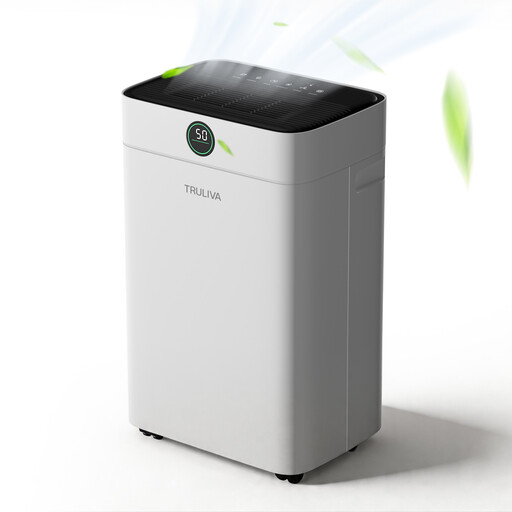 Image unavailable
TRULIVA 25 L/day, 2.8 L tank
Worth considering if you’re keeping a clothes airer and can manage the water collected. The product name mentions a laundry mode, continuous drainage hose and R290 refrigerant. Its stated capacity of 25 L/day doesn’t predict how it will perform in your room. Check the dimensions, noise level in laundry mode and the clearance required in the instructions.
View on Joybuy
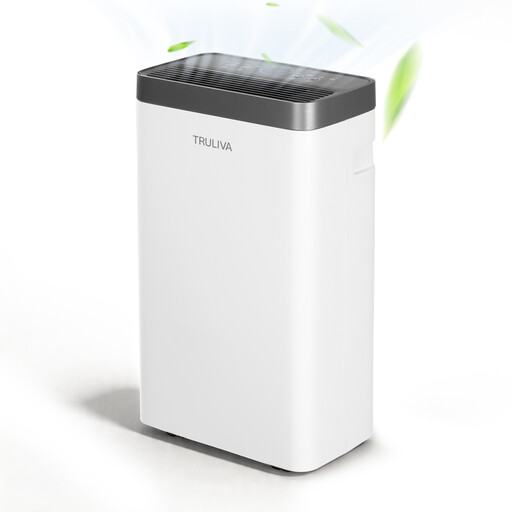 Image unavailable
TRULIVA AP10-2012EE, for around 32 m²
This model is presented as a companion for indoor air-drying, with a laundry mode and continuous drainage mentioned in its name. Its stated coverage is around 32 m². Compare this with the actual size of your room and check the space it needs, its noise level and how to empty it before choosing.
View on Joybuy
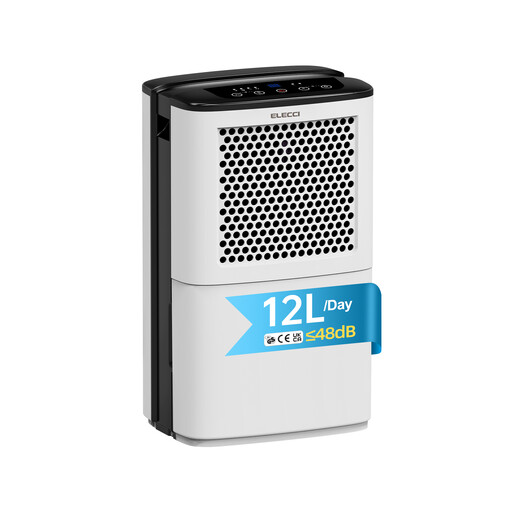 Image unavailable
ELECCI 12 L/day, 3.8 L tank
Worth a look if you want the option of emptying a tank or using a drainage hose near your clothes airer. The product name lists 12 L/day, suitability for rooms of 25 m² and R290 refrigerant. These figures don’t determine how much water it will collect in your home. Check the dimensions and clearance requirements in the instructions.
View on Joybuy
Image unavailable
ELECCI 16 L/day, 3.1 L tank
This model gives you the option of emptying a tank or using continuous drainage near your clothes airer. Its name lists 16 L/day, four modes, suitability for rooms of 32 m² and R290 refrigerant. The amount of water it collects depends on the conditions of use. Make sure the space you choose meets the clearance requirements in the instructions.
View on Joybuy
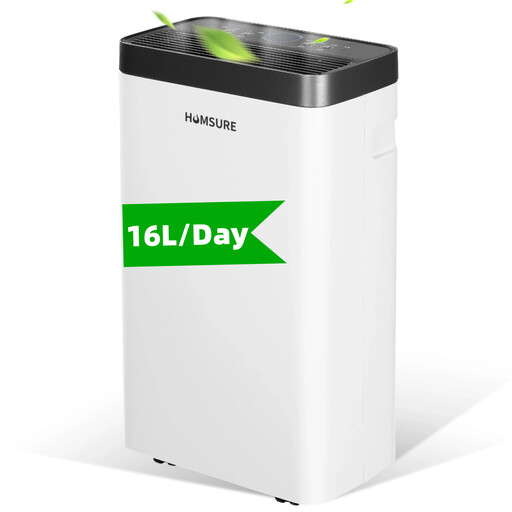 Image unavailable
HUMSURE 16 L/day, 1.4 L tank
Compare this model if you expect to move the appliance around or use its hose instead of emptying the tank regularly. The product name lists suitability for rooms of 25 m², R290 refrigerant and a 24-hour timer. Confirm the number of modes before buying, as the information provided for this model differs on that point. Also check the noise level in laundry mode and the installation clearances.
View on Joybuy
Frequently asked questions
Does a dehumidifier replace ventilation when drying laundry?
No. It can collect some of the moisture in the air while you use a clothes airer, but it doesn’t refresh the air in place of ventilation or an extractor. For indoor laundry drying, ADEME recommends a larger room that is well ventilated or has an extractor.
Which tumble dryer should you choose if you don’t have an outlet to the outside?
A condenser tumble dryer doesn’t need an external air vent. According to the European Commission, the water is collected in a tank or directed to a drain. However, check the space available, possible connections and the installation instructions for the model you’re considering.
What should you compare on a tumble dryer’s product page for a small home?
Start by checking the dimensions, capacity, noise level, energy consumption and how the condensed water is collected. Compare energy ratings from the same generation of label: the European Commission rescaled the tumble dryer label from 1 July 2025. Also check the instructions for clearance and maintenance requirements.
Do you need to empty a dehumidifier tank while drying laundry?
You’ll need to empty the tank if you’re using it instead of continuous drainage. How often depends on how much water is collected and the tank’s capacity. The Rowenta DH5260F0, for example, is listed by the manufacturer with a 3 L tank and a 1 m hose. Check the connection options and tank access on the model you choose.


