Cyclists planning long rides
You’re looking for dry pasta to keep in the cupboard and use for a meal before a ride or between training sessions. What you eat in that meal and the fuel you consume on the bike are two separate decisions.


To plan a meal around a bike ride, choose your dry pasta by comparing the carbohydrates, protein and ingredients listed per 100 g, rather than automatically opting for an enriched recipe. Classic pasta is a good choice if you simply want a base for your meal. An enriched recipe may suit a different priority, provided you check its ingredients and allergens. Either way, a pasta meal is no substitute for the fuel you plan to take on your ride.
You’re looking for dry pasta to keep in the cupboard and use for a meal before a ride or between training sessions. What you eat in that meal and the fuel you consume on the bike are two separate decisions.
You’d like to compare classic pasta with recipes containing added protein. Panzani states that its Les Protéinées range provides 20 g of protein per serving, while Barilla lists 20 g per 100 g for its Penne Rigate Protein+. Check the units before comparing the figures.
Before stocking up, check for wheat or egg and look for any ‘may contain’ warnings. Recipes can vary between products, even within the same brand.
When choosing pasta for meals around your cycling, start by thinking about the role you want it to play on your plate. Then compare the nutritional values on the same basis and check the ingredients on the pack you plan to buy.
| Criterion | What to check | Who is it for? |
|---|---|---|
| Carbohydrates in your meal | Compare the carbohydrate content per 100 g of dry pasta, and distinguish between the amount weighed before cooking and the weight of the cooked serving. | Before a ride or between training sessions, I want to choose the carbohydrate base for my meal without confusing it with what I’ll take on the bike. Around 42% of consumers prioritise this. |
| Protein in your meal | Check the protein per 100 g and see whether any other figure given refers to a serving. | After cycling, I want to make a meal using a recipe with added protein, while still having pasta as the base. Around 25% of consumers put this first. |
| Ingredients and allergens | Read the ingredients list, check the highlighted allergens and, if necessary, look for any ‘may contain’ warnings. | Before buying several packs, I need to know whether the recipe contains ingredients I avoid. Around 17% of consumers put this check at the top of their list. |
| What to keep in the cupboard | Check the pack size, cooking instructions, date marking and storage instructions. | I want to be able to make a meal from what I keep in the cupboard, without choosing a pack size I’ll struggle to use. This is a priority for around 16% of consumers. |
Dry pasta is for preparing a meal before or after cycling. For prolonged exercise, the carbohydrates you consume during your ride need to be planned separately, as explained in a Journal of Sports Sciences article on training and competition.
Plan separately what you can take with you and eat during your ride.
The products covered here use ingredients including pea and wheat protein, or egg white. Some also warn that they may contain traces of soya and mustard.
Check the ingredients and allergen information on every pack, even if you’re already familiar with the brand.
The water absorbed during cooking changes the weight on your plate. So you can’t directly compare a quantity of cooked pasta with a value given per 100 g of dry pasta.
To compare two packs, use the same 100 g basis. When preparing a meal, check whether the stated serving refers to dry or cooked pasta.
A best-before date relates to how long a product keeps its quality; it doesn’t mean the same as a use-by date.
Read the exact wording on the packaging and follow the storage instructions given.
Classic Macaroni and the Les Protéinées range give you two types of dry pasta to consider when putting together a meal around your cycling.
Penne Rigate Protein+ is a short pasta option to consider if you want to compare a recipe combining durum wheat semolina and pea protein.
Carrefour Sensation twists, labelled high protein, are another example of the different recipes available in pasta with added protein.
For a meal around your ride, this selection features dry rice macaroni to cook at home. Check the nutritional information and ingredients on the packaging before comparing it with the wheat pasta mentioned above.
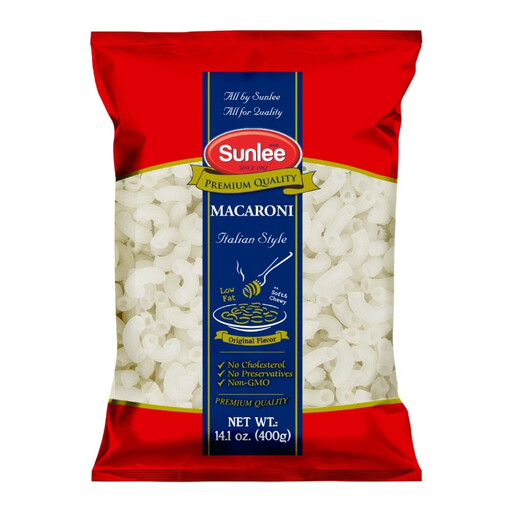 Image unavailable
Rice macaroni to cook for a meal before or after a ride. The pack contains 400 g. Check the packaging for cooking instructions, ingredients and the basis used for the nutritional values before comparing it with other pasta.
It’s mainly intended for meals before or after your ride, not as a replacement for what you consume during exercise. For a long ride, plan separately what you can take with you and are happy to eat.
Compare the nutritional information per 100 g, then check the ingredients and pack size. The French Directorate-General for Competition, Consumer Affairs and Fraud Control states that nutritional information is given per 100 g or 100 ml, depending on the product. Also check whether a stated serving refers to dry or cooked pasta.
Not necessarily: it depends on the role you want the pasta to play in your meal. If you’re comparing an enriched recipe with classic pasta, check the protein, carbohydrates and ingredients on the same basis, rather than focusing only on the claim highlighted on the pack.
Check the ingredients and allergen information for each product. The Carrefour Sensation twists described here contain wheat and egg white, and may contain traces of soya and mustard. A recipe made with pea or wheat protein has a different composition.
Start by checking the exact wording on the pack: a best-before date relates to how long the product keeps its quality and shouldn’t be confused with a use-by date. For a product past its best-before date, take the condition of the packaging and the stated storage instructions into account. Don’t apply this distinction to a product with a use-by date.