What should you prioritise?
Clothes airer and good ventilation
Consider this: if a spacious, well-ventilated room, or one with an extractor, means you can continue drying clothes indoors.
Bear in mind: your laundry will take up space while it dries and add moisture to the room, as ADEME points out.
Dehumidifier with a laundry mode
Consider this: if you want to keep using your clothes airer and remove moisture from the room while it’s in use.
Bear in mind: the appliance needs to run while you dry your clothes. Its laundry mode is no substitute for ventilation or investigating the cause of persistent damp.
Heat pump tumble dryer
Consider this: if you regularly have full loads to dry and have a suitable place for the appliance.
Bear in mind: it’s a fixed appliance that uses electricity for each cycle. Check the programme duration too, before counting on your laundry being ready sooner.
To choose, start with your main constraint: keeping your clothes airer, drying regular loads, finding space for an appliance or getting to the bottom of persistent damp. The percentages below show the consumers who put each need first.
| Concern |
What to check |
Consumers concerned |
| Moisture from indoor drying |
Check the size of the room and its ventilation or extraction. If you’re considering a dehumidifier, look at the conditions used to measure its stated capacity and how to empty the tank. |
I want to keep using my clothes airer without letting condensation build up while my laundry dries. Around 29 % of consumers would put moisture control first. |
| Frequent full loads |
For a tumble dryer, compare its capacity, full-load programme duration and kWh per cycle on the exact model’s specification sheet. |
When loads of washing keep coming, I want to get my laundry dry without setting aside a room for an airer for too long. Having loads ready when needed would be the priority for around 29 % of consumers. |
| Space and noise |
Measure the space and access routes; check the stated noise level for the model and setting you’re considering. |
If the appliance is going in a room close to living areas, I need to be able to install it without too much disruption. Around 21 % of consumers would put space and noise first. |
| Persistent damp |
Check whether damp patches remain when you’re not doing laundry, and look at the condition of windows and ventilation. Get persistent marks on walls assessed. |
If the damp comes back even when no laundry is drying indoors, I want to find out what’s causing it before buying an appliance. Around 21 % of consumers would put this check first. |
Appliances to suit the way you dry your laundry
The tumble dryer below is an option if you’re looking for an appliance to handle regular loads. The four dehumidifiers are for households that want to keep drying clothes indoors and consider removing moisture from the air while their laundry dries. In both cases, check the space and ventilation in the room. If the damp persists, you’ll also need to find out what’s causing it.
 Image unavailable
Hotpoint CHD84MWBSEE, 8 kg heat pump tumble dryer
Worth considering if you regularly dry full loads without using an airer. Its stated capacity is 8 kg. Check its dimensions, programme duration and kWh per cycle to see whether it suits your space and how you plan to use it.
View on Joybuy
 Image unavailable
VINO 20L Smart, WiFi dehumidifier with a 2.5 L tank
Worth considering if you’re keeping your clothes airer and want to use the Dry mode while your laundry dries. The product title also lists Auto and Sleep modes. Check the conditions used to determine its stated extraction capacity, as well as the noise level for the mode you plan to use.
View on Joybuy
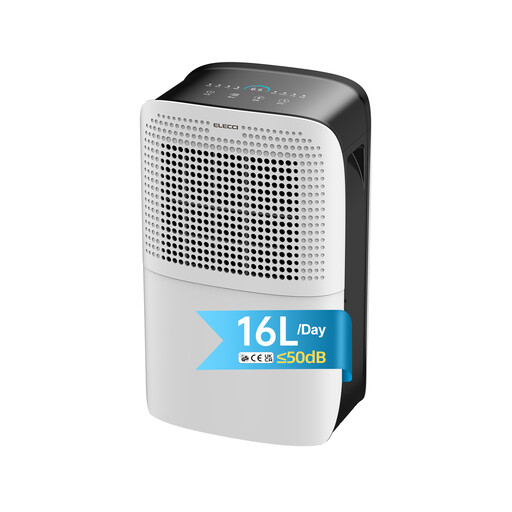 Image unavailable
ELECCI 16L/D, dehumidifier with a 3.1 L tank
Worth considering to help with indoor drying if you have space to use the tank or the drainage hose listed in the title. Check the conditions behind the stated capacity, as well as the noise and energy consumption for the length of time you expect to use it.
View on Joybuy
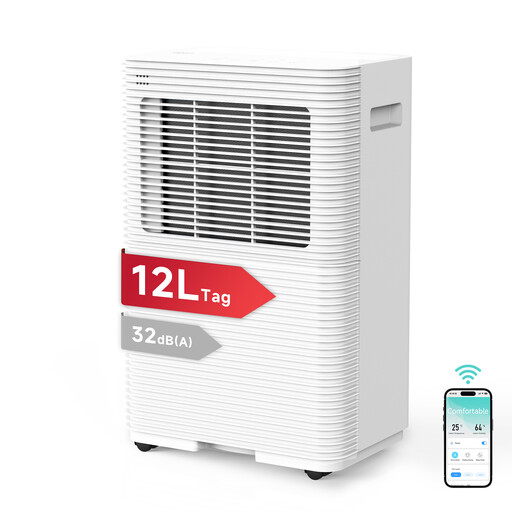 Image unavailable
VINO 12L Smart, WiFi dehumidifier with a 1.8 L tank
Worth considering if you’re keeping your clothes airer and would like a Dry mode. The title also lists Auto and Sleep modes. Before choosing where to put it, check which mode the stated noise level applies to and the conditions used to measure its extraction capacity.
View on Joybuy
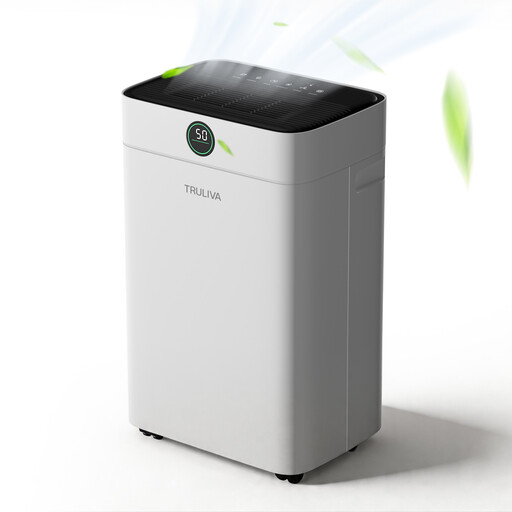 Image unavailable
TRULIVA 25L/Day, dehumidifier with laundry mode
Worth considering if you want to keep drying clothes on an airer with the help of a dedicated laundry mode. The title lists a 2.8 L tank and a continuous drainage hose. The 25 L/day figure alone can’t tell you how quickly your laundry will dry in your room. Check the noise level for the location you have in mind too.
View on Joybuy
Frequently asked questions
Is a dehumidifier enough if the walls stay damp?
No. It can reduce moisture in the air, but it won’t identify or fix what’s making the walls damp. France Rénov’ recommends getting persistent damp patches assessed to find their cause, including possible issues with the walls, water ingress and ventilation.
Which figures should you compare before buying a tumble dryer?
Compare the capacity, dimensions, kWh per cycle, programme duration at rated capacity and the noise level of the exact model. UFC-Que Choisir highlights the benefit of matching the tumble dryer’s capacity to that of your washing machine. Looking at energy use and cycle duration together also helps you avoid choosing based on the energy rating alone.
Where should you dry clothes indoors?
Choose a spacious, well-ventilated room or one with suitable extraction, in line with the recommendations reported by ADEME. If condensation persists, check that the ventilation is working properly rather than simply moving the airer.
What should you do if the ventilation seems faulty in a rented home?
Keep a record of the damp you’ve noticed and arrange to have the ventilation and the cause of the problem checked. ANIL points out that, under the requirements for decent housing in France, opening and ventilation systems must be in good condition and allow moisture to be removed as required for normal occupancy. Buying an appliance is no substitute for having this checked.


