
Livraison le jour même ou le lendemain

Qualité garantie

Débloquez vos offres de bienvenue: Livraison GRATUITE | Jusqu'à -80 % | 30 jours d'essai gratuits à JoyPlus
Téléchargez l'application
After sterilisation or neutering, the metabolism of many adult cats slows down and their energy requirements decrease. For an indoor cat, a portion that is too generous or an unsuitable recipe can therefore lead to weight gain. However, choosing the right dry food for sterilised cats is not simply a matter of relying on the wording highlighted on the packaging.
Claims such as “weight control”, “digestion” or “urinary balance” indicate the focus of the recipe, but they are by no means a medical guarantee. To find out what you are actually buying, check the ingredients list and analytical constituents, particularly the levels of protein, fat, fibre and minerals.
A large bag of dry food for sterilised cats can be worthwhile in a household with several cats, or when your cat already enjoys the recipe. Once opened, however, the food gradually loses its freshness. It should therefore be stored in an airtight container, away from moisture.
For a single, fussy cat, a 1.4 to 1.5 kg bag will generally allow you to test the food before moving on to a 7.5 or 12 kg pack.
Grain-free dry food for sterilised cats generally replaces wheat or maize with peas, potato or other sources of starch. This choice may reflect a preference or a particular dietary requirement, but it is not enough to assess the food’s overall balance. Energy density, the amount served and each cat’s individual tolerance remain the most important factors.
Look for the wording complete food for adult sterilised or neutered cats. This means that the product is designed to form the basis of a cat’s daily diet, when used according to the manufacturer’s recommendations. Kittens, pregnant queens and nursing queens have different nutritional needs, so a formula for adult sterilised cats is not automatically suitable for them.
The ingredients list is presented from the most abundant to the least abundant. For example, a chicken dry food for sterilised cats may list 15 or 17% chicken, while a fish-based formula may state 15% salmon or 16% trout. These percentages should be considered alongside the total protein content rather than assessed in isolation.
Analytical constituents provide a useful starting point for objective comparison:
As a guide, the products selected contain between 30 and 46% protein and around 11 to 16% fat. These figures alone are not enough to determine the ideal portion for a particular cat.
Weigh portions using scales rather than filling the bowl “by eye”. Manufacturers often provide a range based on the cat’s weight. For example, Ultima recommends 25 to 40 g per day for a 2 to 3 kg cat, with the amount then increasing gradually as the cat’s weight rises.
Any change of food for a sterilised cat should be made gradually, over approximately 7 to 10 days. Mix the old food with the new one, slowly increasing the proportion of the latter. A bowl of clean, fresh water should always be available, especially when a neutered cat is fed mainly on dry food.
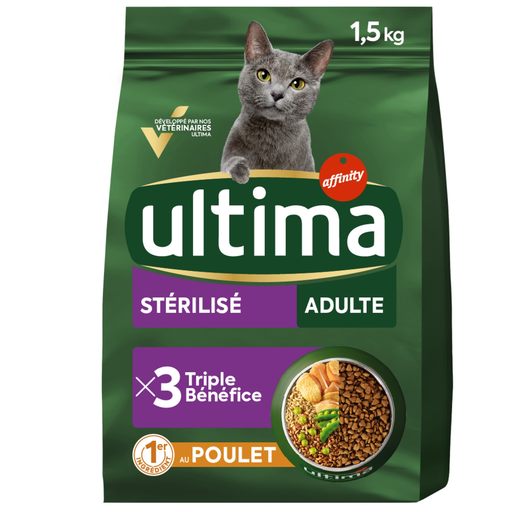
Why this choice suits this profile : At 1.5 kg, this bag lets you try a chicken recipe without a significant outlay or taking up too much cupboard space.
Its product details state 35% protein, 12% fat and a recommended transition period of 7 to 10 days. You can therefore look beyond a simple general claim displayed on the packaging.
17% chicken, a stated 1 100 mg/kg of taurine, plus pea and beetroot fibre in the recipe.
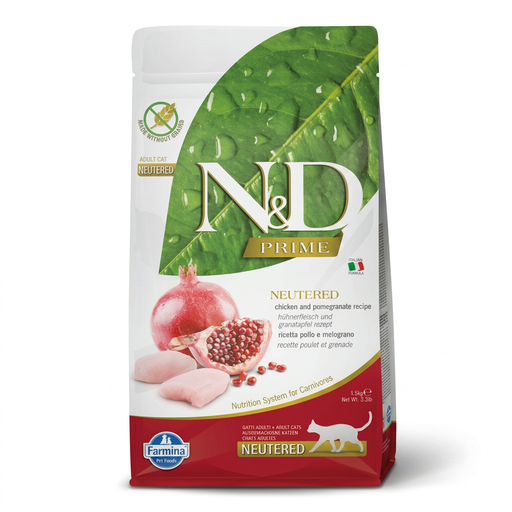
Why this choice suits this profile : According to the product details, this formula is aimed at owners looking for a grain-free recipe with a high proportion of animal protein.
The product details explain that it contains no cereals and provide its analytical constituents. This makes it easier to compare the recipe with a formula containing wheat or maize.
38% protein, 16% fat and a 1.5 kg bag to help preserve the food’s freshness.
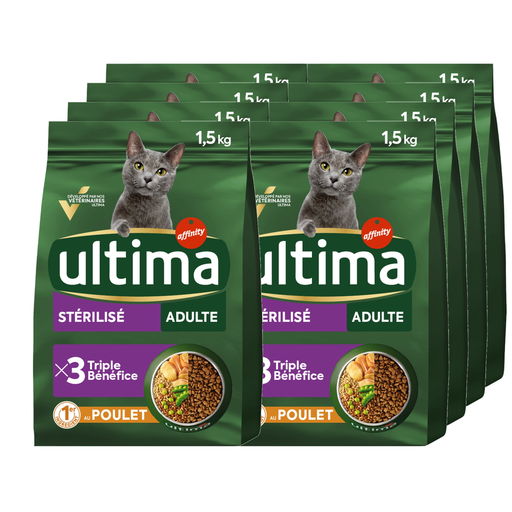
Why this choice suits this profile : The large bag is suitable for households that regularly use weight-control dry food and want to order less frequently.
This economical size should be reserved for a recipe your cat already enjoys eating. The bag should also be kept in an airtight container, in line with the storage recommendations.
17% chicken, 35% protein and 12% fat, as stated in the product details.
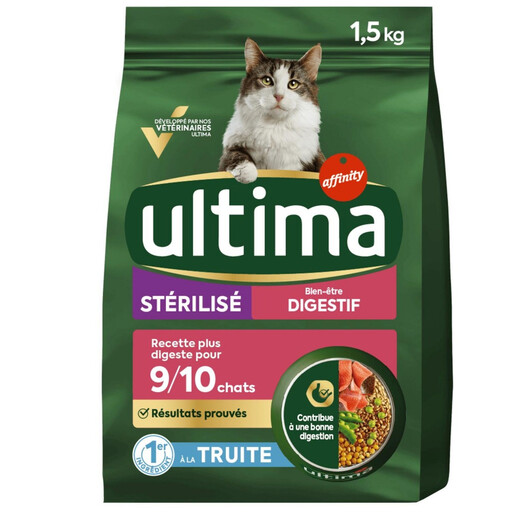
Why this choice suits this profile : This trout recipe is intended for owners who want to try a different protein source and a formula containing fibre.
The ingredients include beetroot pulp, pea fibre and cellulose. This provides more information than a simple promise of easy digestion.
16% trout, 35% protein, 12.5% fat and a stated 1 400 mg/kg of taurine.
We have gathered the products that meet these strict selection criteria and European safety regulations in a complete list updated in real time.
The portion depends on your cat’s weight, activity level, age, energy expenditure and any treats they may receive. Start by following the guidance on the bag, weigh the portion, then regularly monitor your cat’s weight and body shape. An adjustment may be needed for a cat that lives mainly indoors.
Food labelled “complete” can form the basis of a cat’s daily diet. Fresh water must nevertheless always be available. Wet food may also be offered, depending on your cat’s habits, their total daily intake and your vet’s advice.
You may consider changing the food gradually if your cat gains weight, regularly refuses meals or suffers from persistent digestive problems. If your cat has a history of urinary issues or a diagnosed illness, ask a vet for advice before choosing a specialist diet.