
Livraison le jour même ou le lendemain

Qualité garantie

Débloquez vos offres de bienvenue: Livraison GRATUITE | Jusqu'à -80 % | 30 jours d'essai gratuits à JoyPlus
Téléchargez l'application
After neutering, your cat's lifestyle and energy needs can change. For an adult cat that mainly lives indoors, choosing the right dry food isn't just about taste or brand. The ingredients, portion size and packaging all have a real impact on your pet's health, their comfort and your day-to-day budget.
Some marketing claims sound reassuring, but they don't always give you enough information to properly compare products.
To feed a neutered or spayed cat, check that the packaging clearly states it's a complete food intended for adult cats. A recipe for kittens, pregnant females or animals with a diagnosed medical condition won't necessarily meet the same needs.
The products available target different profiles: neutered indoor cats, less active animals, or cats that need a more strictly controlled portion. Your cat's age, weight, activity level and body condition should guide your choice.
The analytical constituents let you compare dry foods for adult neutered cats on a more concrete basis. For example, the PURINA ONE Bifensis beef recipe has 37% crude protein and 13% fat, while ULTIMA chicken dry food has 35% protein and 12% fat.
These figures alone aren't enough to rank products. They mainly help you check whether the recipe seems consistent with your cat's activity level. Fibre also deserves your attention if you're looking for dry food for neutered cats that supports weight control or regular digestion.
After neutering, an over-generous bowl can quickly lead to weight gain. Use a kitchen scale or a measuring cup rather than estimating the amount by eye. The feeding guidelines on the bag are a starting point, to be adjusted according to your cat's activity and any changes in their weight.
For dry food aimed at the urinary health of neutered cats, pay particular attention to the information about minerals and declared additives. Some ULTIMA products mention the presence of ammonium chloride at 5 g/kg. This describes the product's composition: it is not a treatment and does not replace veterinary advice if your cat shows signs of urinary issues.
The products below are presented based on their ingredients, formats and the information on their product pages. Any new diet should be introduced gradually, usually over 7 to 10 days, following the recommendations on the packaging.
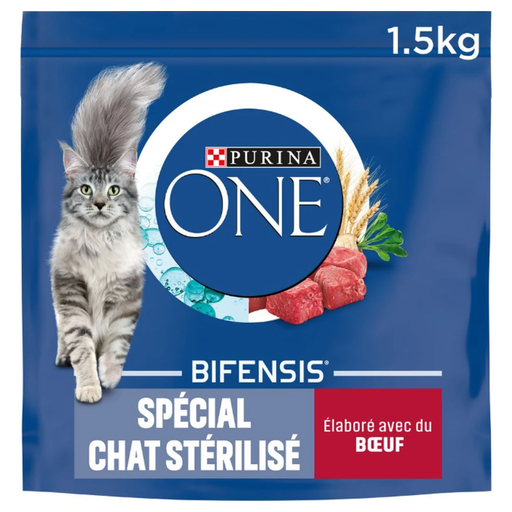
Why this suits this profile: The 1.5 kg bag lets you try a beef recipe without committing a large budget or cluttering up your cupboard.
This smaller pack size reduces the risk of leaving a bag open for weeks if your cat changes their diet or eats less.
The product page states 37% protein, 13% fat, chicory and heat-treated Lactobacillus bacteria.
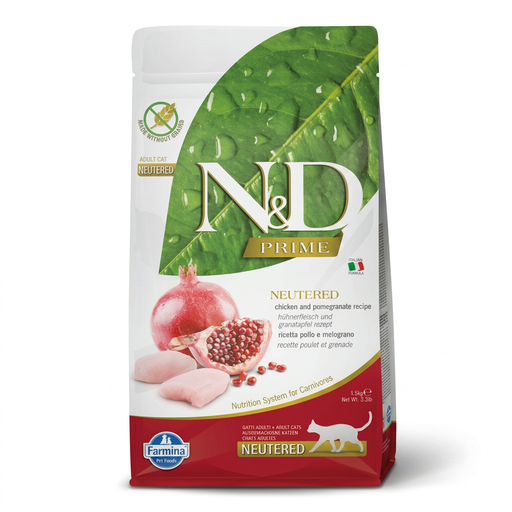
Why this suits this profile: This recipe targets buyers looking for a grain-free formula with a high proportion of animal protein.
The product page details the ingredients instead of just relying on the "grain-free" claim: chicken, egg, herring, chickpeas and nutritional additives are all clearly listed.
The product page states 38% protein, 16% fat, a 1.5 kg bag and added taurine at 1,500 mg/kg.
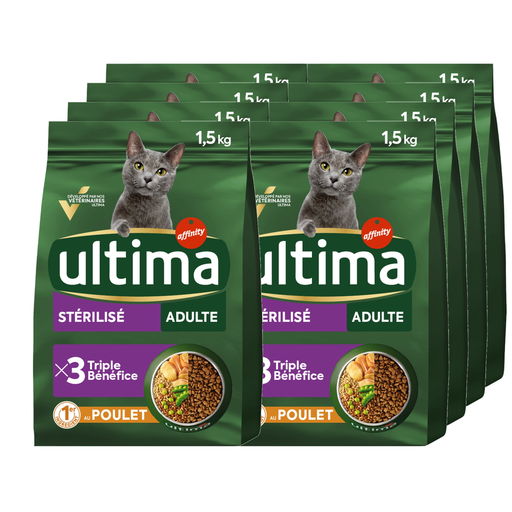
Why this suits this profile: The large format suits a household with several neutered cats or heavy consumption, provided you have suitable storage.
The feeding guide is given by weight, from 25 to 80 g per day according to the product page. This stops you from guessing the portion from a large bag.
The product page states 35% protein, 12% fat, 17% chicken and fibre sources such as beet pulp.
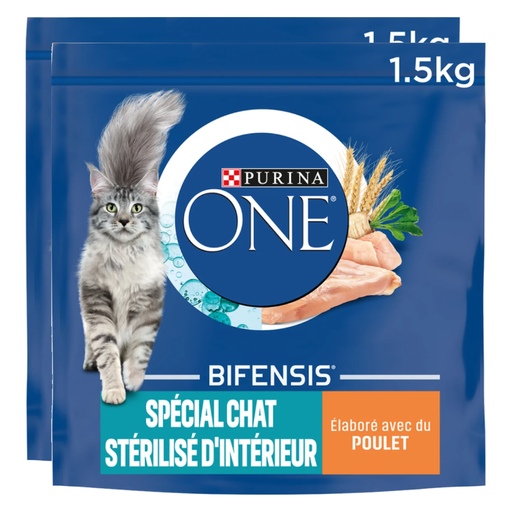
Why this suits this profile: The recipe is presented as suitable for neutered adult cats that mainly live indoors. The 3 kg format is split across two bags.
The double packaging means you don't expose the whole supply to air as soon as you open it, unlike a single large bag.
The product page states 37% protein, 13% fat, 5.5% fibre and a recipe containing 15% chicken.
We've put together a comprehensive selection, updated in real time, of products that meet these exacting criteria and European food safety regulations.
The amount depends on your cat's weight, age, activity level and the energy density of the recipe. The manufacturer's recommendations are a good starting point. If your cat continues to gain weight despite sticking to the recommended portion, ask a professional for advice on adjusting their diet.
Yes, as long as it's intended for an adult cat and the portion is adjusted to their activity level. Recipes for neutered indoor cats may contain more fibre or offer specific feeding guidelines, but the label is still the best basis for comparison.
The flavour can affect how much your cat likes it, but it's not enough to judge the quality of a recipe. Instead, compare the full ingredients list, the analytical constituents, the pack size and the feeding recommendations. Chicken, salmon or beef dry food can all be suitable, depending on your cat's preferences and tolerance.