
Livraison le jour même ou le lendemain

Qualité garantie

Débloquez vos offres de bienvenue: Livraison GRATUITE | Jusqu'à -80 % | 30 jours d'essai gratuits à JoyPlus
Téléchargez l'application
Choosing dry food for adult cats isn’t just about comparing the price per kilo or picking your pet’s favourite flavour. With recipes for neutered cats, formulas for indoor cats and promises about digestion, it’s not always easy to know what to look for on the shelves.
Three common pitfalls keep cropping up:
For everyday feeding, look for the phrase “complete food for adult cats”. This means the product is designed to meet your cat’s nutritional needs when fed according to the manufacturer’s guidelines.
Also check the target age: some products are designed for cats aged 1 to 7 years, while others suit adult cats from 1 year old. Even if it’s good quality, dry kitten food shouldn’t be chosen by default for an adult cat.
The ingredients list gives you a first idea of the recipe, but it’s not enough to judge a food. Also look at the analytical constituents shown on the product page or packaging:
As a guide, some chicken dry foods for adult cats in this selection show 34% protein and 14% fat. Meanwhile, a Friskies indoor cat recipe shows 30% protein and 11% fat. These figures alone don’t create a ranking – they mainly help you compare profiles and adjust the ration to your pet’s activity level.
The percentage of the featured protein also deserves a close look. A Purina One salmon recipe, for example, states 17% salmon in its composition, while the Friskies Indoor recipe shows 3% salmon in total. A difference that reminds you it’s better to trust the label than the picture on the packet or the flavour name.
A 3 kg bag of dry cat food often suits households that want to keep the food fresh and control their usage better. Packs containing two 1.5 kg bags are particularly handy, as they reduce the time each bag stays open.
A 12 kg bag of dry cat food can be a good option for a multi-cat household or for a cat that eats the same recipe regularly. However, it must be carefully resealed and stored in a cool, dry place away from light. A clean, airtight container can also help protect the kibble from moisture.
If you’re changing your cat’s food, plan a gradual transition over about 7 to 10 days, following the manufacturer’s instructions. A sudden change can put your cat off the new kibble or cause digestive discomfort.
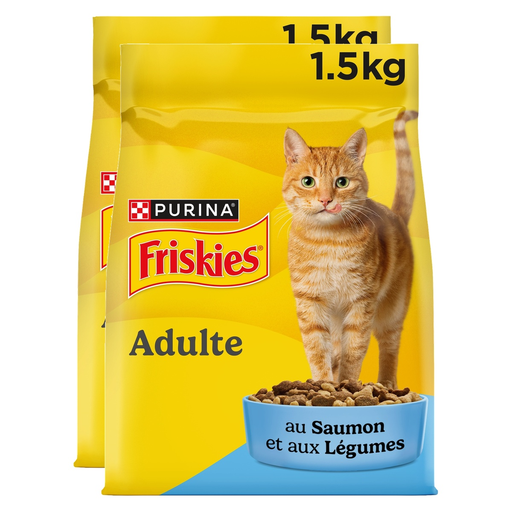
Why this suits this profile: This complete recipe for adult cats is ideal for households looking for a 3 kg bag and a formula designed for cats that live mainly indoors.
The product page states the total salmon content and the kibble composition. This stops you mistaking the advertised flavour for a recipe made entirely of fish.
A 3 kg bag, 30% crude protein and no artificial colours, flavours or preservatives, according to the product information.
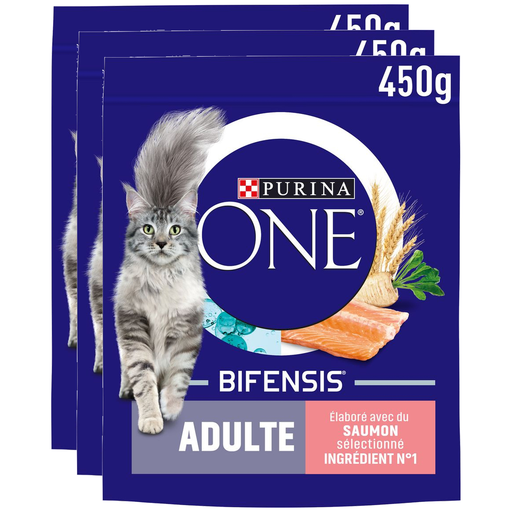
Why this suits this profile: Its small bag size lets you try a salmon recipe before committing to a larger volume, especially with an adult cat that has strong preferences.
The composition shows 17% salmon and clearly lists the other protein sources, rather than implying the flavour matches an unspecified proportion.
34% crude protein, 14% fat and 0.5% omega-3 fatty acids, according to the available information.
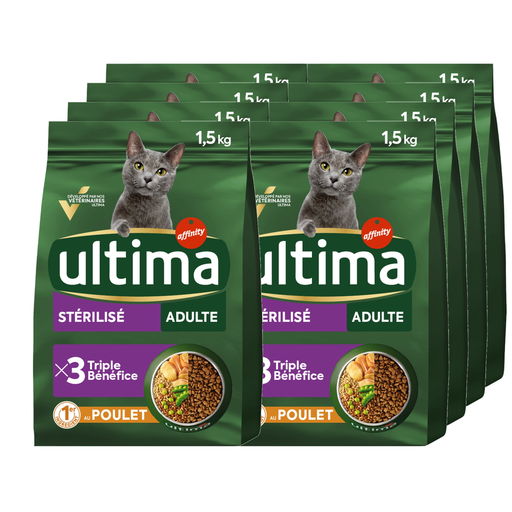
Why this suits this profile: This large bag is designed for households with several neutered cats or for those who regularly buy the same dry food.
The product page provides indicative rations based on weight and reminds you that the amount should be adjusted according to your pet’s activity and physical condition.
A 12 kg bag, 35% crude protein, 12% fat and 17% chicken stated in the composition.
We’ve put together a full, real-time updated selection of products that meet these exacting standards and European safety regulations.
The ration depends on your cat’s weight, age, activity level, whether it’s neutered and its physical condition. Use the table on the bag as a starting point, then keep an eye on its weight and body shape. Your cat should always have access to clean, fresh water.
A recipe for neutered cats is formulated for a specific profile. An unneutered indoor cat may have different needs depending on its activity and physical condition. Compare the analytical constituents and ask your vet for advice if your pet has a sensitive stomach or particular dietary requirements.
Follow the date on the packaging and the manufacturer’s instructions. Reseal the bag after each use, avoid warm or damp places and choose a size your cat can finish within a reasonable time. If you’re changing recipes, keep the old food until the gradual transition is complete.