What matters for your buffet?
First decide whether you want to spread something on foods you’ve already planned to serve, or put out a ready-to-eat treat. The format then determines how you serve it and divide up the portions.
Spread in a large jar
Choose this if: you’re planning to serve bread, crêpes or other foods to spread it on, and want to portion out the spread yourself.
Bear in mind: you’ll need serving utensils and space to serve it; a jar doesn’t provide individual portions.
Filled biscuits
Choose this if: you’re looking for a sweet treat that’s ready to put on the table, rather than a spread.
The trade-off: the biscuit and the amount of filling in each one are already set.
Individually wrapped wafers
Choose this if: you want to transport and hand out the pieces one by one.
The trade-off: you’ll need to deal with the individual wrappers after serving.
| Criterion |
What to check |
Who is it for? |
| Serving and portions |
Product type, number of pieces and packaging. |
I want to be able to hand out treats as soon as guests arrive, without preparing a spread station. Around 25% of consumers would make quick serving and portion counting their top priority. |
| Getting the quantity right |
Net weight of the jar or pack, and how much food you’re planning to spread it on. |
If the buffet includes several foods to spread it on, I want a quantity that suits the number of guests, rather than automatically choosing a large jar. Getting the quantity right would be the main concern for around 25% of consumers. |
| Recipe and allergens |
Allergenic ingredients highlighted on the exact pack, and any warnings such as “may contain”. |
If a guest tells me they need to avoid an allergen, I need to check the recipe of the format I’ll be serving, rather than relying on the details for another chocolate and hazelnut product. This would come first for around 31% of consumers. |
| Nutritional information |
Nutritional values per 100 g and for the portion actually served, whether or not Nutri-Score is displayed. |
When there are already several sweet products on the buffet, I want to compare their nutritional information on a like-for-like basis. Around 19% of consumers would make this their top criterion when choosing. |
Brands to know when comparing formats
These examples help you tell the different product types apart, but a brand name is no substitute for checking the exact product you choose.
Nutella
The brand offers spread in jars, as well as the B-ready and Nutella Biscuits ranges.
- Nutella says B-ready pieces are individually wrapped; the brand also offers Biscuits in several pack sizes.
- A wafer or biscuit can’t replace a jar when you want to serve spread with foods to put it on. Check the allergens for each product.
Carrefour Classic' et Carrefour Bio
Ranges of spreads to consider if you’re looking for a jar rather than a ready-to-serve product.
- Carrefour lists, among others, a 750 g jar of Classic' hazelnut spread.
- Check the ingredients and allergens for the exact product, especially when comparing the Classic' and Bio ranges.
Bonne Maman
A range of hazelnut and cocoa spreads to compare with other products in jars.
- Products listed by Carrefour and Auchan include jars in several sizes.
- Check the recipe and allergens on the product you choose; information for one product doesn’t apply to the whole range.
Rigoni di Asiago / Nocciolata
A range of cocoa and hazelnut spreads sold in jars.
- Nocciolata products listed by Auchan include different sizes.
- Read the label on the jar you choose to check its ingredients, allergens and nutritional information.
Tartichoc®
A hazelnut spread sold by ALDI France.
- As a hazelnut spread, it sits among the jarred products to serve with foods to spread it on.
- Check the product information in store before comparing it with a specific product from another brand.
Three formats available on Joybuy
For a sweet touch at an evening drinks party, these products offer three ways to serve: hand out wafers, put out a spread, or set biscuits on the table.
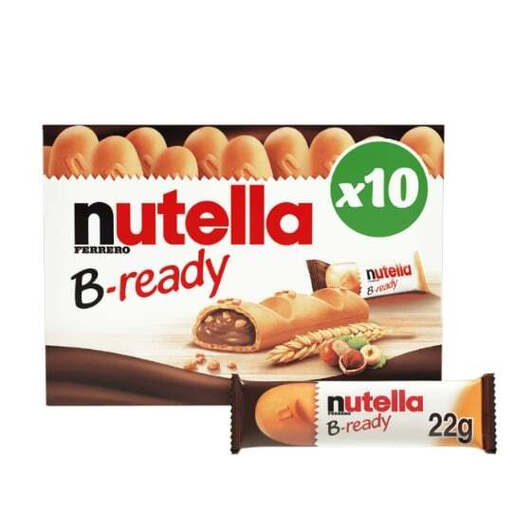 Image unavailable
Nutella B-ready t10, 220 g
A handy option to hand out rather than spread if you want to avoid preparing things to spread it on and setting out utensils. This pack is labelled t10 and has a total weight of 220 g; Nutella describes B-ready pieces as individually wrapped. Check the allergens on the pack before serving.
View on Joybuy
 Image unavailable
Nutella hazelnut and cocoa spread, 1 kg
This jar suits a buffet where you’re planning to serve foods to spread it on, with utensils for serving. It has a net weight of 1 kg; choose a quantity to match what you plan to spread it on, and check the allergens on the packaging.
View on Joybuy
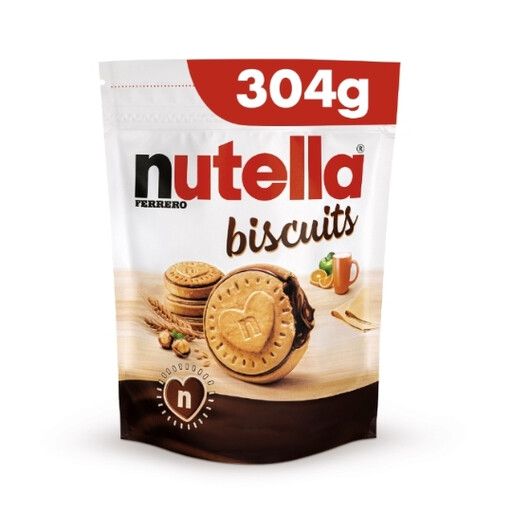 Image unavailable
Nutella Biscuits, 304 g
These biscuits are a good choice if you’d rather put a ready-to-eat product on the table than serve a spread. The pack weighs 304 g; check the number of biscuits, how they’re packaged and the allergens on the pack before deciding how to share them among your guests.
View on Joybuy
Frequently asked questions
Is Nutri-Score compulsory on spreads sold in France?
No. According to the ministry responsible for consumer affairs, displaying it is optional in France, unlike the nutritional declaration required for pre-packed foods. If the logo isn’t shown, compare the values per 100 g and also read the ingredients and allergen information.
Can a large jar replace a sharing pack?
Yes, if you’re planning to serve foods to spread it on, along with serving utensils. A jar doesn’t serve the same purpose as biscuits or wafers you can hand out. For those, check the number of pieces and the packaging of the pack you choose.
How can I check for allergens before serving?
Ask which allergens need to be avoided, then check the label on the exact pack, including any “may contain” warnings. The DGCCRF says allergenic ingredients must be highlighted; the recipe may differ between a jar, a wafer and a biscuit.
How should I store the jar before the drinks party?
Follow the instructions on the jar you’ve bought. The product information for a jar of Nutella published by Auchan says to store it in a cool, dry place, away from heat, and not to refrigerate it; don’t assume the same instructions apply to other recipes.
How should I compare two products in different sizes?
Read the nutritional information per 100 g: the DGCCRF explains that this makes it easier to compare pre-packed foods. Then consider the portion you plan to serve, without assuming that this comparison alone means a product will suit every guest.


