People keeping an eye on added sugars
You’re looking for a drinking yoghurt to enjoy regularly and want to tell naturally occurring sugars apart from added sugars. How much you drink matters just as much as the figures given per 100 g.


When choosing a drinking yoghurt as part of your weight management approach, compare the sugars and energy per 100 g, then consider how much you plan to serve. ‘No added sugars’ and ‘0% fat’ refer to different things. If you prefer a bottle to share, check its ingredients and the storage instructions for after opening, too.
You’re looking for a drinking yoghurt to enjoy regularly and want to tell naturally occurring sugars apart from added sugars. How much you drink matters just as much as the figures given per 100 g.
You’re considering a milk-based drink as a snack, perhaps around your exercise routine. The protein content per bottle doesn’t tell you everything about the serving, so check its energy and carbohydrate content as well.
You’d like to serve several people from the same bottle. A larger size can make shopping easier to plan, but everyone may pour a different amount, so the storage instructions for after opening matter too.
First, choose the product category that suits your needs — a drinking yoghurt or another milk-based drink. Then compare products on a like-for-like basis, both per 100 g and for the serving you’ll actually pour.
| Criteria | What to check | Who is it for? |
|---|---|---|
| Sugars and serving size | Compare the ‘of which sugars’ line and the energy per 100 g, then check the figures for the amount you’ll serve. Read the ingredients to tell added sugars and sweeteners apart. | If I drink drinking yoghurt regularly, I want to know what’s in my glass rather than relying on a claim on the front of the pack; around 36% of consumers put sugars and energy intake first. |
| Protein-rich snack | Check the protein, carbohydrate and energy per bottle. Make sure you know whether the product is a drinking yoghurt or another type of dairy product. | For a snack around exercise, I may prioritise protein while still taking the whole bottle into account; around 29% of consumers share this priority. |
| Shareable format | Check the net quantity, the ingredients of the flavour you’ve chosen and the instructions for after opening. If you’re looking for one 3 L bottle, make sure it’s not a multipack of smaller bottles. | In a large household, I want a practical bottle to share while keeping track of how much each person is served; around 21% of consumers make family-size packs their main priority. |
| Ingredients and label | Read the ingredients list, any highlighted allergens, the nutritional information and the date shown on the packaging. | If a particular ingredient or nutrition claim determines my choice, I need to be able to check the exact recipe; ingredients are the top priority for around 14% of consumers. |
The ‘0%’ on a product may refer to its fat content, not its sugars. Carrefour France’s product information for Actimel plain 0% fat, for example, describes a sweet taste achieved using sweeteners.
Check what the claim refers to, then look at the ‘of which sugars’ line and the ingredients list.
E.Leclerc’s 850 g Eco+ strawberry bottle contains sugar in its recipe. The container size tells you neither what’s in the product nor how much goes into each glass.
Compare the figures per 100 g for the flavour you’ve chosen, and pour a measured amount rather than drinking straight from the bottle.
According to information from HiPRO Danone France, its strawberry and raspberry drinking dairy speciality provides 25 g of protein, 180 kcal and 16.5 g of carbohydrate per 300 g serving. It’s a different product category from a standard drinking yoghurt.
If you choose this kind of snack, compare the whole serving and check the product description.
The DGCCRF advises that a use-by date must not be exceeded. For a bottle you plan to share, the date on the pack doesn’t replace the storage instructions for once it’s been opened.
Choose an amount that suits your household’s needs and follow the storage instructions on the bottle.
These brands offer examples of different formats and recipes. Always compare the specific product rather than assuming what’s in it from the brand name.
Actimel offers plain drinking yoghurts with different claims to compare, while HiPRO is a drinking dairy speciality.
The Yop range includes an 825 g bottle listed by Yoplait France, designed for sharing rather than as individually packaged portions.
The sweetened plain product listed by Carrefour France is a fermented milk drink. Its product description is worth distinguishing from that of a drinking yoghurt.
E.Leclerc lists an 850 g bottle of Eco+ strawberry drinking yoghurt.
Auchan France lists sweetened plain drinking yoghurt in a pack of six 100 g bottles — a different format from one large family-size bottle.
This selection features a milk-based drink in individual bottles for a snack. It’s a milkshake, not a drinking yoghurt or one large bottle for sharing.
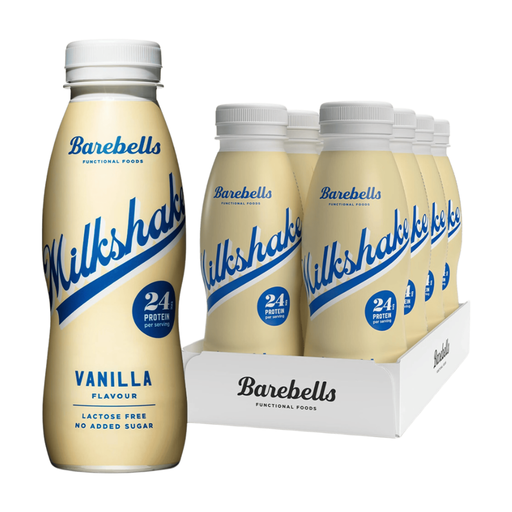 Image unavailable
An individual-bottle option if you’re after a milk-based snack rather than a drinking yoghurt. The pack contains eight 330 ml bottles, not one large bottle to share.
No. Dairy products can contain naturally occurring sugars, including lactose, as explained by Anses. To find out how much sugar is in the recipe you’ve chosen, check the ‘of which sugars’ line in the nutritional information.
No. First check what the ‘0%’ refers to. Carrefour France’s product information for Actimel plain 0% fat also mentions sweeteners, so compare the sugars, energy and ingredients against your priorities.
Start with the net quantity, ingredients, allergens and nutritional values per 100 g, then check the date and storage instructions. If you specifically want 3 L in a single bottle, check the container’s volume: the total volume of a multipack isn’t suitable for the same purpose.
Follow the product’s storage instructions for after opening as well. The DGCCRF advises that a use-by date must not be exceeded; if the bottle has been opened, also check the storage conditions and time limit shown on its packaging.