Households preparing several portions
If you’re sharing a large bottle between several breakfasts or snacks, check that the quantity matches the portions you’re planning, and check its use-by date and the storage instructions after opening.


To prepare several snacks in advance, choose a larger bottle if you can finish it within its use-by date and follow the storage instructions after opening. Individual bottles are better for ready-to-go portions. If you’re looking for a different recipe, compare kefir drinks and protein milk drinks separately, and don’t assume that “matured” or “aged” is an established feature of drinking yoghurt.
If you’re sharing a large bottle between several breakfasts or snacks, check that the quantity matches the portions you’re planning, and check its use-by date and the storage instructions after opening.
Individual bottles save you from having to divide a larger bottle yourself. Check the storage instructions for each product, especially if a portion will be out of the fridge.
Look beyond the flavour on the bottle and compare sugars, sweeteners, fat, protein and the ingredients used for fermentation.
If you’re planning several servings, start by working out how much you’ll actually use and how it needs to be stored. Then choose the pack size and recipe that suit those portions.
Worth considering: when you’ll be serving several portions at home. E.Leclerc, for example, lists Déli'max drinking yoghurts in 850 g bottles.
Bear in mind: check the use-by date and the instructions for storing your chosen bottle after opening, to avoid leftovers going to waste.
Worth considering: when everyone needs a separate portion, without having to decant a large bottle.
Bear in mind: this pack format gives you less flexibility to adjust portion sizes. Check the storage instructions for each product.
Worth considering: if you’d like to compare a fermented drink that’s different from flavoured drinking yoghurt. Carrefour’s listing for Activia Plain Kefir includes kefir yeasts and cultures in the ingredients.
Bear in mind: compare the flavour, ingredients, serving size and storage requirements, rather than assuming kefir will replace drinking yoghurt in all your snacks.
Worth considering: if protein per serving is your main point of comparison. HiPRO advertises 25 g per serving for the drinks featured on its website.
Bear in mind: this is a different category from drinking yoghurt. Check the ingredients, pack size and storage instructions.
| Criteria | What to check | Who it matters to |
|---|---|---|
| Quantity and use-by date | Enough for the portions you’re planning; use-by date and instructions for storage after opening. | If I’m sharing a large bottle over several days, I want to avoid having any left past its use-by date. Around 45% of consumers would put managing quantities and use-by dates first. |
| Individual portions | Volume per bottle and storage instructions for the product you’ve chosen. | For snacks to take with me, I’d rather have separate bottles than fill my own containers. Around 33% of consumers would prioritise this convenience. |
| Ingredients | Ingredients list and nutritional information, especially sugars and protein per serving. | If I’m comparing drinking yoghurt, kefir and another milk drink, I want to know what each recipe contains. Around 22% of consumers would put ingredients first. |
A larger bottle is only practical if you can finish it within its use-by date and follow the storage instructions after opening.
Work out how many portions you’ll need before you buy, then check the date and guidance on the bottle.
On the Actimel plain 0% product featured by Auchan, “0%” refers to fat. The ingredients also include dextrose and sweeteners.
Check the “of which sugars” line in the nutritional information separately from the ingredients list.
Yoplait says its 180 g Yop fruit drink can be kept out of the fridge for up to 8 hours, whereas Auchan’s listing for Actimel plain 0% 12 × 100 g specifies storage between +1 °C and +6 °C.
Follow the instructions for the product you’ve bought, not those for another bottle.
On its own, this word doesn’t tell you the recipe, flavour or storage requirements of a drinking yoghurt.
If you’re looking for a different fermented flavour, compare the ingredients and taste of plain drinking yoghurts and kefir drinks rather than assuming what they’ll be like.
Fermented dairy drinks in small bottles, often available in multipacks.
Fruit-flavoured drinking yoghurts, including a Yop multipack of 6 × 180 g bottles.
A vanilla drinking yoghurt available in a multipack of 6 × 180 g bottles, according to Carrefour’s listing.
A range of drinking yoghurts, including 850 g bottles listed by E.Leclerc.
This protein milkshake in individual bottles is an option to consider for planned snacks. It’s neither a drinking yoghurt nor a kefir, so only compare it with those products if you’re also considering this type of drink.
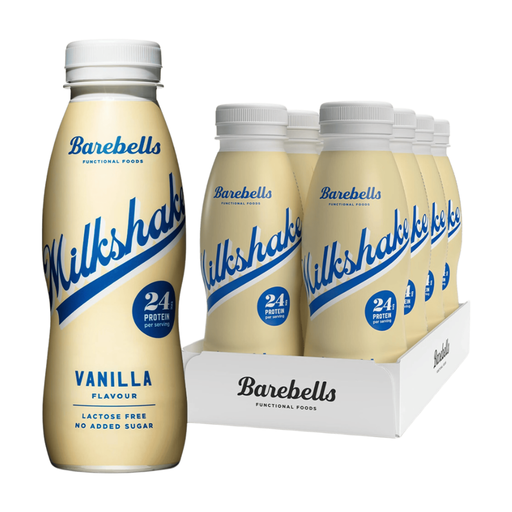 Image unavailable
Worth considering for individual snacks if you’re after a milkshake rather than a drinking yoghurt. The pack contains 8 × 330 ml bottles. Check the use-by date and storage instructions on the packaging before planning to drink them over several days.
Yes, as long as each portion is consumed within the product’s use-by date and in line with its storage instructions. The French Ministry of the Economy reminds consumers that a use-by date is a strict deadline: don’t plan to have a portion after the “use by” date.
It depends on the product and its storage instructions. Yoplait says its 180 g Yop fruit drink can be kept out of the fridge for up to 8 hours, whereas Auchan’s listing for Actimel plain 0% 12 × 100 g specifies storage between +1 °C and +6 °C. Check the packaging of the bottle you’re taking with you.
No. On the Actimel plain 0% product featured by Auchan, “0%” refers to fat, while the ingredients include dextrose and sweeteners. Check the nutritional information for sugars and the ingredients list for sweeteners.
No. Santé publique France says that displaying Nutri-Score is voluntary. If it appears on the products you’re comparing, consider it alongside the ingredients and nutritional information. When planning portions, also check the pack size, use-by date and storage instructions.