When choosing a drinking yoghurt while keeping an eye on your carbohydrate intake, compare the carbohydrates and sugars in the amount you’ll actually drink, then check the ingredients list. The pack size or a ‘0%’ claim isn’t enough. A six-pack makes it easy to keep track of each bottle, while a large bottle means measuring out every serving. A protein drink is a different category, so compare its exact recipe too.
Who are these formats suited to?
People tracking carbohydrates per serving
You want to know how many carbohydrates are in the bottle or glass you’ll drink, not just the figure per 100 g or 100 ml. The French National Health Insurance Fund advises relating nutritional information to the amount consumed.
Households sharing a large bottle
You’re buying for several people and want to distinguish the size of the container from the amount served to each person. Measuring each glass makes it easier to apply the label values to every serving.
People comparing ready-to-drink protein options
You’re also considering a drinkable skyr or a protein milk drink. Check the carbohydrates, ingredients and storage instructions for the specific product you choose.
What should you check before choosing?
First compare the values per 100 g or 100 ml, then work them out for the bottle or glass you’ll actually drink. The format, recipe and storage instructions can then help you choose the options that suit your needs.
| Criteria | What to check | Who it matters to |
|---|
| Carbohydrates per serving |
Carbohydrates and sugars per 100 g or 100 ml, then for the amount you’ll actually drink. |
If I drink the whole bottle, I want to know the carbohydrates in that bottle, not in a standard reference amount. Around 36% of consumers would put this calculation first. |
| Pack size and serving |
The amount in each small bottle or, for a larger container, the amount poured into each glass. |
In a household sharing a bottle, I’d rather be able to measure out how much each person pours. Around 29% of consumers would prioritise portion control. |
| Protein recipe |
Protein, carbohydrates and sugars per serving, as well as the ingredients list for the exact product. |
If I’m looking for a protein-rich drink, I also want to compare its recipe with that of a drinking yoghurt. Around 21% of consumers would prioritise this type of drink. |
| Storage |
The instructions on the packaging, especially for transport and after opening. |
If I’m taking a drink out with me, I need to know how long it can stay out of the fridge. Around 14% of consumers would put storage first. |
Mistakes to avoid
-
Assuming a six-pack means the recipe is suitable
Individual bottles make it easier to identify a serving, but they don’t tell you what it contains. Carrefour, for example, lists 7.1% sugar among the ingredients of its Sensation vanilla drinking yoghurt in a 6 × 180 g pack.
Compare the carbohydrates and sugars in the whole bottle, as well as the values per 100 g.
-
Confusing a large container with a serving
A 825 g Yop bottle, for example, can be divided into several servings. The nutritional value per 100 g doesn’t tell you on its own what’s in your glass.
Decide how much you’ll serve before calculating the corresponding carbohydrates and sugars.
-
Relying only on protein or fat claims
A claim about one nutrient doesn’t tell you everything about the recipe. According to HiPRO Danone France, its UHT Café-Caramel dairy drink contains 25 g of protein and 17 g of carbohydrates per 330 ml serving.
Also check the ‘carbohydrates’ and ‘of which sugars’ lines, then read the ingredients for your chosen flavour.
-
Planning for a 3-litre container without checking what’s actually sold
For a large household, the bottle’s actual size determines how many servings it can provide and how you can divide them up.
Check the weight or volume of the product you’ve chosen, its use-by date and its storage instructions before planning the portions.
Brands to compare
Danone
The brand features in the drinking yoghurt category with Actimel and also offers drinkable dairy specialities under the HiPRO brand.
- According to HiPRO Danone France, the UHT Café-Caramel product contains 25 g of protein per 330 ml serving.
- The same serving contains 17 g of carbohydrates; these figures don’t apply to other Danone or Actimel recipes.
Yoplait
Yoplait offers products including Yop in a large 825 g format and a drinkable Skyr range.
- The large format lets you serve several glasses and measure the amount in each one.
- Yoplait says its drinkable Skyr can be kept out of the fridge for up to four hours; after that, it must be thrown away. Compare the carbohydrates and sugars for each flavour.
Carrefour
Carrefour offers products including Sensation vanilla drinking yoghurt in a pack of six 180 g bottles.
- Each bottle is an easy-to-identify unit in the pack.
- Carrefour lists 7.1% sugar among the ingredients for this product. Check the carbohydrates and sugars separately in its nutritional information.
E.Leclerc / Marque Repère
The retailer offers products including Déli’max drinking yoghurt in an 850 g format and single-serve protein drinks.
- These formats suit different ways of serving or taking a drink with you.
- Check the carbohydrates, sugars, ingredients and allergens on the specific product you plan to buy.
Auchan
The retailer’s range includes Auchan vanilla-flavoured drinking yoghurt in a pack of six 180 g bottles.
- The packaging clearly states the amount in each bottle.
- The number of bottles doesn’t replace comparing the nutritional information for the recipe you’ve chosen.
A protein drink option on Joybuy
This is a ready-to-drink protein milkshake, not a drinking yoghurt. It may be worth comparing if you’re also considering this other category: check its recipe and how much you’ll drink before choosing.
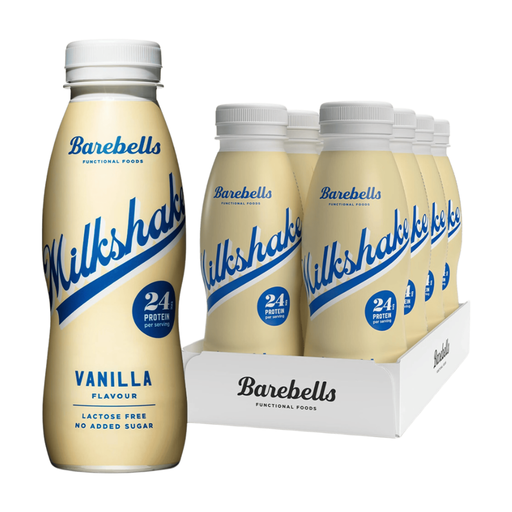 Image unavailable
Barebells High Protein Milkshake Vanilla Flavour, 330 ml (pack of 8)
Worth comparing if you’re looking for a protein drink rather than a drinking yoghurt. The pack contains eight 330 ml bottles. Check the packaging for the carbohydrates, sugars and ingredients in the amount you’ll drink.
View on Joybuy
Frequently asked questions
Is Nutri-Score enough to compare drinking yoghurts when I’m tracking carbohydrates?
No. Also check the carbohydrates, sugars, ingredients and the amount you’ll drink. Nutri-Score is calculated per 100 g or 100 ml, according to Manger Bouger; on its own, it doesn’t tell you the values for your bottle or glass.
How should I use the nutritional information for a large bottle?
Apply the carbohydrates and sugars listed per 100 g or 100 ml to the amount you pour into your glass. The French National Health Insurance Fund recommends taking the amount actually consumed into account: an 825 g bottle shared between people isn’t a single serving.
Does a ‘0%’ claim or high protein content mean I don’t need to check the carbohydrates?
No. These claims don’t tell you how many carbohydrates are in the recipe. According to HiPRO Danone France, its UHT Café-Caramel drink contains 25 g of protein and 17 g of carbohydrates per 330 ml serving. Always check the values for the product and flavour you choose.
How long can Yoplait drinkable Skyr stay out of the fridge?
Yoplait says its drinkable Skyr can stay out of the fridge for up to four hours and must be thrown away after that. Check the instructions on the packaging you buy, as they may differ for another drink.


