When starting baby-led weaning (BLW), first consider plain, unflavoured dairy, served in a way that suits your child’s abilities, rather than fruity drinking yoghurt. Manger Bouger’s guidance links weaning with gradually discovering different textures; a drink from a bottle cannot replace this learning process. For an older child, drinking yoghurt serves a different purpose: check the ingredients and make sure it contains milk before choosing it.
Who is this choice for?
Parents starting baby-led weaning
You’re looking for a dairy product that gives your child the chance to explore textures and mealtime skills, rather than a drinkable snack. Manger Bouger reminds parents to keep their child seated and supervised during meals.
Parents of an older child
You’re considering a bottle for a snack or a day out. The word “children’s” isn’t enough to tell you what’s in the recipe: the fruit-flavoured and flavoured options listed by Carrefour France, Auchan France and E.Leclerc contain sugar in their ingredients.
Families managing a milk allergy
You need to check the ingredients of each product and follow the medical advice given for your child. At school, the French Ministry of National Education says an individual care plan can be put in place when a special diet is required.
What should you look for?
Plain dairy to serve
When to choose it: during weaning, if you want to offer plain dairy while letting your child explore a texture and develop mealtime skills.
What to bear in mind: serving it takes more support than offering a ready-to-drink bottle; your child should stay seated and supervised.
Flavoured drinking yoghurt
When to consider it: as a snack for an older child, separate from a weaning meal, after checking the label.
What to bear in mind: a drinkable format doesn’t replace exploring different textures; several fruit-flavoured or flavoured products reviewed contain added sugar.
| Criterion |
What to check |
Consumers concerned |
| Texture and independence |
Choose a texture and serving method that suit your child’s abilities; make sure they eat seated and supervised. |
I want the dairy product to support my child’s exploration of textures and mealtime skills, rather than offering it only as a drink. Around 36% of consumers prioritise this learning process. |
| Plain recipe |
Read the ingredients and nutritional information, particularly the “of which sugars” figure per 100 g; distinguish plain dairy from a flavoured recipe. |
Packaging aimed at children doesn’t tell me whether the recipe is plain, so I prefer to check the ingredients before snack time. Around 36% of consumers are thought to share this priority. |
| Milk content |
Check for “MILK” on the exact product and follow any avoidance advice given for your child. |
If my child has specific dietary requirements, product suitability matters more than convenience. This would be the top criterion for around 28% of consumers. |
Common misconceptions to avoid
-
Mistaking a liquid snack for a food to support BLW
Drinking straight from a bottle doesn’t replace the gradual discovery of textures and mealtime skills described by Manger Bouger.
For a weaning meal, choose a serving method that suits your child’s abilities. Make sure they’re seated and stay with them while they eat.
-
Relying on the fruit or the word “children’s”
A small fruit-flavoured bottle may contain added sugar or flavourings. Manger Bouger recommends introducing sugary products as late as possible and in limited amounts.
Compare the ingredients and sugar content per 100 g of the exact product. During weaning, Manger Bouger’s guidance points towards plain, unflavoured dairy.
-
Confusing milk allergy with lactose intolerance
These conditions call for different dietary advice. A product’s packaging alone can’t explain a reaction in your child.
If you’re unsure or your child has symptoms, speak to your doctor, as Manger Bouger advises. If your child has been told to avoid a food, follow the advice you’ve been given and check the label every time you buy it.
Brands to know
The details below apply to the specific products mentioned, not every product made by each brand.
Danonino (Danone)
The peach, apricot, strawberry and banana product listed by Carrefour France is a fruit drinking yoghurt in 100 g bottles.
- The small bottles may be useful if you’re looking for an individual portion for an older child.
- Carrefour France’s published ingredients list includes skimmed milk and liquid sugar, including 6.8% sucrose: this is not plain, unflavoured dairy.
Yop (Yoplait)
The vanilla product listed by Auchan France is a flavoured drinking yoghurt in 250 g bottles.
- The bottle format suits those looking for a drinkable snack for an older child.
- For this product, Auchan France lists sugar at 7.8% in the ingredients and 10.4 g of sugars per 100 g. This format isn’t a substitute for choosing plain dairy when starting weaning.
Carrefour Sensation
The strawberry product listed by Carrefour France comes in a pack of eight 100 g bottles.
- Carrefour France says this product can be kept out of the fridge for up to eight hours.
- Its ingredients list includes milk, cream and 8.1% sugar, so it doesn’t meet the criteria for plain, unflavoured dairy.
ECO+ (E.Leclerc)
The strawberry product listed by E.Leclerc is a drinking yoghurt in an 850 g bottle.
- The larger bottle may suit you if you’d prefer to serve the product in a glass rather than in individual bottles.
- E.Leclerc lists 7.1% sugar and a natural flavouring in the ingredients for this product: it isn’t plain, unflavoured dairy.
A plain dairy product to consider
This plain fromage frais in pots is another type of dairy product to consider during weaning; it isn’t drinking yoghurt. Serve it in a way that suits your child’s abilities.
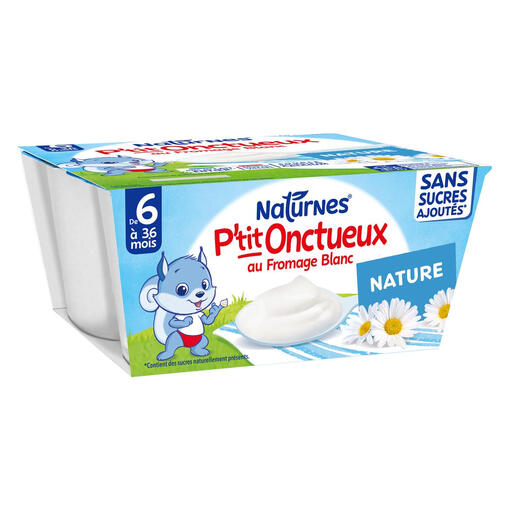 Image unavailable
Nestlé P'Tit Smooth, plain fromage frais from 6 months, 4 × 90 g
Plain fromage frais in pots to consider if you’re looking for dairy to serve rather than drink during weaning.
Age guidance: from 6 months. Pack size: four 90 g pots. Check that the texture and serving method suit your child’s current abilities; this product contains milk.
View on Joybuy
Frequently asked questions
Is drinking yoghurt suitable when starting BLW?
When starting BLW, it’s better to choose plain, unflavoured dairy, served in a way that suits your child’s abilities. Manger Bouger’s guidance focuses on gradually exploring different textures; drinking yoghurt from a bottle doesn’t replace this discovery.
Can drinking yoghurt replace water or breast milk or infant formula?
No. Drinking yoghurt is a dairy product, not a drink intended to replace water, breast milk or infant formula. Manger Bouger’s weaning guidance treats these drinks as a separate part of a young child’s diet.
How do you choose between plain dairy and fruity drinking yoghurt?
For weaning, start with the plain, unflavoured dairy recommended by Manger Bouger and choose a serving method that suits your child. If you’re considering drinking yoghurt for an older child, check the ingredients and nutritional information for the exact product: the fruit flavour or bottle format alone won’t tell you what’s in it.
What should you do if your child has a milk allergy or eats at school?
If your child has a diagnosed allergy or you suspect a reaction, follow your doctor’s advice rather than trying drinking yoghurt: the products described here contain milk. For a pupil who needs a special diet, the French Ministry of National Education says an individual care plan can be put in place with the people concerned.


