
Livraison le jour même ou le lendemain

Qualité garantie

Débloquez vos offres de bienvenue: Livraison GRATUITE | Jusqu'à -80 % | 30 jours d'essai gratuits à JoyPlus
Téléchargez l'application
Replacing your drinking glasses sounds simple… until you start comparing capacities, shapes and materials. A model that looks appealing in a photo may prove impractical for everyday use, too fragile for the dishwasher or poorly suited to the drinks you serve.
Three common pitfalls come up time and again:
Whether you are buying for a French household, a restaurant or a bar, your choice should be based on how the glasses will actually be used: water and soft drinks every day, wine, champagne, cocktails, coffee, tea or dessert presentation.
Capacity is generally expressed in millilitres or centilitres. For versatile everyday use, formats from 27 to 40 cl are suitable for water, juices, cocktails and some servings of wine. Larger wine glasses, such as 60 cl models, provide more room for the liquid and aromas, but also take up more space in the cupboard.
For champagne and sparkling wines, champagne flutes from 19 to 26 cl offer a tall, elegant format. They can be over 24 cm high, so check the available height on your shelves and in the dishwasher racks.
Cocktail glasses should be chosen according to the recipe. A 28 cl tumbler is suitable for drinks served with ice, while a 40 cl glass can accommodate a more generous preparation, garnishes or even a dessert.
Borosilicate glass is used for several double-walled models. Its composition is designed to withstand changes in temperature within the limits specified by the manufacturer. It can still break, however: avoid pouring boiling liquid into a cold glass or placing a hot glass under cold water.
Lead-free crystal glasses, also marketed as clear, transparent lead-free crystal glassware, focus on a bright, crystal-clear appearance while remaining suitable for frequent use. The term “lead-free” refers to the stated composition of the product; it does not mean that the glass is unbreakable.
Finally, classic clear glass is a simple solution for completing your tableware or gradually replacing your existing glasses. In all cases, check the dimensions, number of pieces and care instructions.
Dishwasher-safe glasses make everyday life easier, particularly in a large family, hotel or catering establishment. Follow the manufacturer’s instructions, prevent the pieces from knocking against one another and check for chips or cracks before each use.
Washing by hand with a soft sponge can help preserve the clarity and finish of crystal or mouth-blown models. Double-walled glasses require particular care around their valve or base, where fitted.
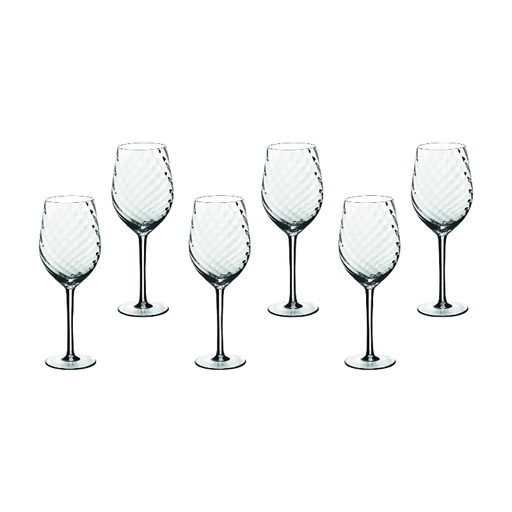
Why this choice suits this profile : With a capacity of 36 cl and supplied in a pack of six, these glasses provide a coordinated foundation for everyday meals, white wine, rosé and sparkling drinks.
The capacity is clearly stated, while the six-piece set avoids mixing several shapes when replacing your glasses for the first time.
Clear lead-free crystal glass, six pieces and stated dishwasher compatibility.
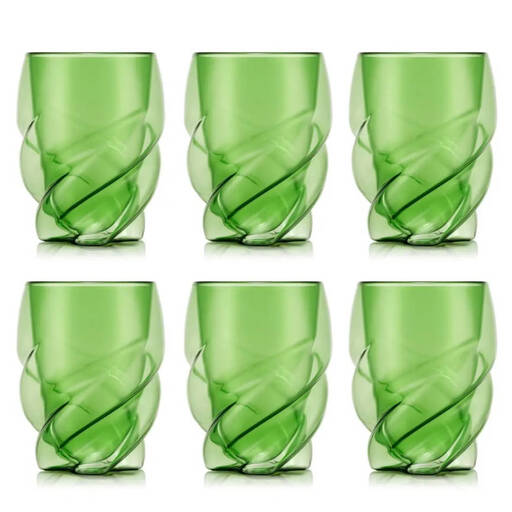
Why this choice suits this profile : These 270 ml double-walled glasses combine colourful presentation with mouth-blown borosilicate glass construction. They are suitable for both hot and cold drinks.
The double wall helps limit condensation on the outside of the glass, but you must still follow the instructions designed to prevent thermal shock.
Set of six glasses, 270 ml capacity, mouth-blown borosilicate glass and stated dishwasher compatibility.
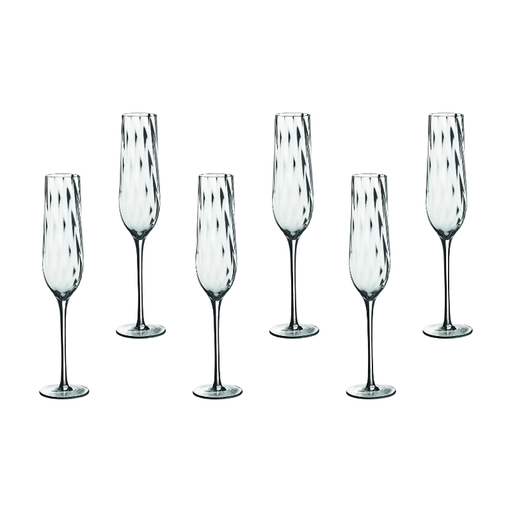
Why this choice suits this profile : The six 26 cl flutes are ideal for entertaining and toasting, as well as for establishments looking for a consistent way to serve champagne or sparkling cocktails.
The shape and capacity are specified, so you can check that they suit your intended service rather than choosing based on height alone.
Clear lead-free crystal glass, six units, 29 cm height and stated dishwasher compatibility.
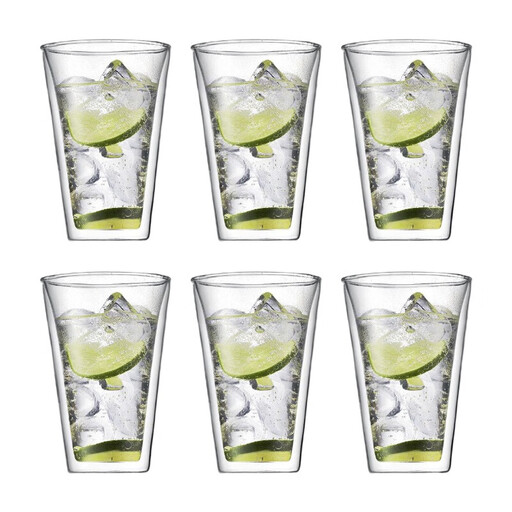
Why this choice suits this profile : With a capacity of 400 ml, these glasses are suitable for coffee, iced drinks, cocktails, desserts or even soups. Their double wall adds a practical and distinctive touch.
The integrated pressure-compensation valve is mentioned in the product details. It should be rinsed carefully and must not be handled with a sharp object.
Mouth-blown borosilicate glass, double wall, six 400 ml glasses and stated dishwasher compatibility.
We have put together a complete, real-time updated list of products that meet these strict selection criteria, as well as European safety regulations.
Even glasses designed for regular use require a few precautions. Leave space between items in the dishwasher rack to prevent knocks. For stemmed models, place them in an area where they will not hit the spray arms or other items.
After serving a hot drink, allow the glass to gradually return to room temperature. Do not use an oven, microwave or direct heat source if the product details prohibit it. Store stemmed glasses upright, without stacking them, and keep double-walled glasses separate to prevent impacts around their base.
The cost of use depends less on the material than on how often the glasses need replacing. A six-piece set makes entertaining easier, while a pack of two may be enough for a couple or useful for supplementing an existing collection. For an establishment, compare the availability of the same model, ease of cleaning and the dimensions required for storage.
A 32 to 38 cl format offers a practical compromise for water, juices, light wine and certain cocktails. If you regularly serve hot or iced drinks, double-walled borosilicate glass models may be worth considering, provided you follow the manufacturer’s instructions and avoid significant temperature changes.
No. Always check the product details. Several models featured here are stated to be dishwasher-compatible, but washing by hand with a soft sponge can help preserve the clarity, finishes and lustre of crystal glass.
A flute is narrower and taller, with a capacity generally ranging from 19 to 26 cl in this selection. It is mainly used for champagne and sparkling wines. A wine glass often has a wider bowl, particularly when it is intended for red wine or larger cocktails.