
Livraison le jour même ou le lendemain

Qualité garantie

Débloquez vos offres de bienvenue: Livraison GRATUITE | Jusqu'à -80 % | 30 jours d'essai gratuits à JoyPlus
Téléchargez l'application
Whether you're refreshing your tableware or setting up a new home, the question always comes up: which drinking glass should you choose? It seems like a simple question, but it can quickly become a real headache. Between fleeting trends and materials with baffling names, it's easy to end up with glasses that chip at the slightest knock or are completely unsuited for their purpose. To help you avoid disappointment, let's review the common pitfalls and the essential criteria for a smart, long-lasting purchase.
To choose well, you first need to know what to steer clear of. Here are three classic mistakes that can turn a great deal into a bad buy.
The allure of marketing often sells us the dream of a do-it-all glass. In reality, a simple tumbler will never enhance the aromas of a fine wine, and using a champagne flute to sip whisky is a terrible choice. Opting for a single style guarantees a subpar tasting experience that does justice to neither your drinks nor your table setting.
An extremely thin glass may look very chic, but it's often the first to break in the dishwasher or during slightly too-vigorous stacking. Elegance should never come at the cost of durability, especially for everyday glasses. A good glass must be able to withstand the small bumps of daily life without issue.
Soda-lime glass, borosilicate, crystalline, crystal glass... these technical terms are not just synonyms. A standard glass will never offer the brilliance or thermal resistance of a more advanced material. Knowing how to decipher them is crucial to avoid paying a premium for basic quality.
To make things clearer, let's focus on the few criteria that truly make a difference and ensure a drinking glass will meet your expectations.
The material is the cornerstone of your choice, determining the durability and intended use of your glasses.
Far from being a mere aesthetic whim, the shape of the glass directly influences the perception of aromas and flavours.
For daily use, practicality is king. An identical set of glasses simplifies storage and ensures a harmonious look on the table. Your number one priority: check for dishwasher compatibility to save yourself the chore of handwashing. Stackability is a real bonus for optimising space in already-crowded cupboards.
To put theory into practice, here are a few concrete examples that illustrate these criteria, designed for different needs.
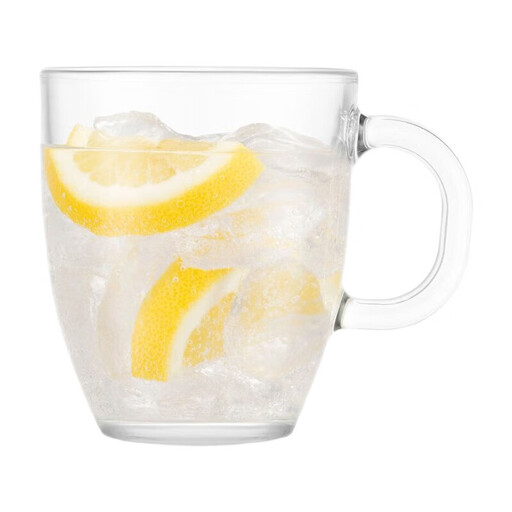
Why we chose it: Its ultra-durable borosilicate glass construction and generous 350 ml capacity make it the perfect partner for your morning coffee or afternoon tea. The thick handle ensures a secure and comfortable grip.
It sidesteps the "fragile elegance" trap. This mug is built for heavy use and thermal shock (scalding drinks, microwaves), unlike decorative glasses you're afraid to touch.
Made from heat-resistant borosilicate glass; microwave and dishwasher-safe for zero-hassle maintenance.
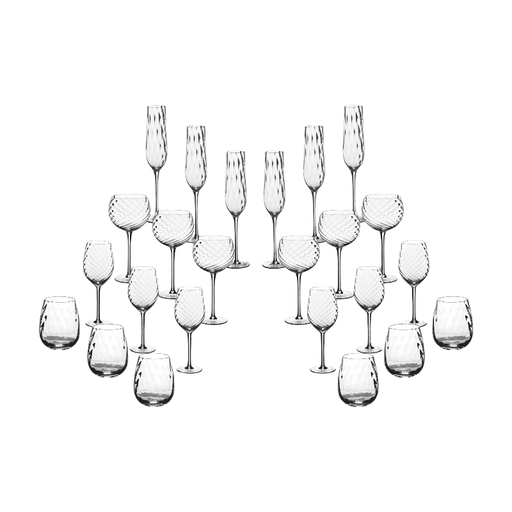
Why we chose it: This complete set provides a chic, coordinated, turnkey solution for any occasion. No more hassle of buying and storing mismatched glasses: it has everything, from water to champagne.
It shatters the "universal glass" myth by offering the right shape for each beverage, all within a harmoniously designed collection.
A complete 24-piece glassware set made of lead-free crystalline, where every item is fully dishwasher-safe.
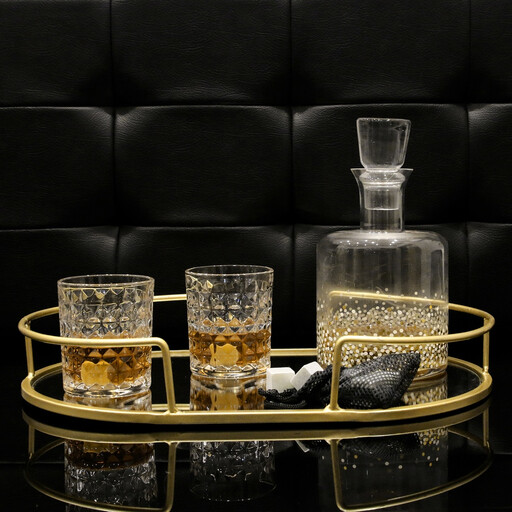
Why we chose it: Designed for tasting, its tapered tulip shape concentrates the complex aromas of whisky. Its heavy base provides excellent stability and a premium feel in hand.
This is a specialist glass, not a simple tumbler. It avoids the classic mistake of using an unsuitable glass that would flatten the aromatic complexity of a fine spirit.
An engineered shape for aroma concentration and a thick, heavy base for an optimal tasting experience.
Discover our full selection of products that meet our quality criteria and current safety standards.
What's the difference between crystal and crystalline? Traditional crystal gets its brilliance and weight from its lead oxide content (a minimum of 24%). Crystalline, its modern alternative, is lead-free. It uses other metal oxides (like barium or zinc) to achieve comparable clarity and resonance. It is generally more durable and therefore better suited for everyday use, including in the dishwasher.
How can I prevent my glasses from becoming cloudy in the dishwasher? This cloudy film is often caused by hard water deposits (limescale) or glass corrosion. To prevent it, follow a few simple steps: always use a rinse aid, check your regenerating salt levels, and opt for low-temperature cycles. Finally, don't overload the dishwasher rack, to ensure proper water circulation.
Is a double-walled glass really useful? Absolutely, and it's incredibly effective. The double-walled glass perfectly insulates your drink, whether hot or cold. The result: the outer wall never burns your fingers and won't be covered in condensation. It's the perfect choice for tea, latte, or iced drink lovers who enjoy savouring their beverage at their own pace.