To make a single cup for Epiphany without measuring out the powder, choose a sachet: the Nesquik serving described by Nestlé Professional France contains 13.5 g of powder to mix with 200 ml of semi-skimmed milk. If you’d rather compare sugar levels or make up your own drink, a tub of powder to measure or unsweetened cocoa may be a better fit. In that case, check how much you’ll use, along with the ingredients and allergens.
Which format is right for you?
For a cup without measuring out the powder
If you want a ready-measured portion for your Epiphany drink, a sachet saves you having to measure from a tub. Nestlé Professional France says that one 13.5 g Nesquik sachet is made with 200 ml of semi-skimmed milk. The format alone doesn’t tell you how much sugar it contains.
For more control over what goes into your drink
If you don’t mind measuring the powder, you can compare the sugar per 100 g and the ingredients in tub recipes. The Bio Village cocoa featured by E.Leclerc contains only low-fat cocoa powder, so you decide how to prepare it and whether to add anything.
For checking allergens before serving
The specific variety matters just as much as the brand. The Nesquik sachet described by Nestlé Professional France contains soya and may contain milk; Banania lists wheat, barley and malted wheat in its Original powder. Check the label on the product you choose, as well as the labels on anything you add to your cup.
What should you look for?
For a single Epiphany drink, start with what matters most to you: skipping the measuring, comparing sugar levels or choosing the ingredients yourself.
| What to consider |
What to check |
Who is it for? |
| Single servings |
Check how many sachets there are, the weight of each one and the amount of liquid specified for preparation; a large pouch is not a single serving. |
If I want to make a cup without reaching for a spoon or measuring the powder, I’d choose a pre-portioned serving. Around 42% of consumers put convenience first. |
| Sugars and recipe |
Compare the sugar per 100 g of powder, then consider how much you’ll use in your cup. Check the ingredients too, along with the cocoa percentage where stated. |
If I’m happy to measure the powder, I want to choose the recipe and decide what to add to my drink. Around 33% of consumers prioritise keeping an eye on sugar. |
| Ingredients and allergens |
Check the ingredients list, allergens and any ‘may contain’ statements on the variety you’re buying, as well as the liquid you add. |
If I need to avoid certain ingredients, I must check the recipe before making a cup. For around 25% of consumers, ingredient suitability or customisation comes before other considerations. |
Common mix-ups to avoid
-
Confusing a sachet with a single serving
A sachet can contain a large amount of powder that needs measuring. The individual Nesquik product featured by Auchan is described as a pack of 12 sachets, each weighing 13.5 g.
If you’re buying for a single cup, check the number of servings, their weight and the preparation instructions.
-
Assuming sachets mean less sugar
Pre-portioning doesn’t tell you what’s in the recipe. The Nesquik sachet product listing gives 75.1 g of sugar per 100 g of powder; this isn’t the sugar content of the prepared drink.
Compare sugar levels on the same basis, then take into account how much powder and liquid you’ll use.
-
Thinking the Nutri-Score must appear on the box
The DGCCRF explains that Nutri-Score is voluntary. A nutrition declaration is generally required for prepacked foods, subject to applicable exceptions.
If a Nutri-Score is shown, read it alongside the nutrition information, including the sugar per 100 g, and the ingredients list.
-
Switching recipes without checking the allergens
The Nesquik sachet described by Nestlé Professional France contains soya and may contain milk. Banania lists wheat, barley and malted wheat in its Original powder.
Check the label on the variety you buy and the ingredients you add to your drink.
Brands to know
Nesquik
Nestlé Professional France describes a pack of 12 sachets weighing 13.5 g each, while Carrefour features a tub of Nesquik ‘Less Sugar’ recipe.
- The sachet provides a pre-measured amount of powder for one drink.
- This product contains soya, may contain milk and has 75.1 g of sugar per 100 g of powder.
Poulain
Among the products featured by Auchan is a 400 g tub of Grand Arôme ‘Less Sugar’ powder, with at least 47% cocoa.
- Its product listing gives 52 g of sugar per 100 g, a figure to compare with other recipes on the same basis.
- The product described doesn’t come in individual servings, so you’ll need to measure the powder for each cup.
Banania
Banania describes its Original powder as a blend of cocoa, cereals, banana and honey, which you measure yourself.
- Its ingredients set it apart from chocolate powder without cereals.
- The ingredients list for this recipe includes wheat, barley and malted wheat.
Carrefour Classic'
The Carrefour Classic' powders featured in Carrefour’s range come in formats you measure yourself rather than pre-portioned sachets.
- This format may suit you if you prefer to measure the powder for each drink.
- If you want a ready-to-use serving, check that the product you choose is explicitly sold in individual portions.
Bio Village
E.Leclerc features a 250 g tub of Bio Village low-fat cocoa made from low-fat cocoa powder, for you to use in your own recipe.
- The product listing gives 0.5 g of sugar per 100 g of powder and a Nutri-Score of B.
- This isn’t a ready-to-use sweetened chocolate drink mix or an individual sachet; any additions depend on your recipe.
Products available on Joybuy
These products let you choose between sachets for one cup, chocolate powders you measure yourself and cocoa to use in your own recipe. Check the packaging and nutrition information for the variety you’re interested in.
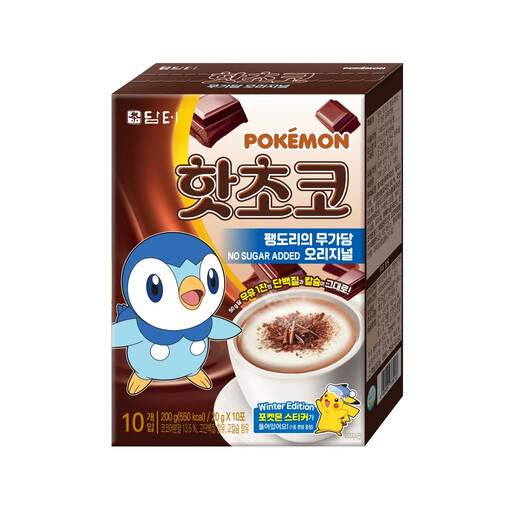 Image unavailable
DAMTUH Pokemon, hot chocolate, 10 sachets of 20 g
Pre-portioned sachets are a convenient way to make an individual drink without measuring loose powder. The suggested preparation uses around 110 ml of hot water or milk per sachet; the product contains milk and soya. Check the nutrition declaration on the packaging before relying on the stated sugar figure, as the ingredients list also mentions starch syrup.
View on Joybuy
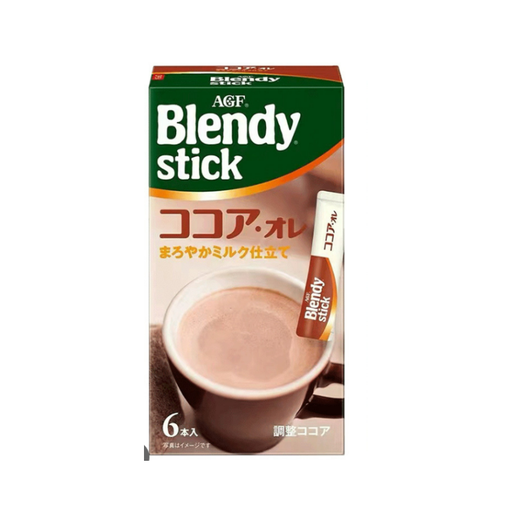 Image unavailable
AGF Blendy Stick Cocoa with milk, 6 sachets of 11 g
Each sachet provides one serving for an individual drink; the instructions specify around 160 ml of hot water per sachet. The product contains milk and may contain traces of soya. If sugar content is important to your choice, check the nutrition information on the packaging.
View on Joybuy
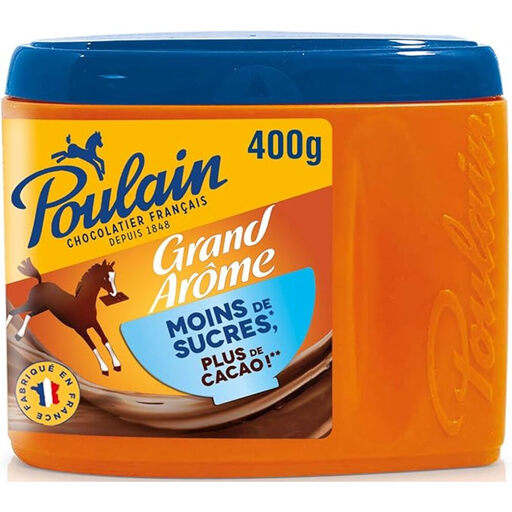 Image unavailable
Poulain Cocoa with Rich Flavor, 400 g
This tub lets you choose how much powder to use in each cup. The product description states that it contains at least 47% cocoa and 52 g of sugar per 100 g of powder. Check the pack instructions to find out how much to use for each serving.
View on Joybuy
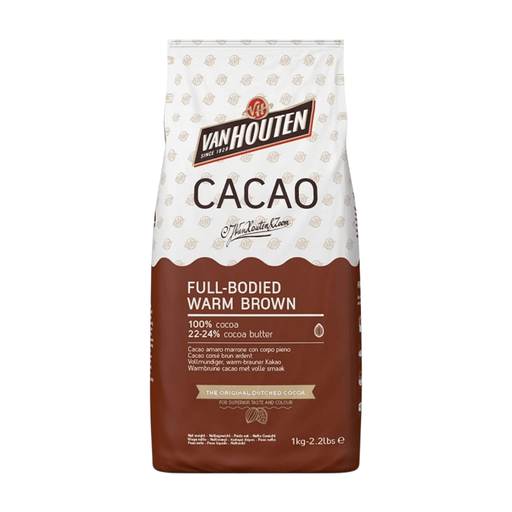 Image unavailable
VAN HOUTEN VH1F, 14.7% cocoa powder, 1 kg
This cocoa powder is for anyone who prefers to make and measure their own drink rather than use a sachet mix. The description gives 1.5 g of sugar per 100 g and lists cocoa powder and acidity regulators among the ingredients. If the ‘14.7%’ specification matters to you, check the packaging to see what it refers to.
View on Joybuy
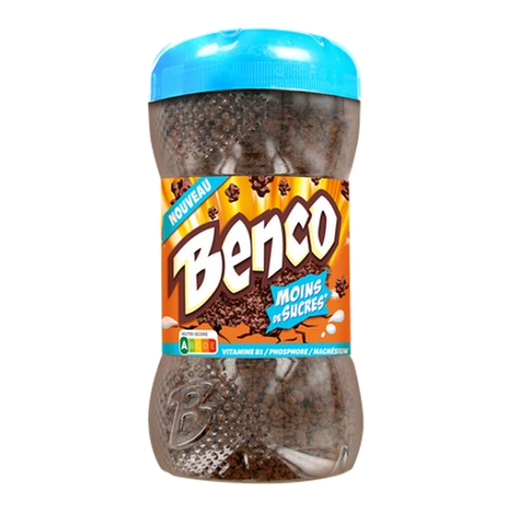 Image unavailable
BENCO Less Sugar, chocolate granules, 400 g
This tub may suit you if you prefer to measure the powder for each drink and compare its ingredients. The description states that it contains 21% highly defatted cocoa and 50 g of sugar per 100 g. The ‘Less Sugar’ wording doesn’t replace this figure, so check the instructions too to find out how much to use per cup.
View on Joybuy
Frequently asked questions
Is a sachet of chocolate powder a bar to eat?
No. It’s a portion of powder for making a drink, not a bar to eat as it is. Nestlé Professional France says that one 13.5 g Nesquik sachet is mixed with 200 ml of semi-skimmed milk.
Is Nutri-Score compulsory on drinking chocolate powder?
No. In France, the DGCCRF describes Nutri-Score as a voluntary label. A nutrition declaration is generally required for prepacked foods, subject to applicable exceptions. It lets you check, among other things, the sugar per 100 g of powder.
How do you prepare an individual Nesquik sachet?
Nestlé Professional France’s product information specifies one 13.5 g sachet with 200 ml of semi-skimmed milk. Also follow the instructions printed on the pack you’re using.
What should you check if certain ingredients need to be avoided?
Read the ingredients list and any ‘may contain’ statements for the variety you buy, then check the liquid you add. The Nesquik sachet described by Nestlé Professional France contains soya and may contain milk; Banania lists wheat, barley and malted wheat in its Original powder.


