Fans of dark chocolate drinks
You’re looking for a drinking chocolate powder with a clearly stated cocoa content. Poulain 1848 and Ethiquable each declare 50% cocoa, although that figure alone doesn’t tell you what the drink will taste like.


For an easy-to-make drink with a high stated cocoa content, start by comparing instant powders labelled as containing 50% cocoa, such as Poulain 1848 and Ethiquable. If you want to control how much sugar you add, choose unsweetened pure cocoa instead. A reduced-sugar formula is another option if you’re happy with its sweeteners. In all cases, the cocoa percentage is no substitute for checking the ingredients and sugars per 100 g.
You’re looking for a drinking chocolate powder with a clearly stated cocoa content. Poulain 1848 and Ethiquable each declare 50% cocoa, although that figure alone doesn’t tell you what the drink will taste like.
You’d rather choose what goes into your drink. Unsweetened pure cocoa, such as E.Leclerc’s EQUADOR, lets you adjust the sugar to suit your taste.
You’re looking for a short ingredient list, as well as organic and Fairtrade ingredients. Ethiquable states that its instant powder, which contains 50% cocoa, meets these criteria.
First decide whether you want a ready-sweetened drink or cocoa you can prepare to your own taste. Then compare the cocoa content, ingredients and sugars.
Worth considering: if you want a drinking chocolate powder with a stated cocoa content of 50%, such as Poulain 1848 or Ethiquable.
Bear in mind: both recipes also contain sugar.
Worth considering: if you want to decide how much sugar to add to your drink or recipe.
Bear in mind: you’ll need to prepare and adjust it to taste, and shouldn’t assume the powder will dissolve instantly.
Worth considering: if you’re looking for this feature and are happy with the sucralose used in Canderel Cankao.
Bear in mind: a reduction compared with a reference product doesn’t mean the powder is unsweetened.
| What to look for | What to check | Who is it for? |
|---|---|---|
| Cocoa content | Check the stated percentage and distinguish drinking chocolate powder from pure cocoa. | If I want a drink with a stronger cocoa character, I want to know how much cocoa it contains before choosing a recipe. Around 36% of consumers are said to put stated cocoa content first. |
| Sugars | Compare the “sugars” per 100 g and check whether the powder contains a sweetener. | If I’d rather control how much sugar I add, a ready-sweetened mix doesn’t meet the same need as unsweetened pure cocoa. Around 29% of consumers are said to put control over sugar first. |
| Ingredients and sourcing | Read the ingredient list and check for any organic or Fairtrade claims shown on the pack. | I might prefer a short ingredient list and stated sourcing credentials, without making assumptions about the taste or nutritional values. This is said to be the main priority for around 21% of consumers. |
| Preparation and pack size | Check the preparation instructions and choose a pack size that suits how you’ll use it. | If I make this drink regularly, I want a preparation method that works for me and a quantity I expect to use. Around 14% of consumers are said to prioritise convenience. |
Poulain 1848 and Ethiquable’s instant powder both state this cocoa content, but their recipes also contain sugar.
Check the cocoa percentage, ingredients and sugars per 100 g. If you want to add sugar yourself, look for a powder explicitly labelled as unsweetened.
According to the DGCCRF, displaying Nutri-Score is voluntary in France. Its presence or absence isn’t enough to decide between two recipes based on your preferences.
If it appears on the packaging, consider it alongside the nutritional values per 100 g and the ingredient list.
Canderel Cankao, listed by Auchan, contains sucralose. This ingredient choice may matter just as much as the reduced-sugar claim.
Check the ingredients before buying. If you want to choose the ingredients you add yourself, compare it with unsweetened pure cocoa.
The amount in the tin doesn’t tell you how much cocoa it contains or whether it has added sugar.
Choose the type of recipe first, then pick a pack size to suit how often you’ll use it.
If you don’t like the recipe, a large pack could sit unused for a long time.
The 1848 recipe is worth considering if you’re looking for drinking chocolate powder with a high stated cocoa content.
Its instant powder combines a stated cocoa content of at least 50% with sourcing credentials.
Cankao is another option among powders stating that they contain 50% cocoa.
Its range includes both Intense drinking chocolate powder and cocoa powder.
The Marque Repère range includes an EQUADOR product called “Pure Unsweetened Cocoa”.
These two Poulain pack sizes are for making a chocolate drink. If you’re looking for a stronger cocoa flavour and deciding between them, compare the ingredients for each pack on its product page and packaging.
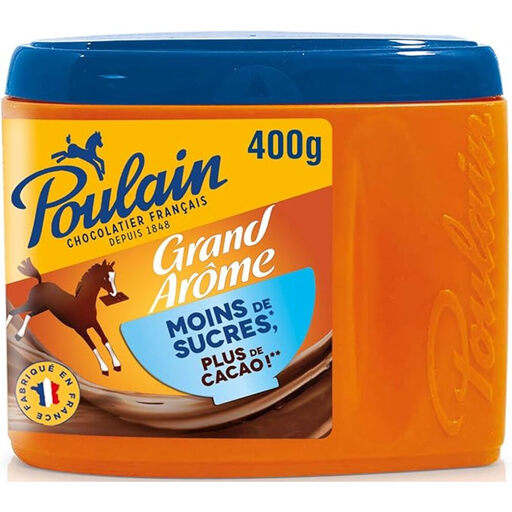 Image unavailable
Worth considering if you’re looking for a Poulain drinking chocolate powder with a high stated cocoa content: the Joybuy product page for this 400 g pack says it contains at least 47% cocoa. This figure alone doesn’t tell you how much sugar it contains, so check the nutritional values per 100 g before choosing.
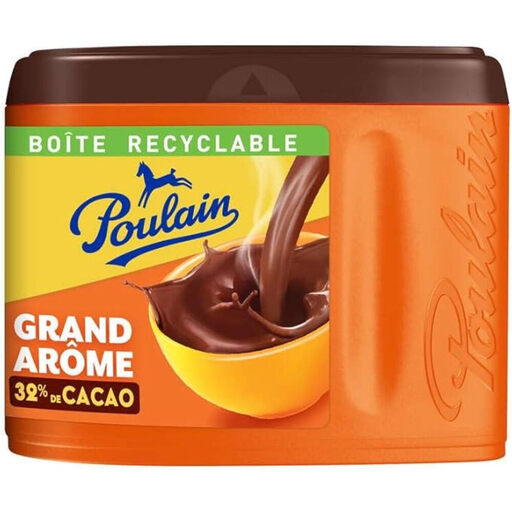 Image unavailable
Worth considering if this 450 g pack suits how you use it. Don’t assume it has the same ingredients as the 400 g pack: check the cocoa percentage, ingredients and sugars per 100 g for this product.
No. The DGCCRF states that displaying Nutri-Score is voluntary. When comparing prepacked powders that require a nutrition declaration, check the nutritional values per 100 g, particularly the “sugars” line, as well as the ingredients.
You shouldn’t assume this applies to a powder sold dry. The charge described by BOFiP-Impôts applies to non-alcoholic drinks containing added sugars; that description alone isn’t enough to establish the tax treatment of every powder. When comparing recipes before buying, it’s more useful to check the stated sugars per 100 g.
No, not necessarily. Chocolat Poulain lists sugar in its 1848 recipe, which contains 50% cocoa, and Ethiquable lists cane sugar in its recipe too. If you want to control how much sugar you add, look for a product explicitly labelled as unsweetened pure cocoa.