People prioritising fat content
When comparing drinkable yoghurts as part of a low-fat diet, check the ‘fat’ value per 100 g or 100 ml. This helps you distinguish this criterion from claims about sugar.


If your priority is to limit fat, compare the amount per 100 g or 100 ml before choosing a multipack of drinkable yoghurt. The claim ‘no added sugar’ relates to a different criterion. Actimel Nature 0% Fat multipacks of 10 × 100 g and 12 × 100 g offer individual portions, but contain milk and sweeteners and need to be kept chilled. A protein-focused drink may suit a different priority, but it may not be a substitute for this multipack format.
When comparing drinkable yoghurts as part of a low-fat diet, check the ‘fat’ value per 100 g or 100 ml. This helps you distinguish this criterion from claims about sugar.
Actimel Nature 0% Fat multipacks of 10 or 12 bottles, each containing 100 g, are listed by Carrefour and make it easy to portion out individual servings over several days. However, you’ll need to follow the storage instructions for the product you choose when transporting it.
If the amount of protein per serving matters more to you than the number of bottles, compare drinks sold in other formats too. Their size and storage requirements may differ from those of a small bottle of drinkable yoghurt.
Start with the fat content, then check whether the number of portions and storage requirements suit your needs. If protein is also a priority, compare the amount per 100 g or 100 ml as well as per serving.
| Criterion | What to check | Who is it for? |
|---|---|---|
| Fat | The amount of fat and saturated fatty acids per 100 g or 100 ml, as well as the 0% fat claim. | If my first priority is limiting fat, I want to compare the figures rather than rely on a claim about sugar. Around 50% of consumers would make this their priority. |
| Portions and storage | The number of bottles, the amount in each bottle and the storage instructions for the product you’re considering. | When preparing several lunchboxes, I mainly need individual portions that I can keep in line with the instructions on the packaging. This would be the priority for around 30% of consumers. |
| Protein and transport | Protein per serving and per 100 g or 100 ml, along with the duration and conditions of transport. | If protein matters more to me than a pack of small bottles, I also need to consider serving size and keeping the product chilled. Around 20% of consumers would put this need first. |
These claims refer to different nutritional values. Carrefour’s product listings show 1,6 g of fat per 100 g for Actimel Nature with no added sugar, compared with 0,1 g per 100 g for the Actimel Nature 0% Fat multipack.
If fat is your main priority, compare the value in the nutritional information for each product.
The listings for Actimel Nature 0% Fat say that these products contain milk and sweeteners. A low fat content doesn’t tell you anything by itself about the other ingredients.
Check the ingredients list and allergens for the exact product if you need to avoid certain ingredients.
Yoplait says its Skyr à Boire should be thrown away if left out of the fridge for more than 4 hours, while HiPRO describes its UHT Vanilla drink as suitable for storage outside the fridge before opening. These instructions aren’t interchangeable.
Choose according to how long you’ll actually be transporting the product, and follow the instructions on the packaging of the one you select.
The Nature 0% Fat range includes drinkable yoghurt multipacks of 10 × 100 g and 12 × 100 g listed by Carrefour.
Yoplait describes its Skyr à Boire as a 0% fat drink for people who also compare protein content.
HiPRO UHT Vanilla is a 330 ml serving of dairy drink, rather than a small bottle of drinkable yoghurt in a multipack.
This Joybuy option is a lactic acid bacteria drink in small individual cans. Before choosing it for the same purpose, compare its description and label with those of drinkable yoghurt multipacks.
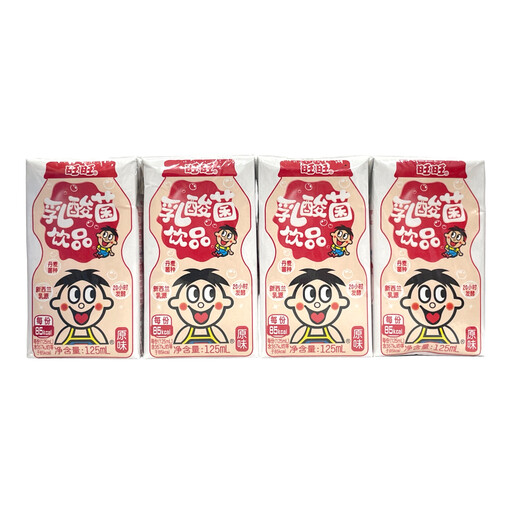 Image unavailable
The four individual portions may suit you if a format that’s easy to divide up is important, but you shouldn’t automatically consider this lactic acid bacteria drink to be the same as drinkable yoghurt.
Before choosing it to limit fat, check the nutritional values on the packaging for the exact product, particularly the fat and saturated fatty acid content.
No, these two claims relate to different things. If you’re choosing a drinkable yoghurt based on its fat content, check the relevant value per 100 g or 100 ml for the product you’re considering.
If it’s your priority, start by comparing the fat content per 100 g or 100 ml. The DGCCRF notes that presenting nutritional information this way makes it easier to compare products. Then check the sugar and protein content if these also influence your choice.
Yes. Auchan’s listing for this multipack says to store it at a maximum of +1 °C to +6 °C. Check the instructions on the packaging of the product you buy.
Not without taking its storage limit into account: Yoplait says it can be kept out of the fridge for up to 4 hours, after which it should be thrown away. If your journey or day is longer than that, make sure it stays suitably chilled or choose a drink with storage instructions that suit your needs.