
Livraison le jour même ou le lendemain

Qualité garantie

Débloquez vos offres de bienvenue: Livraison GRATUITE | Jusqu'à -80 % | 30 jours d'essai gratuits à JoyPlus
Téléchargez l'application
A drinkable konjac jelly can be a handy alternative to a sugary drink or a heavier dessert at the office, on the go, or after a workout. Its soft pouch, jelly-like texture and fruity flavours — mango, peach, lychee, blueberry, watermelon or passion fruit — explain why this speciality has become so popular among fans of Korean konjac jelly.
However, not all products are created equal. The claim "sugar-free" doesn't always tell you which sweeteners have been used, and a low calorie count doesn't guarantee a feeling of fullness. Here are the key points to consider before choosing your konjac drink.
The term "sugar-free" can refer to a recipe containing erythritol, sucralose, acesulfame-K or other sweeteners. So take the time to check the ingredients list and the nutritional information panel. Some products also show a significant amount of carbohydrates even though the "of which sugars" line reads 0 g, as polyols can be counted differently depending on labelling rules.
If you are sensitive to polyols, keep an eye on how much you consume and follow any recommendations on the packaging.
With 2 to 7 kcal per serving, a jelly can make a low-calorie snack. However, it generally provides little to no protein. So it's not a complete meal. For a more balanced break, pair it with a protein-rich food or something containing fats, depending on your dietary habits.
Konjac gives the preparation a thick texture, very different from plain water. Many packs recommend shaking the pouch and not swallowing the jelly without chewing it first. This precaution is especially important for children and anyone who has difficulty swallowing. Always read the warnings on the product before consuming it.
The 120 g and 150 ml formats are very common. The former is ideal for a short break, while the 150 ml pouch slips easily into a gym bag, handbag or rucksack for a commute or a day at the office. A resealable cap is handy if you don't want to finish the product straight away, as long as you follow the storage instructions after opening.
To choose a vegan konjac jelly, look for a clear indication that the recipe is plant-based and check that there is no gelatine or dairy ingredients. Depending on the product, the preparation may contain konjac, carrageenan, xanthan gum or other gelling agents. As for the term "plant collagen", this is a marketing name associated with plant-derived ingredients, not animal collagen.
Compare the values per 100 ml or 100 g, then scale them to the serving you actually consume. Some recipes contain little fruit concentrate and rely mainly on flavourings. If you're after a particular taste, check the stated flavour as well as the proportion of juice or concentrate. Fans of tropical notes can choose mango, peach or passion fruit; those who prefer more floral flavours will enjoy lychee.
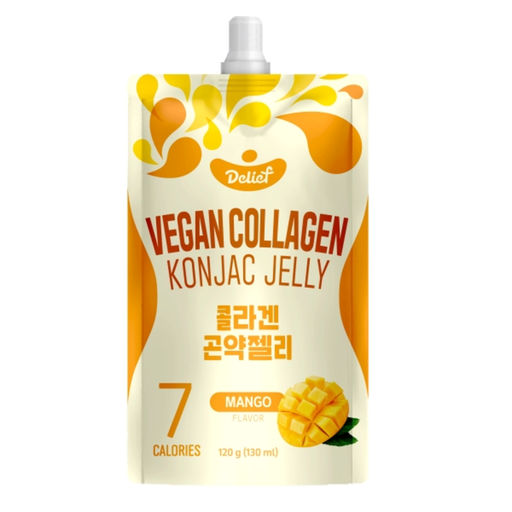
Why this choice suits this profile: Its 120 g format and mango flavour offer a simple first introduction to vegan konjac jelly, to enjoy at home or at work.
The label shows 5 kcal and 0 g of sugars per 100 g: you get concrete data rather than just a marketing promise.
A recipe labelled vegan, with no declared allergens, containing konjac powder and 120 g of product.
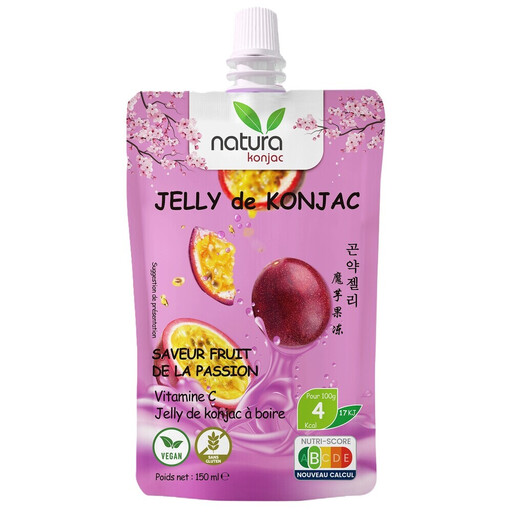
Why this choice suits this profile: Its passion fruit flavour and detailed information appeal to consumers who care about both ingredients and taste experience.
The 150 ml serving is distinguished from the values per 100 ml, making comparison easier: the listing states 6 kcal and 0 g of sugars per serving.
The listing mentions 4.6% fruit concentrate, 150 ml per pouch and storage at room temperature before opening.
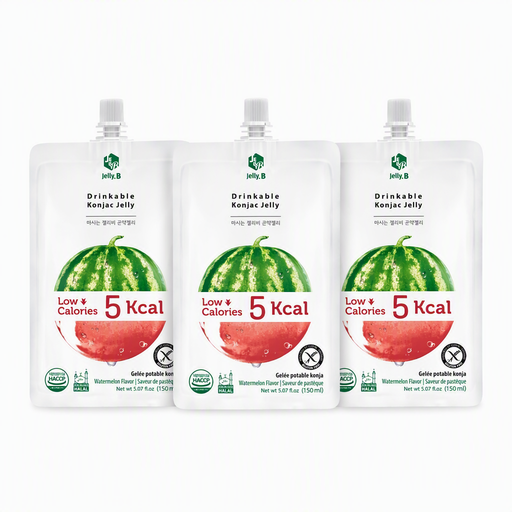
Why this choice suits this profile: Its resealable pouch and individual format are well suited to gym bags, lunchboxes and frequent travel.
The listing specifies the amount of erythritol and the chewing instructions: you can better anticipate the texture and the presence of sweeteners.
The listing states 5 kcal per 150 ml serving, a vegan recipe and a resealable cap: chilling is optional before opening.
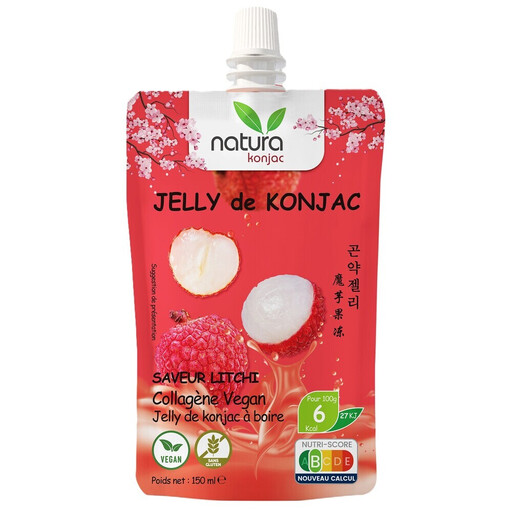
Why this choice suits this profile: Lychee makes a pleasant change from mango and peach, while the 150 ml pouch slips easily into a bag.
The listing clearly separates the values per 100 ml and per 150 ml, notably showing 9 kcal and 0 g of sugars for the stated serving.
The listing states 5.5% lychee concentrate, 1.5 g of protein per serving and the presence of vitamin C.
We have put together a comprehensive, real-time updated selection of products that meet these exacting criteria and European safety regulations.
Before opening, many products can be stored at room temperature, in a dry place away from light. Once the pouch is opened, place it in the fridge and follow the time limit stated on the packaging, usually between 24 and 48 hours. Always check the best-before date and the specific instructions for the product you have chosen.
Some products are labelled vegan, particularly those made from konjac and plant-based ingredients. However, always check the label for each flavour and each brand. The statement "no declared allergens" does not automatically mean "vegan".
Its individual format can work as a fruity snack to take with you before or after physical activity. However, it provides little protein and does not replace a balanced meal. For sports use, also check the sweeteners and adjust the amount to your tolerance.
Not necessarily. Some recipes show 0 g of sugars while still containing carbohydrates or polyols, such as erythritol. To compare two products, look at the full nutritional panel, the serving size and the ingredients list, rather than relying solely on the "sugar-free jelly" claim.