
Livraison le jour même ou le lendemain

Qualité garantie

Débloquez vos offres de bienvenue: Livraison GRATUITE | Jusqu'à -80 % | 30 jours d'essai gratuits à JoyPlus
Téléchargez l'application
Whether you're a renter trying to leave your apartment damage-free or a homeowner looking for a simple way to organise your space, the drill-free wall hook is an appealing promise. No more drills, dust, or holes to patch. Yet, behind this apparent simplicity lie well-known pitfalls that can quickly turn a good idea into a source of frustration.
The scenario is all too common: a picture frame crashing to the floor in the middle of the night, paint peeling off during removal, or a hook that stubbornly refuses to stick in a humid bathroom. Fortunately, these mishaps aren't inevitable. They usually result from three easy-to-avoid purchasing mistakes:
To make the right choice, however, you just need to know the few criteria that separate a reliable drill-free wall mounting solution from a disappointing gadget.
Navigating the jungle of no-hole fasteners is simpler than it seems. To avoid making a mistake, focus on these three key points.
Not all drill-free solutions are created equal, and most importantly, they don't work on the same types of walls.
A hook for a tea towel is not a hook for a mirror. Respecting the maximum load indicated by the manufacturer is non-negotiable, and you should always allow for a safety margin.
For a heavy-duty hook, opt for claw systems or high-performance adhesives. In wet areas, a bathroom hook must explicitly state its resistance to humidity. Likewise, an outdoor hook must be UV and weather-resistant, or it will degrade in just a few months.
Beyond function, aesthetics matter. A wall-mounted coat rack in an entryway should have a certain elegance. Options range from simple, discreet plastic to on-trend brushed stainless steel or matte black metal. The material influences not only the style but also the durability, especially in demanding environments like a kitchen or bathroom.
To put theory into practice, here are a few typical user profiles and the solutions that suit them.
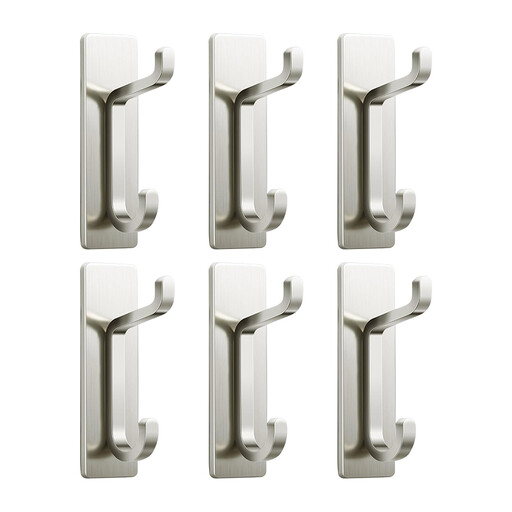
Why it's a match: Ideal for anyone looking for a versatile and budget-friendly solution to organise the kitchen, entryway, or office. This pack lets you hang keys, utensils, and small accessories without breaking the bank.
The stainless steel construction ensures better durability and a more refined finish than low-end plastic, avoiding the cheap "gadget" effect.
Sleek and modern design. Versatile for many rooms. Sold in a pack for excellent value.
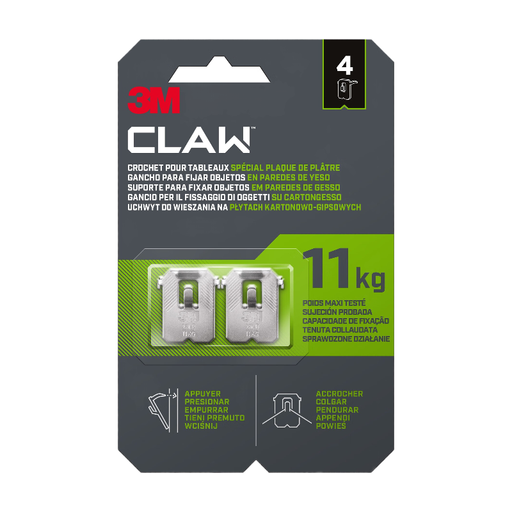
Why it's a match: The perfect solution for hanging heavy objects (mirrors, frames, small shelves) on drywall, where traditional adhesives fall short. For those who refuse to compromise on safety.
It bypasses the "overstated maximum load" trap by relying on a different technology (steel claws) specifically designed for one material (drywall) and a significant load (up to 11 kg).
Tool-free installation with a simple push. Specially designed for drywall. High and reliable load capacity.
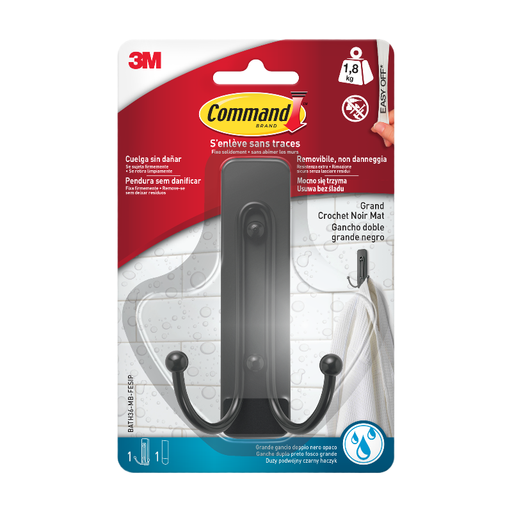
Why it's a match: Designed for those who need a reliable storage solution in the bathroom, including inside the shower. Ideal for hanging towels, bathrobes, or shower squeegees.
It tackles the "unsuitable adhesive" pitfall head-on by using strips specially formulated to resist water and humidity, where a standard hook would fail.
Sticks to many surfaces (tile, glass, etc.). A 1.8 kg capacity suitable even for damp towels. Very on-trend matte black finish.
Discover our full selection of products that meet our criteria for reliability and performance.
It all depends on the adhesive technology. For hooks with a stretch-release strip (like Command), simply pull the tab gently straight down, parallel to the wall. The adhesive will stretch and release cleanly, with no residue or damage on most surfaces. For others, lightly heating the base of the hook with a hairdryer can soften the glue and make removal much easier.
It varies enormously. A suction cup hook may need to be repositioned periodically to maintain its grip. A good adhesive hook, used under the recommended conditions (weight, temperature, humidity), can hold for several years without failing. Claw systems, on the other hand, offer a mechanical hold that is as durable as the wall itself.
Absolutely, but only if you choose the right product for the right surface. A heavy-duty hook is always designed for a specific substrate. For example, 3M CLAW drywall hooks support up to 20?kg on plasterboard. For smooth surfaces, some high-performance adhesives can hold several kilograms. The key takeaway: always read the manufacturer's specifications and never, ever exceed the stated weight limit.