
Livraison le jour même ou le lendemain

Qualité garantie

Débloquez vos offres de bienvenue: Livraison GRATUITE | Jusqu'à -80 % | 30 jours d'essai gratuits à JoyPlus
Téléchargez l'application
Whether you're a renter, a student, or just someone who loves to change up their decor on a whim, the thought of drilling into a wall can be a daunting prospect. Between the fear of damaging the surface, the hassle of getting out the drill, and the permanence of a hole, you quickly start looking for an alternative. The drill-free wall hook emerges as the perfect solution.
But here's the catch: the market is flooded with promises that are rarely kept. One wrong choice, and your picture frame comes crashing down in the middle of the night, the paint peels off when you move out, or a stubborn adhesive residue is left behind to mock you. Before you commit, it's crucial to know the pitfalls to avoid.
The 3 classic mistakes when buying a no-hole hook?:
To get a clearer picture and find the hook that won't let you down, focus on these three essential points.
This is the starting point. Each system is designed for a specific use and wall type.
Never blindly trust the number on the packaging. Read the fine print to see on what type of surface that load was tested. For a wall-mounted coat hook, which endures repeated stress (tossing a heavy, sometimes damp, coat on it), it's wise to be cautious: aim for a model with an advertised capacity at least double the weight you plan to hang.
A hook in a humid bathroom or on a patio doesn't face the same challenges as one in a dry, temperate living room.
To help you see how these criteria apply in practice, here are a few recommended options, each tailored to a different user profile.
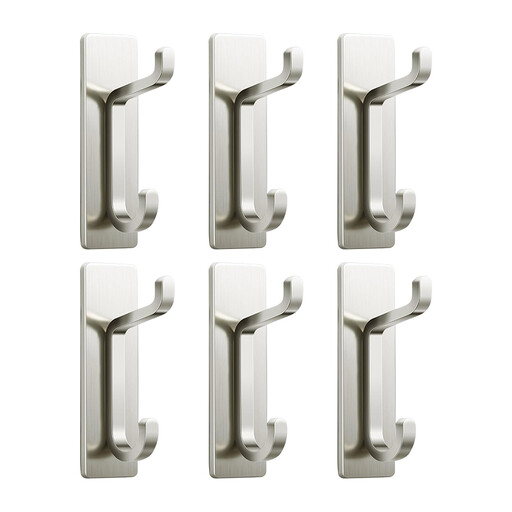
Why we chose it : Perfect for those looking for an affordable and stylish solution to organise small everyday items (keys, tea towels, light utensils). The six-pack allows you to equip a kitchen or entryway at a low cost.
This product is refreshingly honest. It's clearly positioned for light objects on smooth surfaces, which allows it to avoid the trap of an overrated weight capacity.
Excellent value for money with a modern stainless steel design that blends discreetly into many decors.
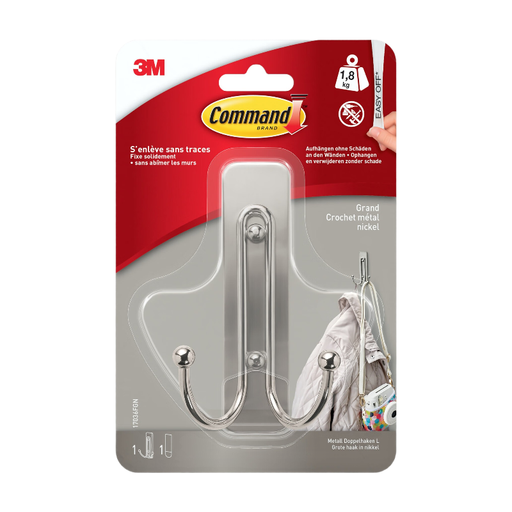
Why we chose it : For those who refuse to compromise between a polished design and a reliable hold. Its brushed nickel finish is elegant, and its 1.8 kg capacity makes it suitable for holding towels, bathrobes, or handbags.
It relies on the stretch-release strip technology from 3M Command, the gold standard for clean removal. This eliminates the #1 risk: adhesive residue and peeled paint.
It combines an elegant metallic finish, a useful weight capacity (1.8 kg), and the peace of mind of damage-free removal.
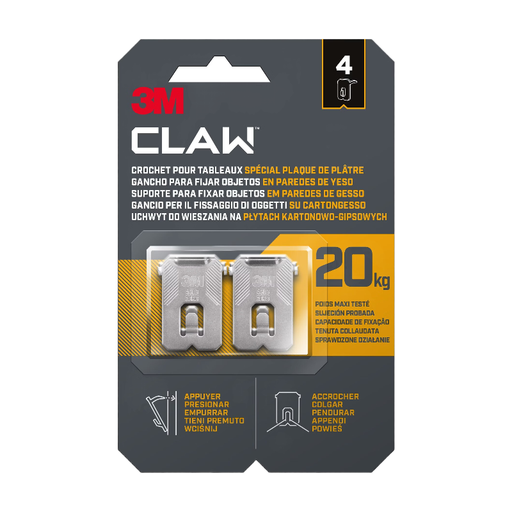
Why we chose it : The ultimate solution for hanging heavy objects (mirrors, large frames) on drywall, without a drill or anchors.
This drywall claw hook is a game-changer. It bypasses the adhesive trap by relying on a mechanical grip within the wall, offering formidable reliability for heavy loads.
An impressive weight capacity (up to 20 kg) on the most common wall type (drywall), all installed in seconds with no tools required.
Explore our complete selection of products that meet our selection criteria and current safety standards.
1. Can you use a drill-free wall hook outdoors or in a bathroom?
Absolutely, but only if you choose a model specifically designed for it. For bathrooms, opt for ranges like Command Bath, which use water-resistant adhesive strips. For outdoor use, products like the Transparent Medium Oval Hook for Outdoor are treated to resist UV rays and weather. Never use a standard hook in a damp room or outdoors; failure is guaranteed.
2. How do you remove an adhesive hook without peeling the paint?
With a stretch-release strip hook (like Command), the process is simple and risk-free. Most importantly, never pull the hook towards you. Gently hold it against the wall with one hand and, with the other, pull the tab straight down, parallel to the wall, very slowly. The strip will stretch (sometimes over 30?cm) until it releases completely, without leaving a trace. For other adhesives, gently heating the glue with a hairdryer can help, but the risk of damaging the paint remains high.
3. What's the difference between an adhesive hook and a claw hook?
They're complete opposites! Their mounting method and the type of wall they target are radically different. The adhesive hook sticks to a smooth, non-porous surface (tile, glass, metal, lacquered paint...). Its performance depends on the quality of the adhesive and the cleanliness of the surface. The claw hook (for drywall) uses no glue. It anchors mechanically into the plasterboard with its steel prongs. It is therefore reserved for drywall and stands out as the best solution for heavy objects on this surface.