
Livraison le jour même ou le lendemain

Qualité garantie

Débloquez vos offres de bienvenue: Livraison GRATUITE | Jusqu'à -80 % | 30 jours d'essai gratuits à JoyPlus
Téléchargez l'application
Hanging a picture frame, organising kitchen utensils, or putting up a towel shouldn't always mean breaking out the drill and wall anchors. The drill-free wall hook is emerging as a convenient solution, but the market is saturated with promises that are rarely kept. Between adhesive that gives way after a week and hooks that rip off paint upon removal, it's easy to make the wrong choice.
As a product recommendation expert at Joybuy, my role is to help you navigate your options. This guide breaks down the essential criteria for choosing a truly reliable drill-free hook and presents proven solutions for specific needs, all based on objective technical specifications.
To avoid buyer's remorse, it's best to be aware of the most common issues.
To make the right choice, three technical aspects must be examined closely.
This is the non-negotiable starting point. Every drill-free wall mounting system has its ideal surface.
Never blindly trust the maximum weight listed on the packaging. Always apply a safety margin: if your picture hook needs to support a 3?kg frame, choose a model rated for at least 4 or 5?kg. Also, consider the use case: a coat hook is subjected to dynamic stress (heavy items are hung and removed repeatedly), which tests the mounting far more than a stationary object.
A hook doesn't face the same challenges in a dry bedroom as it does in a bathroom or outdoors.
Instead of a random list, here are targeted solutions for specific user profiles, selected with the pitfalls and criteria we've just discussed in mind.
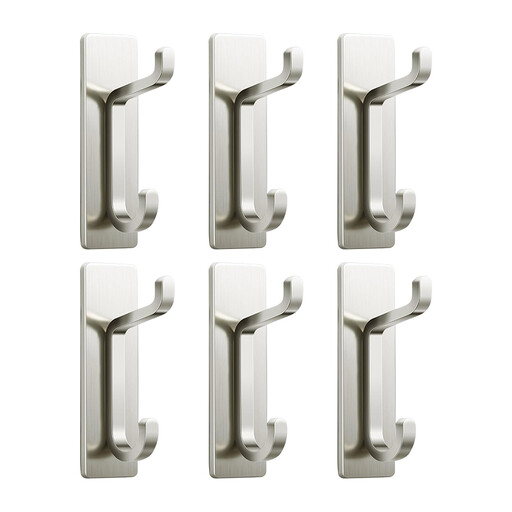
Why this choice? Perfect for organising a rental apartment affordably and without risking your security deposit. This budget-friendly pack allows you to add multiple hanging points for lightweight everyday items (keys, tea towels, oven mitts, small hand towels) in the kitchen, entryway, or bathroom.
This adhesive hook doesn't overpromise: it's clearly designed for smooth surfaces, which avoids the "universal" model trap. Sold as a multi-pack, its economical positioning makes it a smart solution for numerous small needs.
Excellent value for the quantity. Its stainless steel finish gives it much better durability and a more premium feel than all-plastic models.
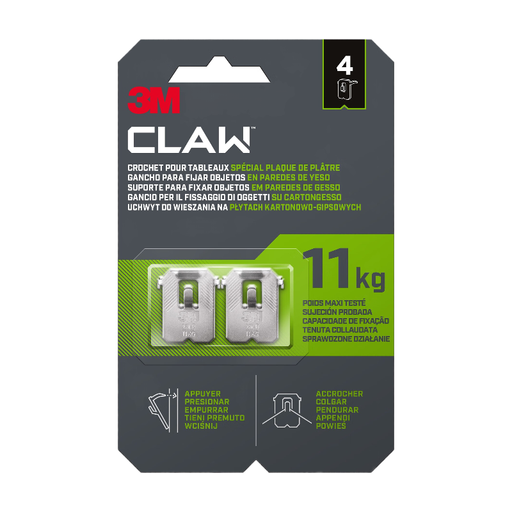
Why this choice? For anyone who wants to hang a heavy mirror, a large frame, or a valuable object on a drywall wall, without having to find a stud or break out the toolbox. It's the trustworthy solution for heavy loads.
This isn't an adhesive but a mechanical anchor system. It therefore bypasses all the pitfalls related to adhesion, humidity, or wall texture. Its load capacity is tested specifically for drywall, which protects you from overestimated claims.
A very high load capacity (up to 11 kg) and a stunningly simple installation: just a push of the thumb is all it takes, no tools required. A formidable solution designed for the most common type of wall.
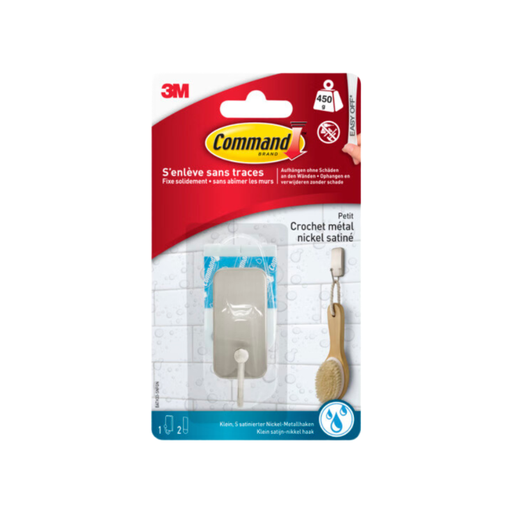
Why this choice? For those who want a solution that is as effective as it is elegant, even in wet areas. Its satin nickel finish, far more stylish than plain white plastic, integrates brilliantly into a contemporary decor.
Specifically designed to be water-resistant, it immediately eliminates the risk of failure that plagues classic adhesives in humid environments. Furthermore, the Command system is the gold standard for clean removal, minimising the risk of damage to the surface.
Combines a water-resistant adhesive, a sleek metallic finish, and a practical double hook for better organisation (for the classic robe and towel combo, for example).
We have compiled a complete and up-to-date selection of products that meet these demanding selection criteria and current standards.
It is strongly discouraged. The adhesive on a wall hook can fuse with the paper and tear it upon removal. For this type of surface, it's better to use very thin steel pins or picture hooks that leave only a tiny pinhole. In all cases, always check the manufacturer's recommendations.
For stretch-release adhesive strips (3M Command type), the instructions are simple: pull the tab very slowly straight down, parallel to the wall. Never pull it towards you. For other adhesives, gently heating the base with a hairdryer can soften the glue. Then, try to slide dental floss behind the hook to gradually work it loose.
It all depends on the product's quality, the load, the surface preparation, and the environment. A well-made hook, properly installed on a clean, smooth surface, can last for several years. It's still wise to check its hold from time to time, especially if it's supporting a valuable or fragile object. Note that some systems allow you to reuse the hook by simply replacing the adhesive strip.