
Livraison le jour même ou le lendemain

Qualité garantie

Débloquez vos offres de bienvenue: Livraison GRATUITE | Jusqu'à -80 % | 30 jours d'essai gratuits à JoyPlus
Téléchargez l'application
Hanging a picture frame, organising kitchen utensils, or putting up string lights shouldn't have to involve drills, wall plugs, and dust. The drill-free wall hook is the perfect solution for decorating your home without leaving a trace. Yet, faced with an overwhelming number of options, there's a high risk of ending up with an unsuitable product that will damage your walls or give way long before its promised weight capacity.
As Section Editor and product expert, my mission is to help you navigate the options and make the right choice. This guide breaks down the pitfalls to avoid and the essential criteria for finding the wall mount that will truly meet your needs, without any nasty surprises.
The drill-free mounting market is full of lofty promises. Unfortunately, not all of them are kept, and disappointment is often the result. Here are the most common pitfalls.
To make the right choice, three technical parameters must be examined closely. They determine the performance and safety of your installation.
Weight is obviously the number one criterion. Don't just rely on the maximum rating; consider the nature of the object you're hanging.
The type of wall is just as crucial as the weight. Read the manufacturer's recommendations carefully—this is non-negotiable.
A hook in a bedroom doesn't face the same stresses as one installed in a shower.
Here are a few products that caught our attention because they meet specific needs while adhering to our selection criteria.
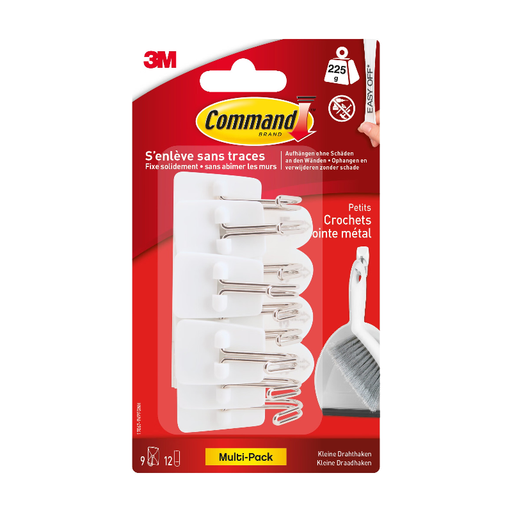
Why we love it: Perfect for renters, students, or for organising small everyday items (keys, tea towels, calendars). Its value-pack of 9 lets you create multiple hanging points throughout the house.
The 225g weight capacity is clearly stated and realistic for small items, avoiding the over-promising pitfall. The Command adhesive is specifically designed for clean removal from painted walls.
Sticks securely and removes without leaving holes, marks, or sticky residue. Compatible with many surfaces (painted walls, wood, tile...).
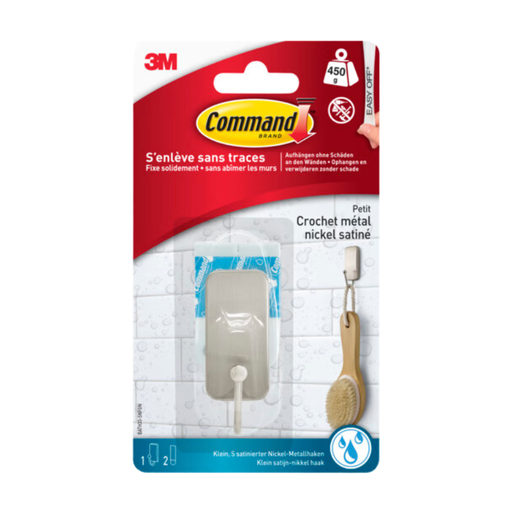
Why we love it: A must-have for the bathroom or shower. Its elegant satin nickel finish and design are engineered for humid environments, where standard adhesives consistently fail.
It bypasses the "one-size-fits-all" adhesive problem by using water-resistant adhesive strips, specially formulated for wet areas. Its metal construction combines durability with aesthetics.
Adheres to glass, mirrors, tile, and fibreglass. It's the reliable alternative to suction cups that always end up falling. The hook is reusable with replacement strips.
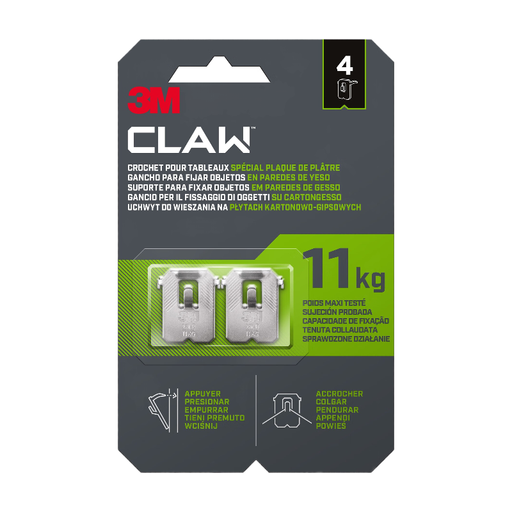
Why we love it: This is THE solution for hanging heavy items (large frames, mirrors) on drywall without needing to find a stud. A true alternative to drilling for substantial loads.
This isn't an adhesive hook. It uses hardened steel claws that lock into drywall with just a push of your thumb. Its 11kg capacity is reliable for this very specific use, eliminating any risk of falling.
Installs without any tools. It grips firmly into drywall and offers a high load capacity where adhesives are not an option. Perfect for the most ambitious wall decor projects.
We have compiled a complete, up-to-date selection of products that meet our strict selection criteria and safety standards.
For hooks with a stretch-release tab (like Command), simply pull the tab very slowly, straight down and parallel to the wall. Crucially, never pull the tab towards you. The adhesive will stretch and release without leaving a single trace. For other adhesives, you can try gently heating the base of the hook with a hairdryer to soften the glue before carefully prying it off.
Yes, but with a caveat. The hook itself is almost always reusable. However, the adhesive strip is single-use. To reuse the hook, you will need to buy compatible refill strips, making sure to choose the right type (standard, water-resistant, etc.) and size.
The fundamental difference is the glue. An outdoor hook uses a special formula designed to withstand a whole range of harsh conditions: rain, snow, UV rays, and extreme temperatures (both hot and cold). A standard adhesive would degrade very quickly in such an environment, losing its grip and causing the hung object to fall.