
Livraison le jour même ou le lendemain

Qualité garantie

Débloquez vos offres de bienvenue: Livraison GRATUITE | Jusqu'à -80 % | 30 jours d'essai gratuits à JoyPlus
Téléchargez l'application
Hanging a frame, putting up a shelf, or simply organising your space no longer has to mean drills, dust, and permanent holes. Whether you're a renter committed to leaving your apartment in pristine condition, a homeowner looking to preserve your walls, or a design enthusiast seeking flexibility, drill-free mounting has become an essential solution.
However, the market is flooded with products that make tempting claims but often fail to deliver. To avoid disappointment—and damaged walls—it's best to understand the most common pitfalls before you start.
To make the right choice, you need to look beyond just the weight capacity. Three technical parameters deserve close inspection to ensure a bond that is both reliable and reversible.
Not all adhesives are created equal. The main distinction is between permanent and removable adhesives.
Always check compatibility: Surfaces like wallpaper (both adhesive wallpaper and traditional), freshly painted walls, vinyl finishes, or highly textured walls are often unsuitable. A smooth, clean, and dry surface (tile, glass, varnished wood, or a painted wall that has cured for several weeks) is an absolute prerequisite for optimal adhesion.
The weight listed on the packaging is a maximum static load. To hang a picture without a hole with complete peace of mind, build in a safety margin. Never push a product to its absolute limit. If a frame weighs 1.8 kg, choose a solution rated for at least 2.5 kg or 3 kg. For valuable or fragile items, it's best to distribute the load across multiple mounting points.
An adhesive designed for a living room won't stand up to the steam in a bathroom or the temperature fluctuations of an exterior wall.
Rather than an exhaustive list, we've matched products to specific user profiles to help you find the solution that perfectly fits your needs.
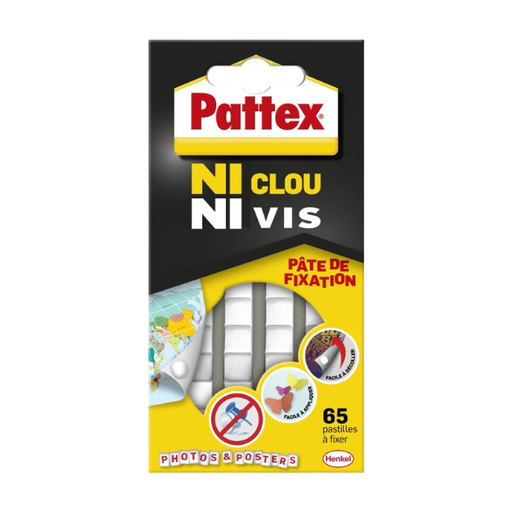
Why we chose it: Ideal for those who want to hang posters, photos, or paper decorations without any long-term commitment. It's the most flexible and budget-friendly solution for light and temporary needs.
This product doesn't overstate its capacity; it's clearly intended for very lightweight objects. Its repositionable nature eliminates the risk of wall damage, as it's designed to be removed and reused without leaving a trace.
Fully repositionable and leaves no residue. The 65 pre-cut squares offer excellent value for money for multiple small projects.
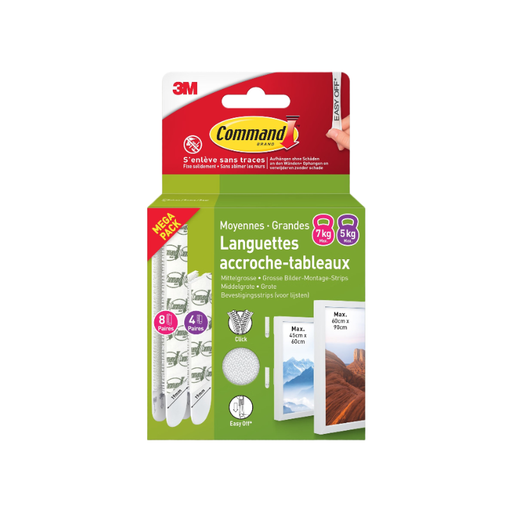
Why we chose it: Perfect for creating a gallery wall without a single hole. This pack combines different sizes to accommodate frames of various weights, and the fastening system makes it easy to remove and rehang them.
Command technology is renowned for its clean removal. The pack clearly states the weight capacities for each strip size (up to 5 kg for medium, 7 kg for large), avoiding the trap of an overstated load capacity.
An invisible, removable fastening system that holds frames securely. The multi-size pack offers great versatility for larger-scale decorating projects.
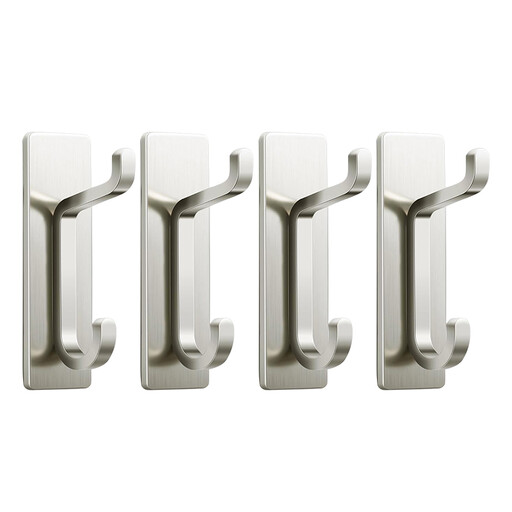
Why we chose it: For those who need functional and sturdy storage solutions in the kitchen, entryway, or bathroom. These metal hooks are designed for daily use and a modern look.
The metal construction inspires more confidence than flimsy plastic hooks. The product is presented as a fixed and durable storage solution, thus avoiding the false promise of easy removal for a strong bond.
Durable metal material and modern design. The strong adhesive installation is intended for a solid hold of everyday items (tea towels, utensils, keys).
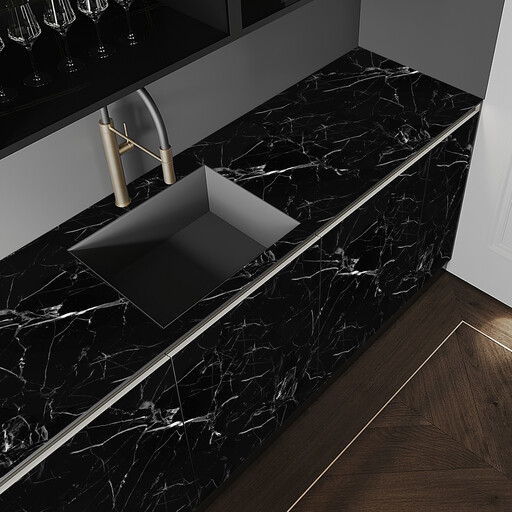
Why we chose it: For those who want a high-impact visual statement without breaking out the paint cans. This adhesive wallpaper lets you create an accent wall, refurbish furniture, or modernise a backsplash in record time.
This product tackles the incompatibility pitfall by clearly specifying that it must be applied to smooth, clean, and dry surfaces. It doesn't present itself as a universal solution, but as a specific decorative covering.
Fast, large-scale aesthetic transformation. The PVC material is durable and easy to clean, making it ideal for accent walls or furniture surfaces.
We've compiled a complete, up-to-date list of products that meet our strict selection criteria.
The durability of a drill-free mount depends on several factors: product quality, following the installation instructions, the object's weight, the surface type, and the environment (humidity, heat). A high-quality adhesive strip, correctly installed on a suitable surface, can hold for several years without failing. More basic solutions like mounting putty are designed to be less permanent.
It's strongly discouraged in most cases. The adhesive, especially if it's strong, is likely to bond more firmly to the wallpaper than the wallpaper's glue is to the wall. When you try to remove it, you risk tearing the wallpaper. Always read the manufacturer's recommendations. For extremely lightweight objects, a repositionable adhesive putty might work, but you do so at your own risk.
The method depends on the type of adhesive. For stretch-release strips, simply pull the tab gently downwards, parallel to the wall, until the hook comes free. For foam or more rigid adhesives, gently heating the area with a hairdryer can help soften the glue. Then, carefully slide a piece of dental floss or a thin credit card between the wall and the mount to "saw" through the adhesive without scratching the surface.