
Livraison le jour même ou le lendemain

Qualité garantie

Débloquez vos offres de bienvenue: Livraison GRATUITE | Jusqu'à -80 % | 30 jours d'essai gratuits à JoyPlus
Téléchargez l'application
Hanging a picture frame, coat hook, or towel rack should no longer mean drills, dust, and holes in your walls. Whether you're a renter (and want your security deposit back) or are simply DIY-averse, the drill-free hook is the perfect alternative. The problem? Between unkept promises and low-quality adhesives, it's easy to end up with a damaged wall or a hook that gives way under the weight of a single towel.
As a Product Expert at Joybuy, my mission is to help you sort through the options. Let's break down the pitfalls to avoid and the criteria that truly matter, cutting through the marketing noise to help you make the right choice.
Before you grab the first hook you see, watch out for these three classic traps that can turn a great idea into a disaster.
To ensure you make the right choice, focus on these three essential points that make all the difference.
Not all drill-free solutions are created equal. There are two main technologies:
The maximum load indicated is a theoretical value obtained in a lab. In practice, rely on these guidelines instead:
For a bathroom, laundry room, or kitchen, the "Water-Resistant" or "For Humid Environments" label isn't an option—it's a requirement. These products use specific adhesive strips that maintain their holding power even in the presence of steam and condensation. Always check for this specification to prevent your drill-free coat hook from failing after a few showers.
Rather than an exhaustive list, here are solutions designed for specific needs, chosen because they tick all the right boxes.
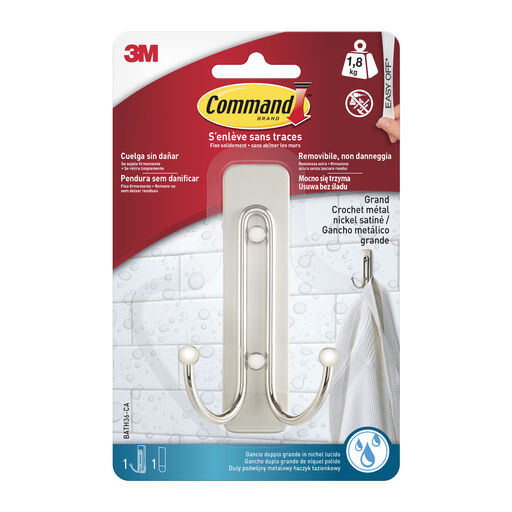
Why we chose it: It's specifically designed for humid environments, allowing you to hang robes and towels (up to 1.8 kg) without fear of detachment.
It uses water-resistant adhesive strips that prevent detachment caused by steam, a classic trap for standard adhesives.
Its double-hook design optimises space, and its satin nickel finish resists rust for a style that lasts.
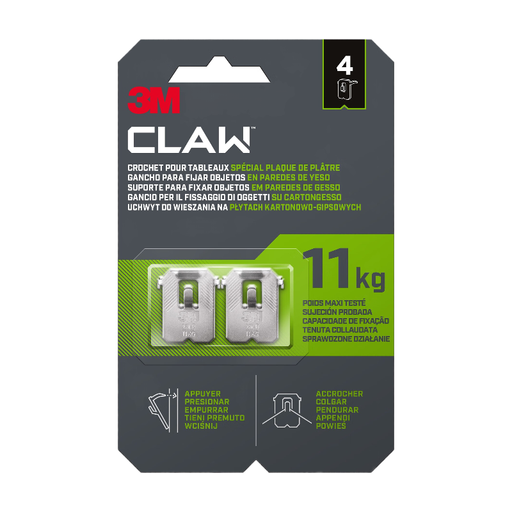
Why we chose it: For hanging heavy objects like mirrors or large frames on drywall, without needing to find studs or take out the drill.
It bypasses the overstated weight capacity trap of adhesives with its ultra-reliable mechanical grip, supporting up to 11 kg.
Incredibly simple thumb-push installation. The hold is strong and secure on the most common interior wall material: drywall.
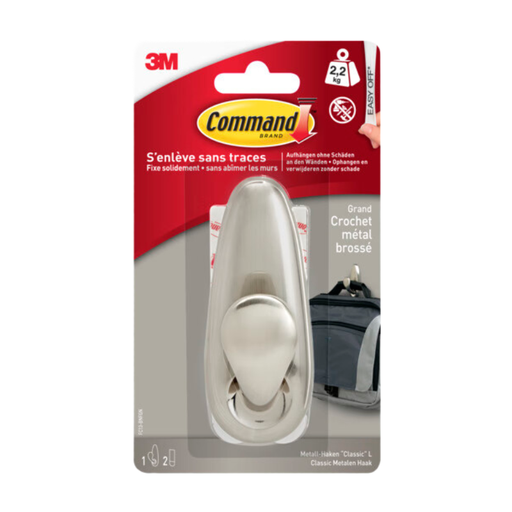
Why we chose it: It's an elegant and robust solution for entryways, offices, or kitchens. Its 2.2 kg capacity is perfect for coats, bags, and other everyday accessories.
It beats the "damage-free" trap thanks to the famous Command stretch-release strip, which ensures clean removal from smooth surfaces.
It combines a refined aesthetic (brushed metal finish) with a reliable load capacity (2.2 kg) and the flexibility to be moved at will.
For very heavy loads or specific cases where a permanent fixture is necessary, explore our selection of traditional solutions.
It all depends on the technology. Hooks that use stretch-release adhesive strips (like those from the Command brand) are perfectly reusable. Simply remove the old strip and apply a new one to move the hook. On the other hand, hooks with a standard foam adhesive are generally single-use. Claw hooks can be removed and reused, but they will leave discreet little marks on the wall.
This should be avoided at all costs. The adhesive is likely to bond with the paper, and removal, even with a "damage-free" system, will almost certainly tear the wall covering. Stick to painted surfaces (that have been dry for at least 7 days), tile, glass, or varnished wood.
When installed correctly on a clean, suitable surface, a quality adhesive hook can last for several years. Its longevity will depend on respecting the maximum load capacity, as well as on variations in temperature and humidity. For an adhesive bathroom hook, using a water-resistant model is essential to ensure it holds up over time.