Households that regularly buy the same dried fruit
If you regularly eat almonds, raisins, dates or prunes, choose a pack size you can finish without leaving the bag open for too long.


If your household regularly eats the same dried fruit, choose a large bag only if you can finish it and store it properly. If you prefer a mix, check its ingredients and allergens. In either case, check the best-before date and make sure you can order the product from your chosen store or for your preferred delivery slot.
If you regularly eat almonds, raisins, dates or prunes, choose a pack size you can finish without leaving the bag open for too long.
To tell a single dried fruit apart from a mix, read the ingredients, allergen information and nutritional details for the exact product before adding it to your basket.
The pack you choose also needs to be available from your selected store and suitable for your collection method or delivery slot.
Start with a pack size your household will actually use, then check the product ingredients and your order options.
| What to consider | What to check | Who is it for? |
|---|---|---|
| Bag size | Compare the net weight of similar products and check the best-before date. | When I regularly buy the same dates or almonds, I want a bag my household can finish without leaving some unused. Around 45% of consumers prioritise this choice of pack size. |
| Ingredients | Read the ingredients and allergen information. If nutritional details are shown, compare the sugar and salt content per 100 g. | When choosing a mix, I need to know all its ingredients before adding it to my basket. Ingredients are the main consideration for around 33% of consumers. |
| Product availability | Select your store or area, then check the collection or delivery method and available slot. | If I’m relying on delivery or collection, I need to be able to get the bag when I want it. This is the priority for around 22% of consumers. |
A 1 kg pack won’t suit every household: some may go unused or lose quality once the bag is opened.
Choose a size that matches your usual consumption and follow the product’s storage instructions.
These products can have different ingredients and allergens. The name or picture alone won’t tell you what’s in the bag.
Compare each category separately and check the ingredients and nutritional values per 100 g.
This claim doesn’t tell you about the other ingredients or whether sugars have been added.
Check the full ingredients list and nutritional information for the product you’ve chosen.
A product shown in a catalogue may not be available from your chosen store or for your selected slot.
Enter your store and order method, then confirm the product in your basket before completing your order.
Its online range makes it easy to find dried fruit available for delivery or click and collect.
E.Leclerc DRIVE offers dried fruit for orders with drive-through collection, pedestrian collection or home delivery.
Auchan’s range includes nuts, dried fruit, seeds and mixes, with click and collect and delivery options.
Its online grocery service offers home delivery or collection in store.
Lidl’s Alesto range includes nuts, dried fruit and snack products, available to buy in store.
Aldi lists products including a 200 g bag of blanched, unsalted almonds.
These two 500 g bags are suited to households that regularly use red dates or dried jujubes. Before choosing, check the ingredients, best-before date and order options.
 Image unavailable
For households that regularly eat red dates and prefer them pitted. The bag contains 500 g. Before ordering, check the ingredients, best-before date and storage instructions.
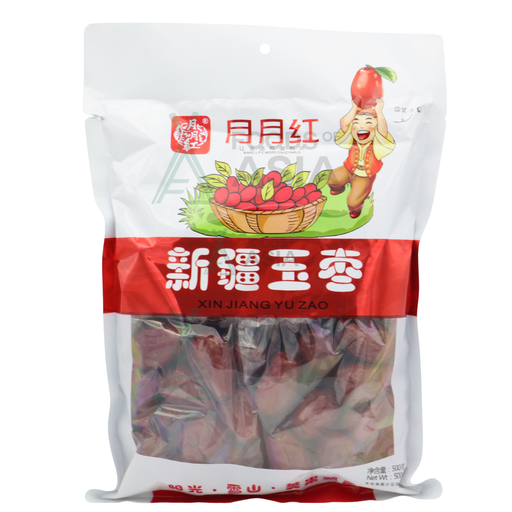 Image unavailable
For households that regularly use dried jujubes. This bag contains 500 g. Check the product listing and packaging for the ingredients, best-before date and storage instructions.
Choose a size your household can use and store properly. Carrefour lists 500 g bags of dates and 1 kg bags of prunes, while Auchan offers almonds in several pack sizes. The right choice depends on the fruit and how quickly you use it.
Check the product name, ingredients, allergen information, net quantity and best-before date. The DGCCRF sets out the labelling rules for pre-packed food. Where nutritional information is required, it is generally given per 100 g to make comparisons easier.
No, these claims refer to different things. To find out what’s in a particular mix, read the ingredients list. The amount of sugars shown in the nutritional information doesn’t, on its own, tell you whether sugars have been added.
Select your store or area and your delivery or collection method, then confirm the product in your basket. Monoprix asks you to choose a slot, while E.Leclerc advises that availability may depend on the selected store or collection point.