A parent grabbing a meal on their own
When there’s no time to make a pan of soup, an individual sachet lets you prepare just one bowl. Check whether you only need to add hot water or whether the recipe needs cooking.


For a bowl prepared between tasks, choose individual portions; if you’re serving several people at once, look for family-size sachets. Dried soup is made up with water, so if you’re looking for tins of ready-to-eat soup, check the category before stocking up. In either case, compare the portions, preparation instructions, salt and allergens for the specific recipe.
When there’s no time to make a pan of soup, an individual sachet lets you prepare just one bowl. Check whether you only need to add hot water or whether the recipe needs cooking.
A family-size sachet is a good choice when several people are having soup at the same meal. The number of portions, amount of water and cooking time on the pack will help you plan how to prepare it.
If salt, allergens or particular ingredients influence your choice, compare the labels recipe by recipe. A vegetable-based name doesn’t tell you whether it contains wheat, milk or celery.
Start by deciding how many bowls you usually prepare at a time. Then compare the instructions and ingredients of the pack sizes that suit your needs, rather than relying on the number of sachets in a multipack alone.
| Criterion | What to check | Who it matters to |
|---|---|---|
| Portions and preparation | Number of bowls, amount of water, and whether the soup needs cooking or simply rehydrating. | When I’m eating on my own while looking after the baby, I want to prepare one bowl without opening a family-size sachet. Around 36% of consumers are said to prioritise quick portions above all else. |
| Salt and ingredients | The ‘salt’ line in the nutrition information and the basis given: per 100 g, per 100 ml as prepared or per portion. | If soup is part of a day’s meals alongside other salty foods, I want to be able to compare recipes on a clear basis. Around 29% of consumers are said to prioritise keeping track of salt and ingredients. |
| Allergens and ingredients | The ingredients list, highlighted allergens and ‘may contain’ statements for the exact product. | Before sharing a meal, I need to rule out any recipe that contains ingredients we avoid. For around 21% of consumers, this compatibility is said to be the main criterion. |
| Keeping a stock in the cupboard | Product name, net quantity, best-before date and storage instructions. | If I want to keep several easy meals on hand, I need to know what each pack contains and how to store it. Pack size is said to be the main priority for around 14% of consumers. |
A multipack of tins won’t necessarily meet the same need as a pack of sachets that you make up with water: the contents, storage and preparation are different.
Before buying several units, read the product name, net quantity, number of portions and preparation instructions.
Vegetable soup listings from Auchan and Carrefour mention wheat, milk or celery in some recipes, as well as other ingredients in ‘may contain’ statements.
Check the ingredients list and ‘may contain’ statements on the packaging of the product you’re buying.
Manger Bouger lists soups among the products that can contain salt you might not immediately notice. The amount varies by recipe and serving size.
Compare the ‘salt’ line on the same basis, then taste the soup before adding any salt.
Auchan’s listing for Maggi organic vegetable and vermicelli soup describes a 60 g sachet for four people.
Royco’s website features several soup ranges; Auchan’s range includes individual portions in four 20 cl sachets.
Carrefour’s range includes a 105 g 9-vegetable soup and a vegetable soup in four 20 g sachets.
E.Leclerc’s range includes a 104 g minestrone and a 72 g chicken soup with vermicelli and vegetables.
Lidl describes Vitasia Asian soup as easy to store and quick to prepare.
This selection includes sachets for preparing several bowls and soups in individual portions. Choose according to how many people you’re serving and the instructions for each recipe.
 Image unavailable
Worth considering if you’re preparing two bowls for the same meal rather than one portion in a cup.
The pack size is listed as 69 g; the variant is also marked 0.70 L. The soup needs cooking, so check the instructions before relying on it for a meal that doesn’t need a pan.
The recipe contains wheat, eggs, soya, mustard and milk, and may contain traces of other ingredients. Salt is listed as 0,78 g per 100 ml of prepared soup, so take the amount you actually serve into account.
 Image unavailable
The three separate portions are a good option if you’re buying soup mainly for the odd bowl.
The product comes in a 3 x 20 cl pack. Check the packaging for preparation steps so you can allow enough time.
The recipe contains gluten, celery, milk and chicken, and may contain traces of several other ingredients. The stated salt content is 1,8 g per 200 ml portion.
 Image unavailable
This pack of separate portions is worth considering if you want to prepare a bowl without using a pan.
The pack is marked 8pc. Follow the temperature and water volume instructions on the packaging for each portion.
The recipe contains soya and may contain traces of gluten and wheat. To compare its salt content with another soup, use the amount for one prepared portion rather than a figure given per 100 g of dry product.
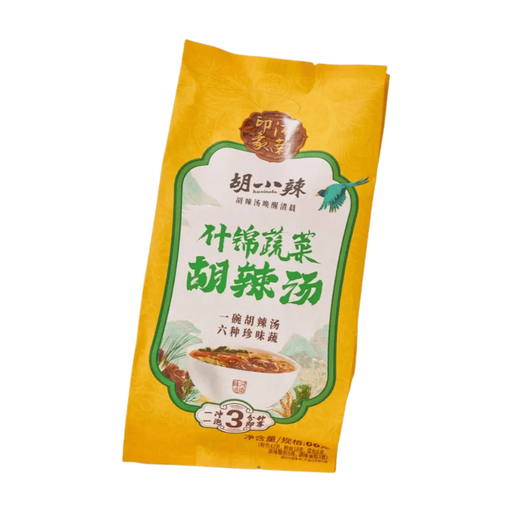 Image unavailable
This individual soup is worth considering if you have boiling water available to prepare a bowl.
The pack is listed as 66 g. Follow the preparation instructions for this spicy recipe.
The ingredients include gluten, soya, sesame and sweeteners. The salt figure given per 100 g doesn’t directly correspond to the amount in a prepared bowl, so check the label for this information.
 Image unavailable
This sachet needs cooking in a pan and is worth comparing with family-size packs if you’re planning to serve several bowls.
The pack is marked 85 gr. The instructions call for 750 ml of water; check the number of portions on the packaging before deciding how many sachets to stock up on.
The recipe contains gluten and may contain traces of egg, soya, milk and celery. To understand the nutrition information per portion, check what volume of prepared soup it refers to.
No. Dried soup needs to be made up with water, while a tin of ready-to-eat soup already contains soup in liquid form. When stocking up, check the product name, contents and preparation instructions rather than relying on terms such as ‘bulk’ or ‘tinned’.
Choose individual sachets if you mostly prepare one bowl at a time; a family-size sachet is better suited to serving several bowls together. It may need a pan and a specific amount of water: for example, Auchan’s listing for Maggi organic vegetable and vermicelli soup, 60 g, gives one litre of water, four portions and five minutes of cooking time.
Compare the ingredients list, allergens, nutrition information, net quantity and date on each product. The DGCCRF notes that this information appears on the labels of prepacked foods. To compare salt content, also check whether the figure is for the dry product, 100 ml of prepared soup or one portion.
Don’t treat dried soup chosen for adults as food intended for a baby. Manger Bouger advises against adding salt to food offered to a child under one year old. Check the soup’s ingredients and ask for advice tailored to your baby’s diet.