What should you check before buying?
Start with the ingredients and salt content, then choose a recipe and pack size to suit the dinner you have planned.
| Criteria |
What to check |
Who it matters to |
| Salt and allergens |
Allergens highlighted; salt per 100 ml of prepared soup and in the bowl served. |
If we need to avoid certain ingredients at home, I need to be able to spot them before choosing; around 29% of affected consumers would put this check first. |
| Flavour and variety |
Recipe ingredients, seasoning and whether it contains vermicelli or croutons. |
For a child still discovering new flavours, I’m looking for a recipe I can offer while keeping mealtimes varied; around 29% of affected consumers would prioritise how much they enjoy the taste. |
| Preparation and portions |
Number of bowls, finished volume and stated preparation time. |
When dinner needs to be ready quickly, I want to prepare an amount that suits the people eating; around 24% of affected consumers would prioritise this. |
| Storage |
Best-before date, condition of the packaging and storage or usage instructions after opening. |
To keep soup in reserve without forgetting about a large, opened sachet, I check how it should be stored; this would be the main concern for around 18% of affected consumers. |
Dried soups to compare on Joybuy
These three dried soups let you compare a ROYCO pack of individual sachets with two MAGGI sachets. Before choosing one to keep in the cupboard, also check the ingredients, the volume to prepare and the date on the product you receive.
 Image unavailable
MAGGI Chorba, 85 g
Worth considering if chorba suits your child’s tastes; check the seasoning before serving it for dinner.
The recipe lists gluten and celery, and may contain traces of egg, soya and milk. Check the sachet for the amount of water needed and the number of bowls it makes.
View on Joybuy
 Image unavailable
ROYCO Noodles, Carrots and Mushrooms, 3 × 20 cl
The pack of three individual sachets is handy when you only need one or a few small bowls for a meal.
The recipe lists gluten, celery and milk. Compare the stated salt content of the prepared soup with the volume you plan to serve, and check the full list of allergens.
View on Joybuy
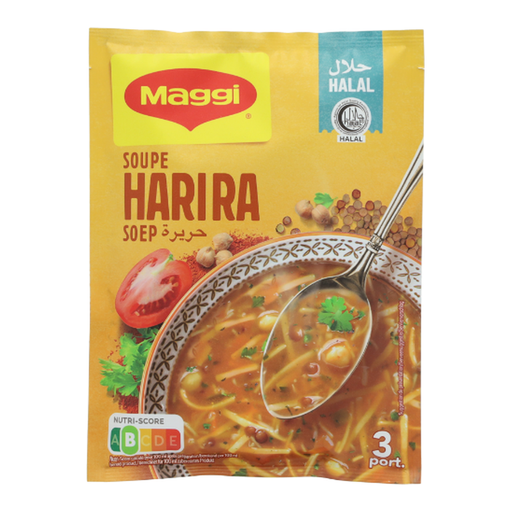 Image unavailable
MAGGI Harira, 90 g
This harira is an option if its ingredients and seasoning suit the dinner you have planned.
The recipe lists gluten and may contain traces of egg, soya, milk and celery. Check the sachet for the volume it makes before working out how many portions you’ll get.
View on Joybuy
Frequently asked questions
Is ordinary dried soup suitable for a child under one?
Don’t assume that it is. Manger Bouger advises against adding salt to food offered to a child under one. Before choosing a recipe, take your child’s age and any dietary guidance into account.
How do you compare the salt in two sachet soups?
Compare the salt content of both prepared soups at the same volume, then consider how much is in the bowl you’ll actually serve. The amount of water needed and the finished volume may vary from one recipe to another.
Should you add salt during preparation?
Don’t add it automatically: first check the salt content and the instructions on the sachet. Manger Bouger recommends limiting salty foods in children’s diets.
Can you use soup after its best-before date?
A past best-before date doesn’t automatically mean the product can’t be eaten. According to the DGCCRF, it may still be safe to eat if the packaging is intact, although its quality may have deteriorated. Check the storage instructions too, and don’t confuse a best-before date with a use-by date.
Is an ‘organic’ or ‘no preservatives’ claim enough if you have an allergy?
No. These claims don’t replace checking the ingredients and highlighted allergens. Before serving the soup to someone with an allergy, check the specific recipe and any possible traces listed on the packaging.


