People keeping an eye on fibre
You want to keep eating pasta while comparing its fibre content. Manger Bouger recommends choosing wholegrain or semi-wholegrain starchy foods and says fibre contributes to feelings of fullness.


When choosing dried pasta as part of your approach to weight management, compare the fibre content and the proportion of wholemeal semolina, while keeping the rest of the meal in mind. Manger Bouger says fibre contributes to feelings of fullness and recommends pairing starchy foods with vegetables and a source of protein. Pasta made with a blend of semolinas may suit you if you prefer the taste; a higher protein content alone does not demonstrate an effect on weight.
You want to keep eating pasta while comparing its fibre content. Manger Bouger recommends choosing wholegrain or semi-wholegrain starchy foods and says fibre contributes to feelings of fullness.
You want to try pasta containing wholemeal semolina without immediately giving up the recipes everyone at home enjoys. The proportion of wholemeal semolina varies between products, so check the ingredients on the pack you choose.
You’re looking at pasta with added plant protein. Check its ingredients and allergens, then consider the other foods you plan to serve with it.
First decide whether your priority is fibre, the overall recipe, taste or protein. Then compare the nutritional information on the same basis: per 100 g of dried pasta.
| Criterion | What to check | Who it’s for |
|---|---|---|
| Fibre and fullness | Whether wholemeal semolina is listed in the ingredients and the amount of fibre per 100 g of dried pasta. | If I want to keep pasta on the menu, its fibre content becomes my top priority; around 36% of consumers would put this need first. |
| What’s in the meal | The vegetables and source of protein planned to go with the pasta, as well as the ingredients added to the sauce. | To keep making the dishes I enjoy, I’d rather think about the whole plate than just the pasta pack; this would be the priority for around 29% of consumers. |
| Taste and texture | The percentage of wholemeal semolina, if stated, and the fibre per 100 g. | If my household isn’t keen on wholemeal pasta yet, I look for a gradual switch that works with our recipes; around 21% of consumers would put this need first. |
| Protein | The protein per 100 g, the ingredients list and the allergens in the product you’re considering. | If I want the pasta to contribute to the meal’s protein, I check its ingredients before choosing; this would be the top criterion for around 14% of consumers. |
The proportion depends on the product. Panzani says its Complètement Bon range contains 50% wholemeal wheat semolina, while the ingredients list for Lustucru Collerettes délices published by Auchan states 15% wholemeal semolina.
Read the ingredients and the percentage stated on the pack, then compare the fibre per 100 g of dried pasta.
The type of pasta tells you nothing about the toppings or the quantities added. Manger Bouger recommends including vegetables, starchy foods or pulses, and a source of protein in your main meal.
Choose your pasta with the recipe in mind: pay particular attention to the vegetables, source of protein and sauce ingredients.
Panzani says its Les Protéinées range contains ingredients including durum wheat, wheat protein and peas. Some Auchan wholemeal pasta products also state that they may contain traces of egg, soya and mustard.
If you have an allergy or avoid certain foods, check the ingredients and allergen information for the specific product before buying.
The Integrale range includes wholemeal pasta, including spaghetti.
The brand offers two distinct ranges: Complètement Bon, made with a blend of semolinas, and Les Protéinées, which contains ingredients including wheat protein and peas.
Collerettes délices wholemeal pasta combines two types of durum wheat semolina.
Carrefour offers a wholemeal durum wheat pasta product under its own brand.
E.Leclerc offers Turini wholemeal penne in a 500 g pack, among other products.
The brand offers wholemeal wheat coquillettes and spaghetti, among other products.
These two wholemeal wheat dried pasta products let you explore different shapes if fibre and the overall meal are guiding your choice. Check the nutritional information and allergens on each pack before comparing them.
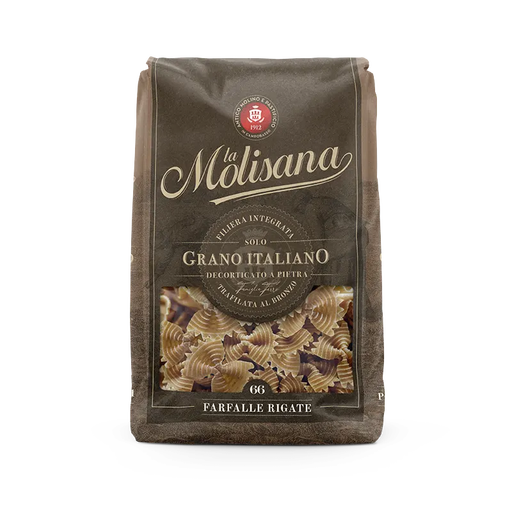 Image unavailable
A farfalle shape to consider if you’d like to make a pasta dish with Integrali. The pack contains 500 g; compare the fibre per 100 g and check the ingredients and allergens on the packaging.
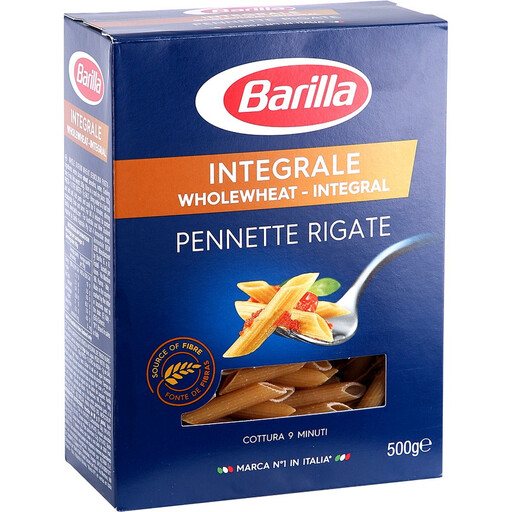 Image unavailable
A pennette shape to consider if you prefer wholemeal pasta for your usual recipes. The pack contains 500 g; check the nutritional information and allergens for this variant rather than relying on the details for other Barilla pasta products.
No, choosing wholemeal pasta does not guarantee weight loss. Manger Bouger says fibre contributes to feelings of fullness, but the meal also depends on portion sizes and what you serve with it.
Compare the nutritional values per 100 g of dry product, particularly fibre and protein, then read the ingredients to see how much wholemeal semolina it contains, if this is stated. Consider the recipe you’re planning rather than attributing the qualities of the whole dish to the pasta pack.
It may suit you if you prefer the taste or texture, but the ingredients vary. Panzani says Complètement Bon contains 50% wholemeal wheat semolina, compared with 15% in the ingredients list for Lustucru Collerettes délices published by Auchan; compare the fibre content of the specific packs too.
Read the ingredients and allergen information for each product, including any warnings about possible traces. The wheat pasta products discussed contain wheat, and Auchan’s product information for its wholemeal coquillettes warns that they may contain traces of egg, soya and mustard.