Households that cook a variety of dishes
If you make everything from pasta with sauce to salads and bakes, the shape matters just as much as the brand. One shape won’t necessarily work for every recipe.


When stocking your cupboard with dried pasta, start with the dishes you make. One short shape and one long shape can cover a range of uses, while wholemeal, quick-cook or gluten-free pasta each meet a different need. Check the ingredients, allergens, cooking time and storage instructions before deciding how much to stock up on.
If you make everything from pasta with sauce to salads and bakes, the shape matters just as much as the brand. One shape won’t necessarily work for every recipe.
500 g and 1 kg packs suit different usage habits and storage spaces. Choose an amount you can store properly, especially once the pack has been opened.
Wholemeal pasta, a short cooking time and a gluten-free recipe each meet a different need. Check the pack that matches your priority rather than treating these options as interchangeable.
First, choose shapes that work for the dishes you make regularly, then decide whether a particular recipe deserves a place in your cupboard. For every pack, the ingredient and storage information matters just as much as its size.
| Criteria | What to check | Who is it for? |
|---|---|---|
| Amount to stock | Compare the net weight with how often you use pasta, and plan to store opened packs somewhere dry. | If I’m stocking up, I want to use my packs without leaving them open for too long; around 24% of shoppers rank the amount to stock as their top priority. |
| Versatile shapes | Keep a short and a long shape in your cupboard; add tubes, twists or lasagne sheets to suit your recipes. | To make a variety of dishes with only a few packs, I need shapes that suit the recipes I actually cook; nearly 23% of shoppers prioritise this versatility. |
| Wholemeal recipe | Read the ingredients list and nutritional information for the product you choose, including the fibre per 100 g. | When I want to cook with wholemeal pasta, I look for a recipe that suits this dietary choice; around 18% of shoppers make this their main priority. |
| Quick cooking | Check the cooking time stated for the exact product, rather than guessing from its shape alone. | On days when saving time matters most, I look for a pack with a short stated cooking time; around 18% of shoppers prioritise this above all else. |
| Gluten-free ingredients | Check the gluten-free label, ingredients list and allergen information on the pack you choose. | If I need to choose gluten-free pasta, its ingredients come before the shape or cooking time; around 17% of shoppers put this requirement first. |
According to Panzani’s cooking guide, twists hold thick sauces, while tube-shaped pasta works well in oven-baked dishes. Lasagne sheets, meanwhile, are designed for a specific recipe.
Keep a short and a long shape if you use them regularly; save more specialised shapes for dishes you actually make.
Made with whole wheat, a shorter cooking time and gluten-free ingredients are three distinct features. Having one doesn’t mean a pasta has the other two.
For each product, check the ingredients, allergens, nutritional information and cooking time against your needs.
The DGCCRF distinguishes between a best-before date (DDM) and a use-by date (DLC). A best-before date that has passed does not, by itself, mean a product is unfit to eat, but its condition still matters.
Read the exact wording on the packaging and check that the pack is intact, dry and shows no signs of deterioration.
These brands offer different shapes and recipes. Compare the specific products: a feature of one pack won’t necessarily apply to the whole brand.
Barilla offers classic, wholemeal and gluten-free ranges, among others.
Panzani offers short and long shapes, pasta designed for oven-baked dishes and a quick-cook range.
Lustucru offers classic pasta, recipes made with fresh eggs and quick-cook products.
Carrefour offers dried pasta across several own-brand ranges, including Carrefour Classic’, Carrefour Bio and Carrefour Extra.
E.Leclerc’s range includes Turini pasta and gluten-free small pasta under its own brands.
Auchan offers wholemeal dried pasta and quick-cook products, among others.
These products suit different cupboard needs: quick-cook short pasta, wholemeal farfalle, gluten-free penne and lasagne sheets for oven-baked dishes. Choose according to your recipes and the information on the pack, rather than automatically swapping one shape for another.
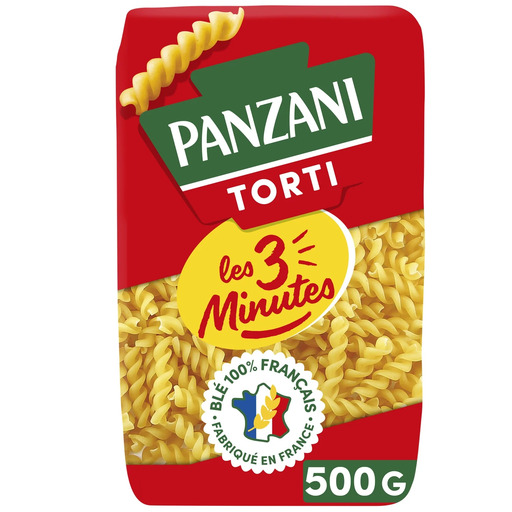 Image unavailable
A short shape to consider when cooking time matters. The pack states 500 g and a cooking time of 3 minutes; check the allergen information on the packaging to make sure it suits your needs.
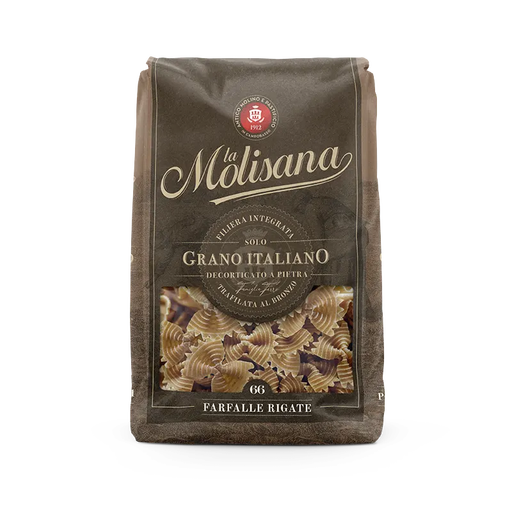 Image unavailable
Wholemeal farfalle to add this recipe to your cupboard. The pack states 500 g; read the ingredients and nutritional information for this product before choosing it.
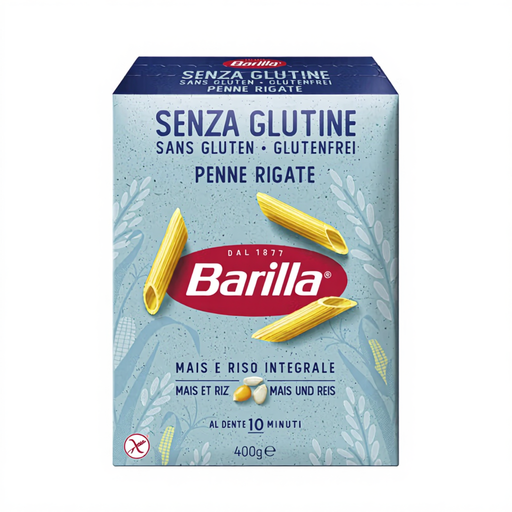 Image unavailable
Penne to consider if you’re looking for a gluten-free option. The product title states 400 g; check the ingredients, allergens and cooking time on the pack.
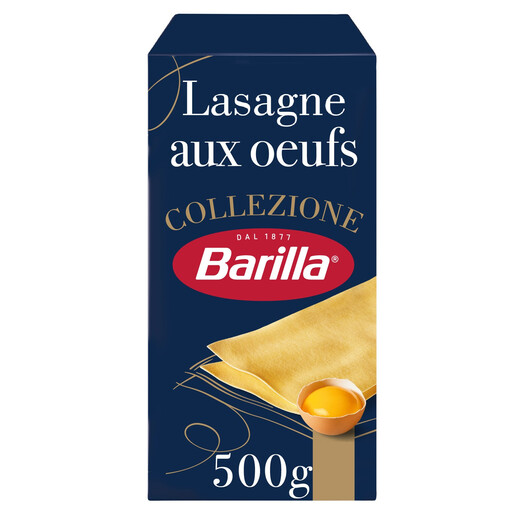 Image unavailable
Lasagne sheets for making lasagne, rather than for the uses you’d choose a short pasta for. The pack states 500 g; check the ingredients and allergens before buying.
A best-before date that has passed does not, by itself, mean you can’t eat dried pasta. The DGCCRF says the product may, however, have lost some of its qualities. Check that the pack is intact and shows no sign of damp or deterioration. Don’t confuse a best-before date with a use-by date.
Follow the instructions on the pack and protect the pasta from moisture. The published guidance for one Auchan product says to store it away from light and moisture, while the guidance for one Lustucru product recommends a cool, dry place.
No: wheat pasta contains gluten. To choose a gluten-free product, check its gluten-free label, ingredients and allergen information. For example, Barilla describes its gluten-free small pasta as made with white maize, yellow maize and rice; this composition doesn’t apply to all its pasta.
Read the ingredients list and allergen information for the product you choose. For pre-packed foods sold in France, the DGCCRF states that allergenic ingredients must be highlighted on the label.