Who are these options for?

For lunches where fibre matters

You regularly put together a lunch using store-cupboard ingredients and want to choose between wholemeal and semi-wholemeal pasta. Manger Bouger includes both categories in its recommendations for wholegrain starchy foods.

For lunches where protein comes first

You’re looking for dried pasta with a stated protein content, while choosing the other components of your meal separately. For example, Barilla lists the protein content of its Penne Rigate Protein+.

For a convenient store-cupboard stash

You want to keep several packs of dried pasta on hand so you can vary your lunches. The pack sizes, dates and storage instructions on each pack can help you organise your supplies.

Which criteria should you prioritise?

Start by deciding what matters most for lunch, then compare packs using the same values per 100 g and check their ingredient lists.

Criteria What to check Who it’s for
Fibre Check whether wholemeal semolina is listed in the ingredients, then compare fibre per 100 g where this information is provided. Semi-wholemeal pasta does not necessarily have the same composition as wholemeal pasta. For my usual lunches, I want to choose pasta with fibre as my priority; around 50% of consumers would put this criterion first.
Protein Compare protein and fibre per 100 g for the specific product, as well as its ingredients and allergens. If protein content matters most for my dish, I want to be able to check it on the pack rather than infer it from the range name; this would be the priority for around 30% of consumers.
Storage Check the pack size, best-before date and storage instructions for the product you choose. I rely on dried pasta in my cupboard to make different lunches and want to store it properly; around 20% of consumers would put this practical need first.

Mistakes to avoid

  • Confusing protein with fibre

    A high protein value doesn’t tell you how much fibre a product contains. Barilla lists 20 g of protein per 100 g for its Penne Rigate Protein+; this figure is no substitute for checking the ‘fibre’ line.

    If both matter to you, compare their values per 100 g separately on the packs you’re considering.

  • Assuming a feature applies to an entire brand

    Panzani says its Complètement Bon range is made with 50% wholemeal wheat semolina. This doesn’t describe the composition of all Panzani pasta or of wholemeal pasta.

    Check the product description and ingredients for the shape and specific product you choose.

  • Storing pasta without checking the pack

    Dates and storage instructions matter when you have several packs in the cupboard. Auchan, for example, says its wholemeal coquillettes should be kept away from heat and moisture.

    Check the best-before date and the manufacturer’s instructions, then use the packs with the closest dates first.

  • Confusing wholemeal wheat with gluten-free

    Pasta made from wholemeal durum wheat semolina still contains wheat. The Directorate-General for Competition, Consumer Affairs and Fraud Control says that allergenic ingredients must be highlighted on the label.

    If you need to avoid an ingredient, check the ingredients list and any ‘may contain’ warnings on each pack.

Brands and ranges to consider

Barilla

Two options to consider, depending on your priority: wholemeal products and the Protein+ range.

  • Barilla lists 20 g of protein per 100 g for its Penne Rigate Protein+.
  • This value applies to the product mentioned; check the fibre and allergens separately on the pack you choose.

Panzani

The Complètement Bon range may appeal if you’d like to consider a semi-wholemeal option.

  • Panzani says it is made with 50% wholemeal wheat semolina.
  • This proportion doesn’t mean it has the same fibre content as wholemeal pasta, so compare the labels.

Lustucru

Lustucru Sélection includes fresh pasta, filled pasta and gnocchi, which are different from dried pasta for your store cupboard.

  • The ‘Groceries’ category lets you browse products intended for the cupboard.
  • Check the category and storage instructions for each product before adding it to your supplies.

Carrefour

Carrefour’s wholemeal durum wheat pasta is worth considering if you’re looking for a simple ingredients list.

  • Carrefour’s product listing gives wholemeal durum wheat semolina as an ingredient.
  • Check the ingredients on the specific pack, as this doesn’t apply to all Carrefour pasta.

E.Leclerc / Marque Repère

The E.Leclerc range includes Turini wholemeal wheat pasta and Chaq gluten-free products.

  • These ranges let you look for products that meet different criteria.
  • Don’t assume that ‘gluten-free’ means high in fibre; check the nutritional information for each product.

Auchan

Auchan’s 500 g wholemeal coquillettes are one example of dried wholemeal wheat pasta.

  • Auchan lists wholemeal durum wheat semolina in the ingredients and recommends storing the product away from heat and moisture.
  • This product contains wheat; also check the label for any ‘may contain’ warnings.

Joybuy products for your store cupboard

These two dried products suit different store-cupboard needs: wholemeal farfalle if you’re looking for this type of pasta, and buckwheat-flavoured noodles for a change. Noodles should not be confused with wholemeal pasta.
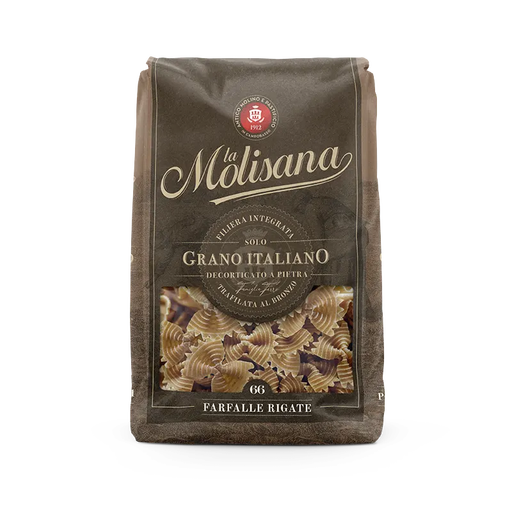
Pack of LA MOLISANA Farfalle Integrali N°066, 500 g

LA MOLISANA Farfalle Integrali N°066, 500 g

Worth considering if you’re looking for wholemeal farfalle for lunch. The pack is listed as 500 g; check its label to compare fibre, check allergens and find the batch date.

View on Joybuy
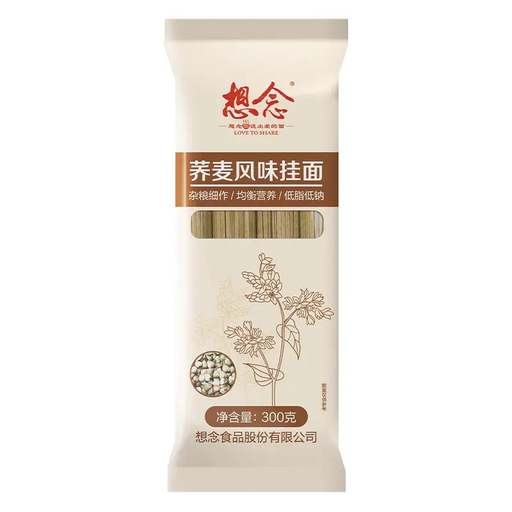
Pack of Xiang Nian buckwheat-flavoured noodles, 300 g

Xiang Nian Buckwheat-Flavoured Noodles, 300 g

Another type of dried product to consider for adding variety to lunches, without confusing it with wholemeal pasta. The pack is listed as 300 g; if these criteria matter to you, check the ingredients, fibre, allergens and date on the packaging.

View on Joybuy

Frequently asked questions

Should you always choose wholemeal pasta for lunch?

No. Manger Bouger recommends both wholemeal and semi-wholemeal pasta as wholegrain starchy foods. If you’re deciding between them, check the ingredients and fibre per 100 g on each pack, then consider the other components of your lunch.

How do you compare two packs of dried pasta?

Start by comparing their nutritional values per 100 g. The Directorate-General for Competition, Consumer Affairs and Fraud Control says that presenting information this way makes comparison easier. Also check the ingredients, fibre where listed and allergens, rather than relying on the front of the pack alone.

What should you check when storing dried pasta after opening?

Follow the manufacturer’s instructions on the pack. Auchan recommends keeping its wholemeal coquillettes away from heat and moisture; also check how to reseal or store the product you’re using.

Is the best-before date on dried pasta the same as a use-by date?

No. A minimum durability date (best-before date) and a use-by date don’t mean the same thing. The French Ministry of the Economy says that a use-by date is a strict limit; check the exact wording, date and storage instructions on your pack.

Is wholemeal wheat pasta gluten-free?

No. Wholemeal pasta made from wheat contains wheat. If you need to avoid wheat or gluten, check the ingredients and any ‘may contain’ warnings for each product. Don’t assume anything from the word ‘wholemeal’ alone.