Anyone preparing a sharing dish
You’re looking for a shape that suits your sauce, is easy to divide between guests and works with the way you plan to serve it.


For Easter lunch, start by choosing a dried pasta shape to suit your sauce and how you plan to serve it. Short shapes are easier to serve from a sharing dish, while long pasta works well when plated individually. Then compare the cooking time, net weight and ingredients of the specific product you’re considering, especially if you’re short on time or any guests have dietary requirements.
You’re looking for a shape that suits your sauce, is easy to divide between guests and works with the way you plan to serve it.
If there’s not much time between courses, choosing a product with a clearly stated cooking time can help you organise the meal.
You want to tell wholewheat pasta apart from products suitable for specific dietary requirements, and check the allergens on the packet you buy.
Decide how you’ll serve the pasta before choosing its shape. Then check the cooking time, quantity and ingredients on each packet: products from the same brand can differ.
| What to consider | What to check | Who is it for? |
|---|---|---|
| Shape and sauce | Choose between short shapes and long pasta to suit the sauce and whether you’re serving it in a sharing dish or plating it individually. | When serving a sharing dish, I want to be able to mix the pasta with the sauce and divide it easily; around 40% of consumers would make this match their top priority. |
| Quantity | Count your guests, decide whether the pasta is a main course or a side, then check the net weight of the packets. | When several guests are coming to the table, I want to make sure there’s enough pasta without relying on an assumed number of portions; quantity would be the top priority for around 30% of consumers. |
| Cooking time | Check the cooking time and instructions for the exact product; look for a quick-cook label if you’re short on time. | If several dishes need to be ready at the same time, I want to know how long to allow before I start cooking. Around 20% of consumers would prioritise this timing. |
| Ingredients | Check the ingredients and allergen information on each packet; “wholewheat” doesn’t mean “gluten-free”. | If guests need to avoid certain ingredients, I need to make sure the product is suitable for them; this check would come first for around 10% of consumers. |
The same brand may sell both ambient grocery products and chilled products. They need to be stored differently, and this can affect how you organise the meal.
If you’re stocking up before Easter, check that the product you choose is dried pasta, then follow the storage instructions on the packet.
Wholewheat pasta contains wheat: “wholewheat” does not mean “gluten-free”. Information about other allergens can also vary between products.
Read the ingredients and warnings on the packet intended for each guest concerned, rather than relying on the range name alone.
The stated cooking time depends on factors such as the shape and range. A “quick-cook” label doesn’t replace the instructions for the product you’ve chosen.
Note the time on the packet before planning the order of your preparations. If this is a new product for you, try it before the meal.
These brands and ranges give you a starting point for comparing shapes, recipes and cooking times. Always check the specific product rather than assuming that the features of one range apply to the whole brand.
Panzani offers short and long pasta shapes, as well as several products in its “Les 3 Minutes” range.
Barilla offers classic, wholewheat and Al Bronzo ranges, among others. The brand describes Al Bronzo as having a rough texture created by its manufacturing process.
Lustucru short spaghetti made with fresh eggs is listed among the products in Auchan’s spaghetti range.
The Carrefour Classic’ range includes fusilli, farfalle and penne rigate, as well as some quick-cook products.
E.Leclerc lists Turini penne and spaghetti, among other products; its Marque Repère range also includes products under other sub-brands.
Auchan offers classic, wholewheat and quick-cook spaghetti, among other products.
These products suit different ways of serving Easter lunch: short shapes for a sharing dish, tagliatelle for individual plates, a wholewheat option and Torti, which has quick-cooking in its name. Compare the specific packet with your sauce, schedule and guests’ needs.
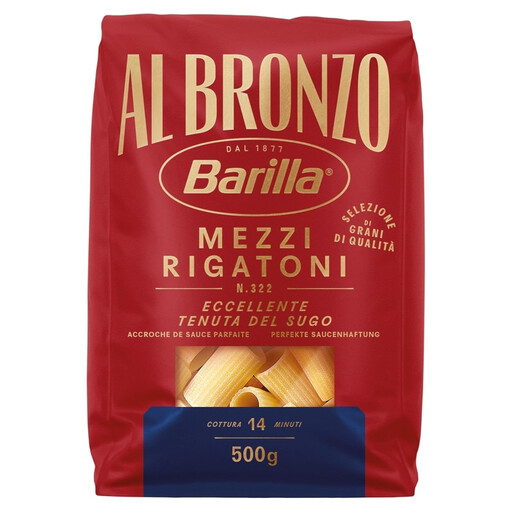 Image unavailable
A short shape to consider for a dish mixed with sauce and served to a group. The packet is listed as 500 g; check the cooking time and ingredients before planning your meal.
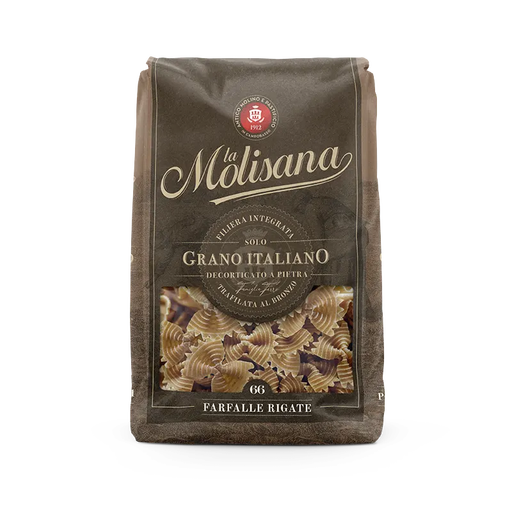 Image unavailable
A short shape to consider if you’re looking for wholewheat pasta for a sharing dish. The packet is listed as 500 g; check the label for the ingredients, allergens and cooking time.
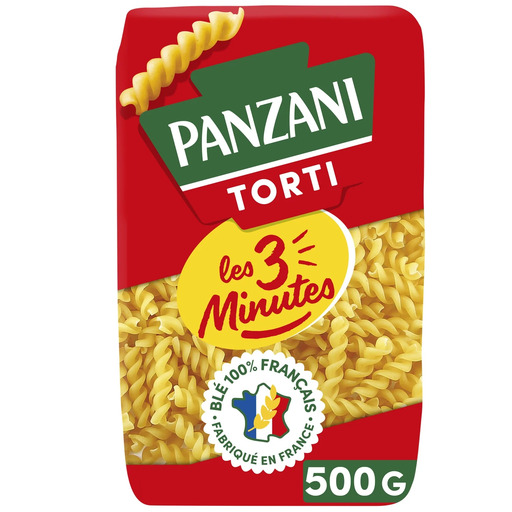 Image unavailable
A product to consider when you have limited time to cook before serving. Its name indicates a 3-minute cooking time and the packet weighs 500 g; check the instructions and ingredients on the packaging.
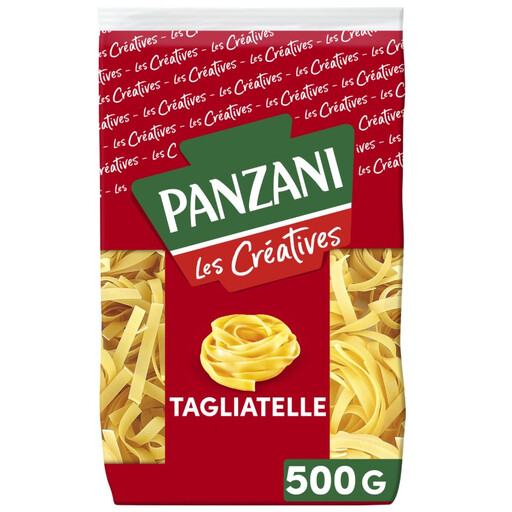 Image unavailable
A long shape to consider for a dish served on individual plates. The packet is listed as 500 g; check the cooking time and allergen information before finalising your menu.
Cook it in plenty of boiling water, stirring at the start and occasionally as it cooks. Follow the cooking time for the product you’ve chosen, too. Panzani recommends using 1 litre of water for every 100 g of pasta as a guide.
No. Pasta made from wholewheat contains wheat: “wholewheat” doesn’t mean “gluten-free”. If a guest needs to avoid gluten, check the product name, ingredients and allergen information on the packet you buy.
Yes, if a guest needs to avoid an ingredient or certain traces. For example, Auchan’s product information for its classic spaghetti lists durum wheat semolina and possible traces of eggs, mustard and soya; check the information on the packet you buy.
Follow the storage instructions on the packet and seal it carefully after use. The Auchan spaghetti product information we consulted advises keeping the pasta away from heat and moisture.