When choosing dried fruit and nuts to take to work, first decide what you want to avoid: a particular allergen, added sugars or added salt. If you have an allergy, check the ingredients list and any ‘may contain’ statements on the exact product: an unsalted mix may contain tree nuts and peanuts. A pack of dried fruit sold separately may make the ingredients easier to check, but that alone does not guarantee it will meet your needs.
Who is this guide for?
People who need to avoid a specific allergen
If you need to avoid tree nuts, peanuts or another allergen, the term ‘dried fruit and nuts’ is not enough to help you choose. Check the ingredients and any ‘may contain’ statements on each pack before deciding on its size.
People who prefer to check every ingredient
Raisins or dates sold separately may be easier to check than an assortment. You’ll still need to read the label on the product you choose to find out what it contains.
People looking for an unsalted mix
If your main requirement is no added salt, check that the specific mix meets this criterion. It won’t tell you whether it contains tree nuts or peanuts.
What should you check before buying?
For lunch at work, start with your main requirement, then check the ingredients and practical details on the pack you plan to take with you.
| What matters to you |
What to check |
Who this matters to |
| Allergens and traces |
Read the ingredients, any highlighted allergens and any ‘may contain’ statements on the exact pack. |
When I need to avoid an allergen, I want to be able to check the specific product before taking it to work; around 33% of consumers make this their priority. |
| Added sugar or salt |
Look for the statement that matches your requirements, then check the product’s ingredients and nutritional information. |
For my lunchtime snack, my main concern is avoiding a specific added ingredient, rather than choosing by the name of the aisle alone. This is a priority for around 27% of consumers. |
| Taking it with you and storage |
Check the packaging and follow the storage instructions given for the product. |
If I keep my snack at work, I want to be able to carry and store it as directed on the pack; around 20% of consumers put convenience first. |
| In-store choice |
Check which product is available in the shop or for your chosen collection option, and read its label. |
When I’m planning my food shopping for the working week, I want to find a product that meets my requirements at the retailer I’ve chosen. Around 20% of consumers prioritise having this choice. |
The European Commission says that, in the EU, allergens used as ingredients must be clearly indicated. If you have an allergy, you should still check for any ‘may contain’ statements.
Common misconceptions to avoid
-
Assuming ‘no added salt’ means ‘allergen-free’
The unsalted Seeberger mix featured by Carrefour contains almonds, cashews, peanuts and pecans. It also carries a warning that it may contain traces of other tree nuts.
If you need to avoid an allergen, check the ingredients and any ‘may contain’ statements first. Then check whether it’s also ‘no added salt’ if that matters to you.
-
Assuming all dried fruit contains no added sugar
A claim on one product, such as the ‘no added sugar’ mix featured by Auchan, does not apply to other products in the aisle.
Look for this statement on the pack you’re considering and read its ingredients list.
-
Choosing an assortment before checking what’s in it
A single pack may contain several types of tree nuts as well as peanuts, as shown by the Seeberger mix featured by Carrefour. Every ingredient matters if you have an allergy-related requirement.
Read the full label before buying. A product sold separately may make it easier to check, but you’ll still need to look at its label.
Retailers to explore
These retailers offer different types of dried fruit and nuts to explore. You’ll still need to check whether a specific product meets your requirements.
Carrefour
Carrefour’s range includes dried fruit sold separately as well as mixes, including a detailed product listing for an unsalted Seeberger mix.
- The Seeberger listing gives the ingredients and a ‘may contain’ statement, which are useful when checking this product.
- This information does not describe the other packs in the range, so check each one individually.
Auchan
Auchan’s ranges include roasted almonds labelled ‘no added salt’ and a mix labelled ‘no added sugar’.
- These claims can help you identify products to check based on the added ingredient you want to avoid.
- On their own, they don’t tell you about allergens or the product’s full ingredients.
Monoprix
Monoprix’s range includes raisins, dates, prunes, apricots and figs.
- These options may be worth exploring if you prefer to check dried fruit sold separately.
- Being in the dried fruit aisle does not mean a product is suitable for someone with an allergy.
Fruit snacks for work on Joybuy
These two 50 g packs make handy fruit snacks to take to work. They do not meet a ‘no added sugar’ requirement; if you have an allergy, check the chosen product’s full label before buying.
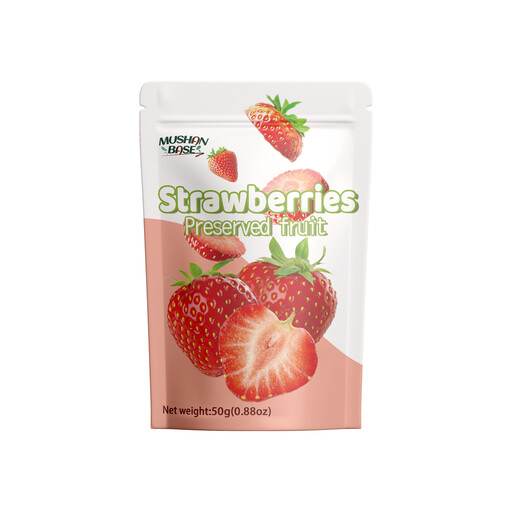 Image unavailable
MUSHAN BASE Bai Cao Wei strawberry snack, 50 g
Consider this if you’re looking for a small pack to take to work and added sugar isn’t something you need to avoid. This product contains added sugar. If you have an allergy, check the ingredients and any ‘may contain’ statements on the full label before buying.
View on Joybuy
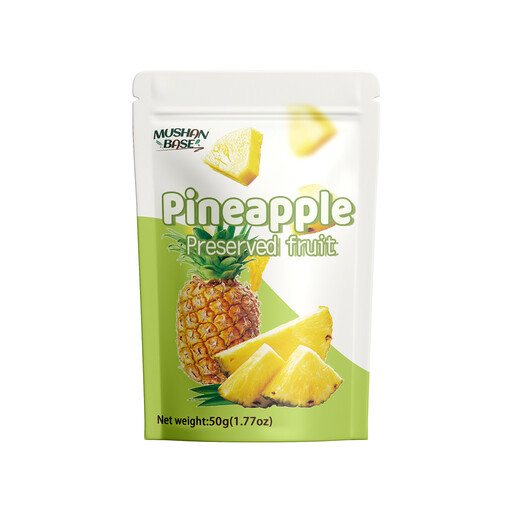 Image unavailable
MUSHAN BASE dried pineapple, 50 g
This pack may suit a break at work if its ingredients meet your requirements. The information provided for this product lists added sugars and syrups, as well as sulphites: avoid it if you need to steer clear of any of these. If you have any other allergen-related requirements, check the full label and any ‘may contain’ statements too.
View on Joybuy
Frequently asked questions
Is a pack labelled ‘dried fruit and nuts’ always allergen-free?
No. This category may include products containing tree nuts, peanuts or other allergens. The European Commission says that allergens used as ingredients must be clearly indicated in the EU. Read the ingredients list for the exact product and check for any ‘may contain’ statements.
What does ‘may contain’ mean?
It indicates that the named allergen may be present, even though it is not listed as an ingredient. If it’s an allergen you need to avoid, take this warning into account before choosing the pack.
Can you check allergen information before placing an online order?
Yes. The European Commission says that food sold online in the EU must provide the same mandatory information as food sold in shops. Check the ingredients and allergen information shown for the specific product before ordering, then check the label on the pack when it arrives.
Is an unsalted mix suitable if I need to avoid tree nuts?
Not necessarily: ‘no added salt’ tells you nothing about allergens. The unsalted Seeberger mix featured by Carrefour contains almonds, cashews and pecans, as well as peanuts. Check the ingredients in each mix for the allergen you need to avoid.


