Travellers who want to manage their portion
You’re looking for a bag that’s easy to take with you alongside your meal. The 100–150 g packs listed by Carrefour, Auchan and E.Leclerc are easy to carry, but they aren’t necessarily individual portions.


To round off a meal on the train, first choose a mix that suits your tastes, then check the bag’s net weight: a small pack isn’t necessarily a single portion. Plain nuts are a good choice if you’re looking for an unseasoned option. A mix with dried fruit offers different flavours, but it’s worth checking the ingredients for anything added. In all cases, check the allergens on the packaging.
You’re looking for a bag that’s easy to take with you alongside your meal. The 100–150 g packs listed by Carrefour, Auchan and E.Leclerc are easy to carry, but they aren’t necessarily individual portions.
You’d like to combine nuts and dried fruit for a variety of flavours. If added sugars or coatings matter to you, check the ingredients list. The TOKAPI mix listed by E.Leclerc is one example.
If you need to avoid certain ingredients, read the label for the specific product you’ve chosen rather than relying on the mix’s name alone. For pre-packed foods sold in France, the DGCCRF says allergenic ingredients must be highlighted in the ingredients list.
For a meal on the train, start with the type of snack you’d like, then check the pack size, recipe and label for the specific product.
Choose these if: you’re looking for unseasoned nuts to enjoy with your meal.
Bear in mind: you may need to portion out a 100–150 g bag before you set off.
Choose this if: you’d like a mix of different textures and fruity flavours.
Check: the words ‘no added salt’ don’t tell you whether sugar has been added to other ingredients.
Choose this if: you’re specifically looking for a savoury snack mix.
Check: some mixes are salted, unlike the unsalted nuts recommended by Manger Bouger.
| What to consider | What to check | Who is it for? |
|---|---|---|
| Pack size and quantity | Net weight and whether you can keep the rest of the bag. | If I’m adding something to my meal during the journey, I want to take an amount I can manage without eating straight from a large bag. Around 40% of consumers make pack size their top priority. |
| Ingredients | Type of mix, added ingredients and nutritional information per 100 g. | To choose between plain nuts, dried fruit and a savoury mix, I need to know exactly what’s in each one. Around 30% of consumers share this priority. |
| Allergens | Allergenic ingredients highlighted on the packaging of the product you’ve chosen. | If I need to avoid certain ingredients, I have to be able to spot them before opening the bag. Checking allergens comes first for around 30% of consumers. |
This term can refer to nuts, dried fruit or savoury mixes, all of which can contain different ingredients.
Decide what type of snack you’re looking for, then read the ingredients list for the specific product.
The TOKAPI mix described by E.Leclerc as having ‘no added salt’ includes sweetened cranberries and sugar-coated almonds. Its product page lists 41 g of sugars per 100 g.
Check the ingredients list and nutritional information separately.
A 100–150 g pack may be easy to carry, but that doesn’t mean it’s the amount you’ll want to eat during your journey.
Check the net weight and, if needed, portion out the contents before you set off.
Two similar-looking recipes may contain different ingredients. The DGCCRF says allergenic ingredients in pre-packed foods must be highlighted in the ingredients list in France.
Check the label on the bag you’re buying, even if you already know a product with a similar name.
Carrefour offers several mixes of nuts and dried fruit, including 100–140 g bags.
Auchan’s range includes smaller mixes, such as a 120 g unsalted mix.
E.Leclerc offers nuts and dried fruit mixes under various brands, including TOKAPI.
Monoprix stocks dried fruit, nuts and mixes, including a 150 g Seeberger nut mix.
These two products are dried-fruit snacks to take with you on the train. They aren’t alternatives to the plain nuts or savoury mixes described above when choosing what to have with your meal.
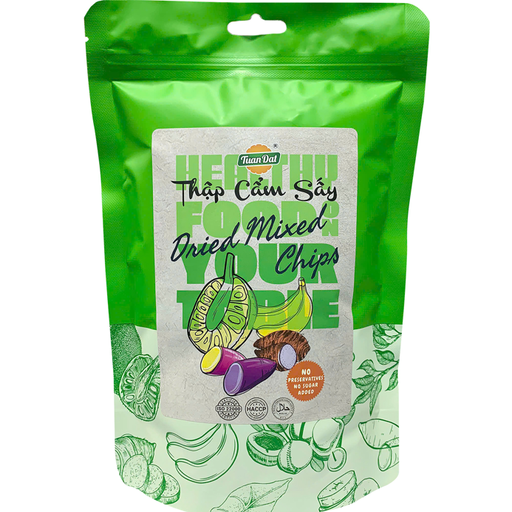 Image unavailable
Take these fruit chips with you for a snack during your journey. The bag contains 100 g, so if you’d like a smaller amount for this meal, portion some out in advance. Check the packaging for ingredients and allergens.
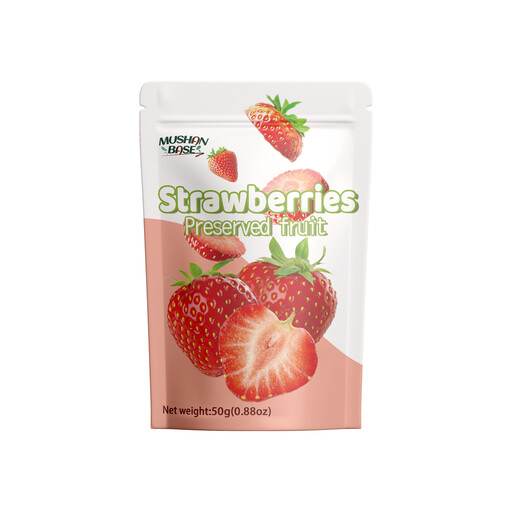 Image unavailable
Take this strawberry snack with you for your journey. The bag contains 50 g, but that weight alone doesn’t make it a single portion. If you plan to save some for later, check the packaging; also read the ingredients and allergens on the pack.
Not necessarily. Check the net weight against how much you’d like to add to your meal. Manger Bouger recommends a small handful of unsalted, unsweetened nuts with no chocolate each day; this doesn’t mean a whole bag should be eaten in one go.
No. The TOKAPI mix described by E.Leclerc as having ‘no added salt’ includes sweetened cranberries and sugar-coated almonds. To find out what’s in the recipe, read the ingredients rather than assuming a claim about salt tells you whether sugar is present.
Read the ingredients list on the bag for the product you’ve chosen. For pre-packed foods sold in France, the DGCCRF says allergenic ingredients must be highlighted in the list. Check particularly for nuts and peanuts if they’re relevant to your choice.