Anyone keeping an eye on the energy in their snack
If you take dried fruit with you after a workout, check both the energy per 100 g and the amount you’ll actually eat. The size of the pack doesn’t determine your portion.


To choose dried fruit after exercise without accidentally making your snack more energy-dense than expected, compare the energy per 100 g, then consider how much you plan to eat. Plain dried fruit, unsalted nuts or a mix can suit different tastes, but none of these categories is automatically low in calories. Check the sugars, salt, ingredients and allergens for the specific product you choose, too.
If you take dried fruit with you after a workout, check both the energy per 100 g and the amount you’ll actually eat. The size of the pack doesn’t determine your portion.
The ingredients list can help you tell plain dried fruit apart from a recipe containing sugar or sweetened fruit. Santé publique France also points out that dried fruit is naturally high in sugars.
For plain nuts or almonds, check the specific product rather than relying on the range name. No added salt doesn’t, by itself, tell you how much energy the product provides.
For a light post-workout snack, start with how much you want to eat, then compare the nutrition information and ingredients of the products you’re considering.
| What to check | What to look for | Who is it for? |
|---|---|---|
| Energy per portion | Compare the kcal per 100 g, then work out how much that means for the amount you plan to eat. | If I take a pack with me after a workout, I want to use it without mistaking the whole contents for a small portion. Around 36% of consumers put managing the energy content of their snack at the heart of their choice. |
| Sugars and ingredients | Look for sugar and sweetened ingredients in the recipe, then check the ‘sugars’ line per 100 g. | I’m looking for a fruity taste, but I want to distinguish the sugars in the fruit from those added to the recipe. Avoiding added sugar would be the main priority for around 29% of consumers. |
| Salt and ingredients | Check the ‘salt’ line per 100 g and the ingredients list for the specific product. | After exercise, some consumers prefer unsalted nuts or a mix with an easy-to-check ingredients list; this would be the priority for around 21% of them. |
| Protein and energy | Compare protein, fat and energy using the same 100 g basis. | If I’m interested in the protein in a mix, I also want to take its energy content into account before deciding on my portion. Finding a balance between the two would be the priority for around 14% of consumers. |
These claims refer to different things. Auchan’s listing for the unsalted Benenuts mix shows 0.02 g of salt and 534 kcal per 100 g.
To choose according to your priorities, check energy, sugars, fat and salt separately.
Dried fruit contains natural sugars, while a recipe may also include added sugar. For example, the Tokapi mix featured by E.Leclerc includes sweetened dried cranberries.
If you want to avoid added sugar, read the ingredients before comparing the nutritional values.
Carrefour and Auchan list 123 kcal per 25 g for a Carrefour Bio mix and 160 kcal per 30 g for a Benenuts mix, respectively. These values apply to the quantities stated, which may not be the amount you eat.
Check the pack weight and decide on your portion before serving yourself.
A Carrefour Bio mix, for example, warns that it may contain traces of peanuts, soya, sesame, wheat and other nuts. In France, the DGCCRF states that allergenic ingredients must be highlighted on the label.
If an allergen affects you, check the packaging of the specific product you’re going to eat, including any ‘may contain’ warnings.
These retailers let you compare specific products; a retailer’s name or a range name alone doesn’t tell you what a product contains.
Worth checking for mixes with listings that detail portion sizes and allergens.
Worth checking to compare dried fruit, nuts and mixes with different recipes.
Worth checking to compare the ingredients and nutrition information for different mixes.
Worth checking for plain nuts and other products in the Alesto range.
Worth checking for separate Trader Joe’s products such as raisins, dates and almonds.
Worth checking to compare individual dried fruits, nuts and mixes.
These dried fruit products are ready to take with you for a post-workout snack. To choose an amount that suits your appetite for a light snack, check the ingredients and nutrition information for each product, then decide how much you’ll eat.
 Image unavailable
These pitted red dates are a good option if you’re looking for dried fruit to portion out in small amounts after a workout. The pack weighs 500 g, so decide how much you’ll eat and check the sugars and energy on the packaging.
 Image unavailable
This version of pitted red dates comes in a 280 g pack. If you’re after a light snack, don’t mistake the pack weight for a single portion. Check the energy and sugars on the packaging before serving yourself.
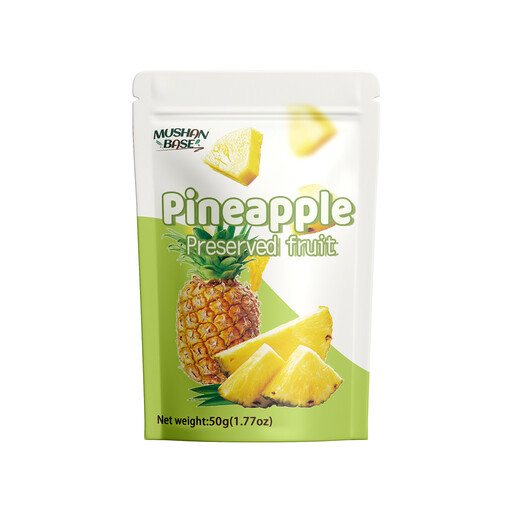 Image unavailable
The 50 g pack makes it easy to see how much you’re taking with you, but that doesn’t automatically make it a light portion. If you want to avoid added sugar or need to check for allergens, read the ingredients list for this dried pineapple recipe.
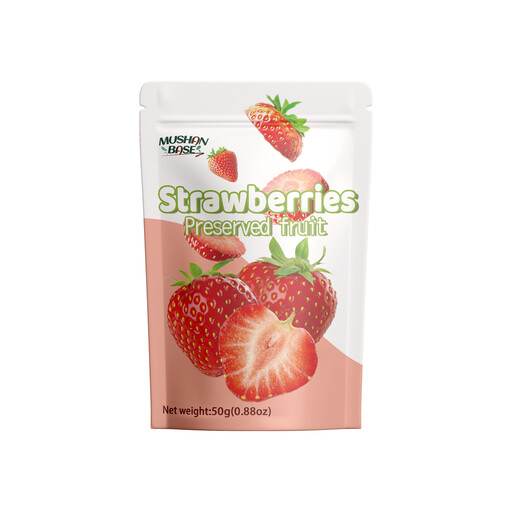 Image unavailable
This strawberry snack comes in a 50 g pack that’s easy to take with you. Compare its energy on the same basis as other products, and check the ingredients if added sugar is a factor in your decision.
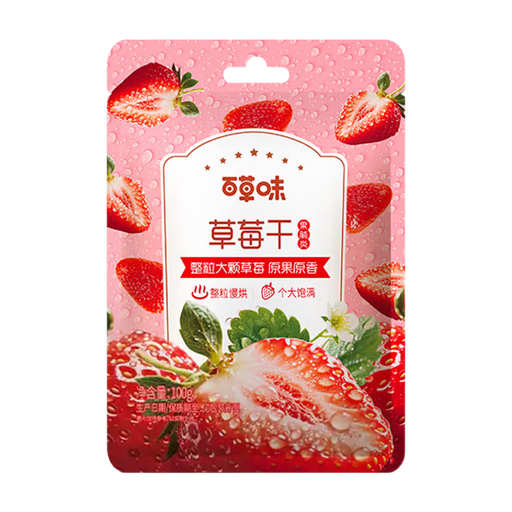 Image unavailable
These dried strawberries come in a 100 g pack. For a small post-workout snack, choose the amount you’ll eat rather than assuming the whole pack is one portion. Check the ingredients and allergen information, too.
No. The four mixes from Auchan and E.Leclerc featured in the examples on this page provide between 381 and 534 kcal per 100 g, depending on the recipe. For a particular snack, compare products on this common basis, then consider how much you’ll actually eat.
No. This claim refers to added salt, not energy. The unsalted Benenuts mix featured by Auchan provides 534 kcal per 100 g; check the ‘energy’ and ‘salt’ lines separately.
Start with the ingredients list to spot sugar or sweetened ingredients added to the recipe, then compare the ‘sugars’ line per 100 g. Santé publique France points out that dried fruit is naturally high in sugars, so their presence in the nutrition table doesn’t, by itself, prove that sugar has been added.
Read the ingredients list and any ‘may contain’ warnings on the packaging of the product you’ve chosen. The DGCCRF states that allergenic ingredients must be highlighted; don’t assume that another recipe in the same range has the same information.
No. The DGCCRF points out that nutrition claims are regulated by European Regulation (EC) No 1924/2006. When choosing a snack, check which characteristic the claim refers to, then compare the energy, sugars and portion sizes of the products you’re considering.