If fat content is your priority, raisins are a practical place to start: the products featured by Carrefour, Auchan, E.Leclerc and Monoprix contain between 0.6 and 1.4 g of fat per 100 g. If you’re choosing between dried fruit and nuts, compare the labels on the same basis. For festival camping, also check the sugars, allergens and storage instructions on the pack you choose.
Who are these criteria useful for?
Festival-goers keeping an eye on fat content
If this matters more than anything else, compare the ‘fat’ figure per 100 g rather than relying on the term ‘reduced fat’. The raisins featured by Carrefour, Auchan, E.Leclerc and Monoprix contain between 0.6 and 1.4 g per 100 g, depending on the product. This range doesn’t apply to all dried fruit.
Anyone who needs to check for allergens
Ingredients and precautionary allergen statements vary from one pack of raisins to another. Some products featured by these retailers mention sulphites or possible traces of allergens, including peanuts and nuts. Always check the label on the product you buy.
Festival-goers keeping an open pack in their bag
Pack size and storage instructions after opening matter if you’ll be snacking over several days of camping. For its 125 g pack of raisins, Auchan advises protecting the product from heat and moisture and resealing the pack tightly after opening.
What should you look for before you set off?
When choosing between dried fruit and nuts, start by comparing the nutritional values per 100 g. Then check the ingredients and storage instructions for the product you’re taking with you.
| Criteria |
What to check |
Who it matters to |
| Fat |
Compare the amount per 100 g, and distinguish between dried fruit, nuts and mixes. |
If my main aim is to limit the fat in the snack I take to the festival, comparing the figures on each pack helps me decide. Around 46% of consumers put this first. |
| Sugars and allergens |
Check the sugars per 100 g, the ingredients list and the allergen information on the specific pack. |
A low-fat product won’t necessarily suit me if its sugar content or ingredients aren’t right for me. Around 36% of consumers prioritise checking sugars and allergens. |
| Pack size and storage |
Check the pack weight, how it closes and the storage instructions after opening. |
If I’m keeping a snack in my bag for several days, I want to be able to store it safely once opened without carrying an impractical pack. Around 18% of consumers prioritise pack size and storage. |
What mistakes should you avoid?
-
Assuming low fat means low sugar
The raisins featured by Auchan and Monoprix contain 67 g and 57 g of sugars per 100 g respectively, while their fat content is 1.4 g and 0.6 g per 100 g.
Before choosing a pack, check both figures in the nutrition table, using the same 100 g basis.
-
Assuming all raisins contain the same ingredients
Depending on the product featured by Carrefour, Auchan, E.Leclerc or Monoprix, the label may mention sulphur dioxide or possible traces of allergens. The category ‘raisins’ alone doesn’t tell you what’s in a particular pack.
Check the ingredients and allergen information on the pack you’re actually buying, even if you already know the product.
-
Leaving an open pack somewhere hot or damp
For its 125 g pack of raisins, Auchan advises protecting it from heat and moisture and sealing it tightly after opening.
Follow the storage instructions for the product you choose. If the pack no longer closes properly, use an airtight food container.
-
Choosing a large pack without thinking about storage after opening
A large pack can be harder to store and reseal while camping, especially if it’s just for one person.
Choose a pack size to suit the length of your stay and the number of people, then check how to store any leftovers.
Retailers to check when comparing labels
Carrefour
Carrefour Original raisins come in a 125 g pack, and the product page lets you check the ingredients and nutritional values.
- Carrefour’s product page lists 0.8 g of fat per 100 g. The ingredients include 99.5% sultanas and sunflower oil.
- It also warns of possible traces of several allergens, including milk, egg, peanuts, gluten, soya, sulphites, sesame and nuts.
Auchan
Auchan’s product page for its 125 g pack of raisins lists nutritional values and storage instructions that are useful when taking a pack camping.
- Auchan lists 1.4 g of fat, 67 g of sugars and 6.2 g of fibre per 100 g. The product page advises sealing the pack tightly after opening.
- Possible traces of peanuts and nuts are also mentioned.
E.Leclerc
Couleurs Vives golden raisins come in a 250 g pack, with an ingredients list and nutritional values provided.
- E.Leclerc’s product page lists 0.7 g of fat and 63.7 g of sugars per 100 g.
- Sulphur dioxide is listed as an ingredient. Check this information if it’s relevant to your choice.
Monoprix
Monoprix raisins are sold in a 250 g pack, with ingredients and nutritional values provided.
- Monoprix lists 0.6 g of fat and 57 g of sugars per 100 g for this product.
- The ingredients include sulphur dioxide and potassium sorbate. Check the ingredients on the pack you choose.
ALDI
ALDI offers a 250 g pack of raisins.
- You can compare this pack size with other options to see what best fits in your bag.
- To decide based on fat, sugars or allergens, check the information on the pack you buy.
Dried fruit available on Joybuy
This Joybuy selection includes raisins, pitted dates and a dried mango and plum preparation. Pack sizes vary, so choose one that’s easy to carry and compare the nutritional information and ingredients on each pack.
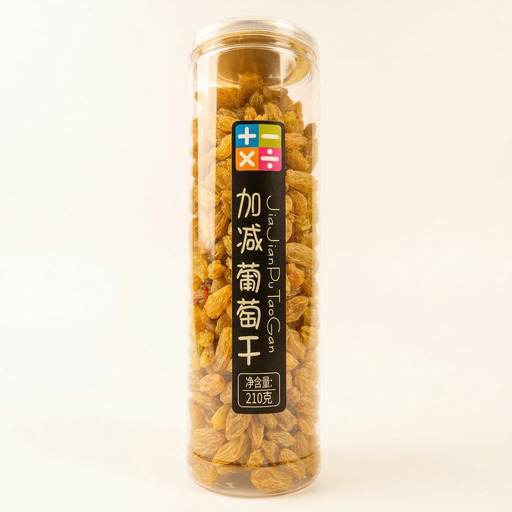 Image unavailable
Jia Jian Cheng Chu raisins 210 g
If you’re taking raisins to the festival, compare this 210 g pack with the amount you’ll need. Check the fat, sugars, allergens and storage instructions after opening on the pack you buy.
View on Joybuy
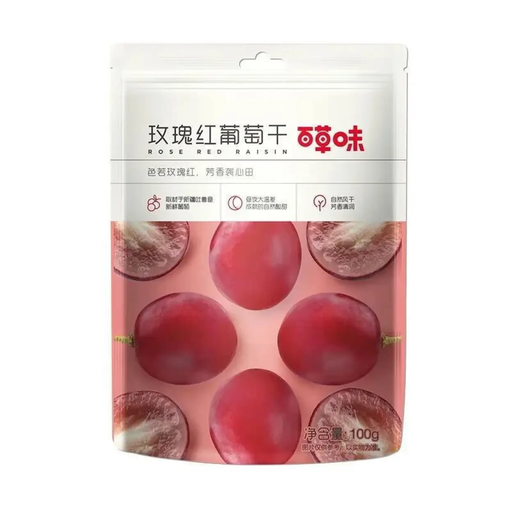 Image unavailable
Be&Cheery Rose red raisins 100 g
If space in your bag is at a premium, this 100 g pack is worth considering. Compare its nutritional values with those of other raisins, and check how to store the contents after opening.
View on Joybuy
 Image unavailable
Haoxiangni Grade 2 pitted red dates, 500 g
This 500 g pack is better suited to those who need a larger quantity than to anyone looking for a compact snack for one. If you’re considering dates instead of raisins, compare their fat and sugars per 100 g and plan how to store the opened pack.
View on Joybuy
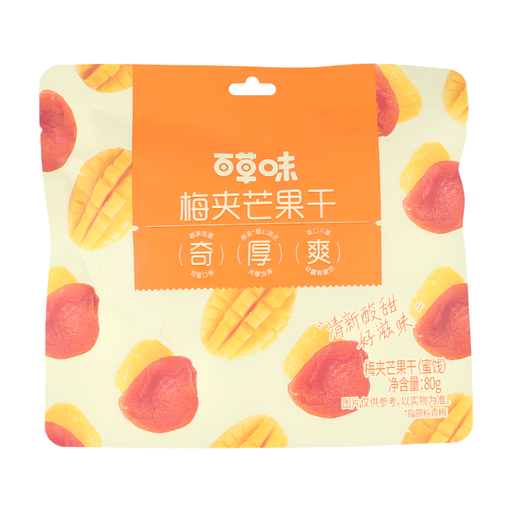 Image unavailable
Be&Cheery dried mango with plum, 80 g (12 packs)
The 12 mini packs make this a handy option if you prefer to spread your snacks around your bag. As this is a mango and plum preparation rather than raisins, check its ingredients and nutritional values per 100 g before choosing it for the same purpose.
View on Joybuy
Frequently asked questions
Is the term ‘reduced fat’ enough to help you choose dried fruit?
No. First compare the fat per 100 g, then check the sugars and ingredients of the specific product. A low fat figure on its own tells you nothing about these other details.
How can you compare two packs of dried fruit?
Compare their nutritional values on the same 100 g basis. The DGCCRF says this format makes it easier to compare pre-packed foods. Then read the ingredients list and allergen information on each pack.
Do all raisins contain sulphites?
The category ‘raisins’ doesn’t tell you what’s in a particular pack. The products featured by E.Leclerc and Monoprix list sulphur dioxide. Check the ingredients and allergens on the pack you buy.
What should you do with an opened pack while camping?
Follow the storage instructions and reseal it as directed. For its 125 g pack of raisins, Auchan advises protecting it from heat and moisture and sealing the pack tightly after opening. An airtight food container can help if the original packaging no longer closes properly.
Do nuts and raisins meet the same needs when it comes to fat content?
Don’t assume they’re equivalent without checking their labels: nuts and raisins are different categories. If fat content is your main priority for the festival, compare the amount per 100 g in the products you’re considering, then check the other ingredients and allergens.


