People comparing calories
For a break during a journey or day out, you’ll want a pack that’s easy to carry. The kcal per 100 g lets you compare products; the amount you eat then determines the size of your snack.


To choose dried fruit or nuts to take with you over the October half-term holiday, compare the kcal and sugars per 100 g, then consider how much you plan to eat. A mix with fewer calories than another may contain more sugars. If you prefer unsalted nuts, check the portion size, ingredients and allergens too.
For a break during a journey or day out, you’ll want a pack that’s easy to carry. The kcal per 100 g lets you compare products; the amount you eat then determines the size of your snack.
You want to distinguish the sugars naturally found in dried fruit from added ingredients. The ingredients list, the ‘of which sugars’ line and any salt content can help you choose according to what matters most to you.
A sharing pack can be handy, as long as you check the allergens in each product. Whole nuts can also be a choking hazard, so take care when young children are sharing the snack.
Start with the factor that matters most for your snack, then check the portion size and the label on the pack you choose.
| Factor | What to check | Who might find this useful? |
|---|---|---|
| Energy content | Compare the kcal per 100 g on a like-for-like basis, then consider how much you plan to have for a snack. | For a snack on a day out, some people want to compare the energy content of packs first, rather than relying on the name of the mix. Around 37% of consumers would put this comparison first. |
| Sugars, salt and added ingredients | Read the ‘of which sugars’ line and the ingredients list, particularly for added sugar, chocolate and salt. | When dried fruit and nuts are sold side by side, others are mainly looking to manage their sugar intake or avoid added ingredients. This would be the priority for around 36% of consumers. |
| Sharing and allergens | Check the allergens listed, the pack size and the storage instructions. | If you’re sharing a snack while travelling, the ingredients need to be suitable for everyone, particularly if anyone has allergies or there are young children. Around 27% of consumers would prioritise these practical precautions. |
The term covers both dried fruit and nuts. Auchan and Carrefour product pages list 381 kcal per 100 g for FRUTSY Mix & Go Énergie, 481 kcal per 100 g for Carrefour Dynamism and 637 kcal per 100 g for the SUN mix mentioned here.
Compare the values per 100 g for a few packs, then decide how much to take for each break.
Dried fruit naturally contains sugars, as Manger Bouger points out. A design or description that suggests fruit or natural ingredients doesn’t, on its own, tell you about the energy content or other ingredients.
Read the ‘of which sugars’ line and the ingredients list before choosing a mix.
A mix may contain several types of nuts and sulphites. According to the DGCCRF, allergenic ingredients must be highlighted on the label.
Check the allergens for the specific product before sharing it. If young children are eating it too, bear in mind the texture of whole nuts.
The retailer sells a range of dried fruit and nut mixes under its own brand.
The FRUTSY Mix & Go Énergie product page describes a mix of nuts and raisins in a 160 g pack.
Monoprix stocks an organic Naturalia mix of raisins, almonds, hazelnuts and cashews.
ALDI offers TRADER JOE'S raisins in a 250 g pack, as well as almonds in the same range.
The Alesto range includes dried fruit and nuts.
These two packs of pitted dried fruit are handy for an on-the-go snack. Their values per 100 g help you compare energy and sugars, but won’t tell you how much to eat during a break.
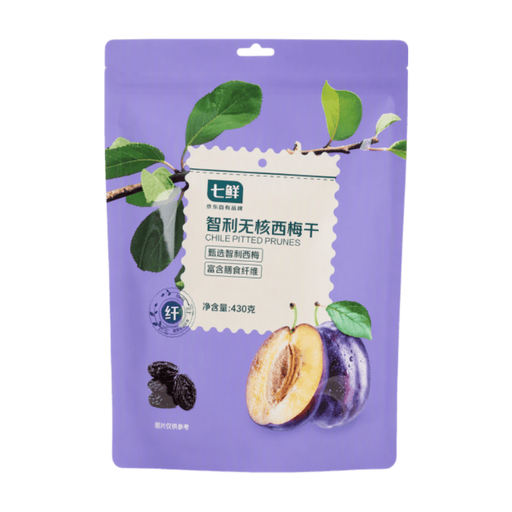 Image unavailable
Worth considering if you’re looking for ready-to-eat dried fruit to take with you and want to compare its energy content per 100 g. The product page lists 283 kcal and 24.5 g of sugars per 100 g; the pack contains 430 g. Decide separately how much to serve, as the value per 100 g won’t necessarily match your portion.
 Image unavailable
Worth considering if you’d like pitted dried fruit to share and its sugar content fits your preferences. The product page lists 300 kcal and 60 g of sugars per 100 g, and the 500 g pack is resealable. Check the allergens on the packaging before sharing, then serve the amount you want.
Compare the kcal per 100 g for specific products, then consider how much you’ll eat. Of the three mixes mentioned here, Auchan lists 381 kcal per 100 g for FRUTSY Mix & Go Énergie, while Carrefour lists 481 kcal per 100 g for Dynamism and 637 kcal per 100 g for SUN. These figures don’t rank all dried fruit and nuts, and they don’t tell you about the sugar content on their own.
First, check the sugar content per 100 g and the ingredients: dried fruit also contains naturally occurring sugars, as Manger Bouger points out. So a claim that there are no added sugars doesn’t mean the product contains no sugar.
Check the allergens on the pack and consider the texture of whole nuts if a young child will be eating them. Ingredients vary from mix to mix, so a family-sized pack is no reason to skip the label before sharing it.
No. If you’re choosing based on energy, sugars or allergens, also check the nutritional information per 100 g and the ingredients list. A score on the pack doesn’t replace this product-specific information.