To choose a lower-calorie cinema snack for the same serving size, compare the kcal per 100 g for the specific product, then prepare the portion you plan to eat. Soft apricots and prunes listed by Carrefour contain 232 and 238 kcal per 100 g respectively, compared with 584 kcal per 100 g for one type of cashew nut. These figures don’t apply to every recipe. If you prefer the crunch of nuts or the variety of a mix, check the ingredients, allergens and serving size too.
Who are these choices for?
If you’re comparing kcal
If your priority is the energy content for the same weight, check the values per 100 g before choosing your portion. The Carrefour listings mentioned for soft apricots, prunes and cashew nuts show why the label ‘dried fruit’ isn’t enough to make a choice.
If you want to keep things crunchy
If you prefer nuts, compare plain, salted and coated varieties rather than assuming they have the same energy content. Manger Bouger suggests a small handful of unsalted nuts as a guide.
If you’re sharing a bag
If several people will be snacking during the film, choose a suitable pack size and serve the portions before the film starts. The ranges listed by E.Leclerc, Auchan and Monoprix include different pack sizes and recipes, so check the one you’re buying.
What should you check before buying?
If energy content is your priority, start by checking the value per 100 g, then look at the recipe and the amount you’ll actually serve. The needs below each relate to the main concern of consumers choosing dried fruit and nuts for a cinema trip.
| What matters to you |
What to check |
Who is it for? |
| Energy content for the same weight |
The kcal per 100 g on the packs you’re comparing, and the portion you plan to serve. |
I want a soft snack and prefer to compare products in equal quantities rather than rely on their category. Around 45% of consumers prioritise this energy comparison. |
| Ingredients |
The ingredients list, sugars, salt and allergens in the product you’ve chosen. |
A recipe with no added salt may not meet my other ingredient preferences, so I want to know what’s in the bag. This is the first thing around 33% of consumers check. |
| Pack size for sharing |
The net weight, number of people and instructions for after opening. |
If I’m sharing during the film, I want a bag that makes it easy to plan portions and store the rest according to the instructions. Pack size is the main concern for around 22% of consumers. |
What mistakes should you avoid?
-
Assuming all dried fruit and nuts are low in calories
Dried fruit and nuts aren’t interchangeable: Carrefour lists one type of organic soft apricot at 232 kcal per 100 g, and one type of organic cashew nut at 584 kcal per 100 g. These figures apply to two specific products.
Compare the labels for the same weight, then serve your portion in a bowl before the film.
-
Assuming ‘no added salt’ means ‘lower in calories’
A Tokapi mix listed by E.Leclerc carries this claim, but still contains 486 kcal and 41 g of sugars per 100 g.
Check the energy value, sugars, salt and ingredients list together for the mix you’re considering.
-
Relying on the fruit’s name alone to check for allergens
One type of Eco+ dried apricot listed by E.Leclerc contains sulphites. The product name isn’t a substitute for checking the ingredients.
If you have an allergy, check the information on the packaging of the product you buy.
-
Opening a large bag without planning portions
A pack designed for several people can make it harder to keep track of how much you eat during the film.
Serve the amount you’ve planned, then reseal the bag and store the rest as directed on the packaging.
Retailers to check
Carrefour
Carrefour lists dried fruit and nuts, including soft apricots, prunes and cashew nuts.
- Some listings show the kcal per 100 g, making it possible to compare specific products.
- Check the recipe and values on the pack you actually choose.
E.Leclerc
E.Leclerc lists products including Eco+ dried apricots, prunes and dried fruit mixes.
- The listings for Eco+ apricots and Tokapi mix provide useful ingredient or nutritional information.
- Check that the product is available at your chosen store or for your chosen click and collect service.
Auchan
Auchan has a range of prunes and dried apricots in several recipes and pack sizes.
- One listing for organic soft apricots gives storage instructions for after opening.
- These instructions apply to that product only, so read those on the pack you choose.
Lidl
Lidl’s Alesto range includes nuts, dried fruit and savoury snacks.
- These categories make it easy to look separately for dried fruit or a crunchy snack.
- A product being part of the range doesn’t, by itself, tell you its kcal per 100 g.
Aldi
Aldi lists products including raisins and a type of roasted almonds with no added salt.
- The description of the almonds makes it easy to identify this no-added-salt recipe.
- Check that the product you want is available before you set off.
Monoprix
Monoprix separates dried fruit from nuts and lists products including a bag of Monoprix Bio raisins.
- These categories make it easier to find the type of product you want to compare.
- Compare recipes and nutritional information: being in the same aisle isn’t enough.
Dried fruit available on Joybuy
These pitted prunes and red dates are suitable dried-fruit snacks to serve during the film. To compare them based on calorie content, check the nutritional information and decide on your portion before opening the bag.
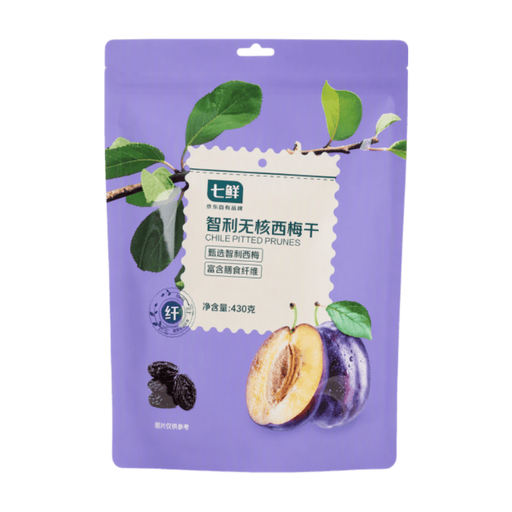 Image unavailable
7FRESH Pitted Prunes, 430 g
Serve prunes without having to remove the stones during the film. The bag contains 430 g, so plan how much to share and check the nutritional information and allergens on the packaging you choose.
View on Joybuy
 Image unavailable
Haoxiangni Grade 2 Pitted Red Dates, 500 g
Share red dates that have already been pitted. With this 500 g bag, serve the portions you’ve planned first, then compare its kcal per 100 g with those of the other dried fruit you’re considering.
View on Joybuy
 Image unavailable
Haoxiangni Grade 2 Fresh-Locked Original Flavour Red Dates, 280 g
Another type of pitted red dates, in a 280 g bag. Compare its recipe and nutritional values with those of the 500 g Haoxiangni product: the pack weight doesn’t tell you the kcal per 100 g.
View on Joybuy
Frequently asked questions
Which dried fruit and nuts should I compare for a lower-calorie snack?
Compare the kcal per 100 g of the products you’re interested in, then consider the portion you’ll serve. Carrefour lists one type of organic soft apricot at 232 kcal per 100 g, whole prunes at 238 and organic cashew nuts at 584. These figures don’t apply to every recipe in these categories.
Can you choose unsalted nuts for the cinema?
Yes, if you’re mainly looking for a crunchy texture and plan how much to serve. Manger Bouger suggests a small handful of unsalted nuts as a guide; that doesn’t mean they’re among the lowest-calorie products per 100 g.
What should I check on the packaging before buying?
For pre-packed dried fruit, check the ingredients, allergens, net quantity, nutritional information and storage instructions. The labelling rules explained by Your Europe and the provisions published by Légifrance cover allergen information, among other things. Always check the packaging of the product you buy.
How should I store dried fruit after opening?
Follow the instructions for the specific bag. For its organic soft apricots, Auchan says to reseal the packaging, store it in the fridge after opening and eat the product within 10 days. Don’t automatically apply these instructions to other dried fruit.


