Parents preparing several lunchboxes
Separate sachets make it easier to divide up portions, as long as you check the contents and allergens in each one. If the lunchbox is for a child under 6, don’t include whole nuts, as they pose a choking risk.


If you’re preparing several lunchboxes or want to hand out portions easily at coffee time, choose a pack with clearly labelled individual sachets. If everyone will help themselves from the same mix, a large pack that you can portion out yourself may be a better fit. Either way, check the ingredients, allergens and quantity in the pack; an assortment doesn’t necessarily contain identical portions.
Separate sachets make it easier to divide up portions, as long as you check the contents and allergens in each one. If the lunchbox is for a child under 6, don’t include whole nuts, as they pose a choking risk.
A large pack lets everyone help themselves or add some mix to their breakfast. Carrefour and Auchan also stock savoury recipes, so the aisle name alone won’t tell you whether a product has the ingredients you want.
The ingredients list helps you distinguish plain nuts, dried fruit and seasoned mixes. If you’re buying an assortment, check each product rather than relying on the pack description alone; the DGCCRF advises that allergens must be highlighted on the label.
First decide whether you need portions that are ready to hand out or are happy to prepare them yourself. Then check the exact recipe, as a pack of dried fruit and nuts may contain different products.
| What matters | What to check | Who it’s for |
|---|---|---|
| Portioning | Number of individual packs and the weight of each one; recipes included in the pack. | When I’m preparing several lunchboxes, I want to hand out the sachets without opening and dividing up a large pack. Around 37% of shoppers say portioning is their top priority. |
| Mix ingredients | Ingredients and allergens in each recipe; sugars and salt in the nutritional information per 100 g. | To go with my coffee, I want to distinguish plain nuts from a sweetened, salted or flavoured recipe. Ingredients are the main priority for around 36% of shoppers. |
| Quantity to prepare | Total net weight and the amount needed for the people the product is intended for. | If we’re sharing the same mix, I’d rather choose a suitable quantity and prepare portions as we go. This is the priority for around 27% of shoppers. |
The same aisle may stock plain nuts as well as savoury, sweetened or flavoured mixes. Manger Bouger’s guidance is for nuts that are unsalted, unsweetened and free from chocolate.
To find out what’s in the recipe you’ve chosen, check its ingredients and nutritional information rather than relying on the words “dried fruit and nuts” alone.
Different packs in an assortment may contain different recipes or quantities. This matters if you want to put the same product in every lunchbox.
Before handing out the sachets, check what’s included, the weight of each individual pack and the allergens in each product.
The number of individual packs alone won’t tell you how much dried fruit and nuts each portion contains or how many people the pack will serve for your needs.
Compare the total net weight and, for an assortment, the weight of each sachet. If you’re preparing portions yourself, make sure the large pack suits the way you plan to use it.
An assortment may contain different ingredients from one sachet to the next. Whole nuts also pose a choking risk for children under 6.
Read the label for each recipe and don’t give whole nuts to children under 6.
Carrefour’s online range includes nuts, dried fruit and mixes from its own ranges and other brands.
E.Leclerc’s dried fruit and nuts range includes Marque Repère and Bio Village products, as well as loose options.
Auchan’s range includes dried fruit, nut and seed mixes, including a 120 g unsalted mix.
Lidl’s Alesto range includes nuts, dried fruit and savoury snacks.
Aldi France’s grocery and snack ranges include raisins and unsalted almonds.
Monoprix separates nuts, dried fruit, seeds and mixes into different subcategories.
These products show two ways to organise breakfast coffee or lunchboxes: hand out sachets from a multipack, or serve a mix yourself from a large pack. Their recipes aren’t interchangeable, so check each label to make sure it’s suitable for the people you’re buying for.
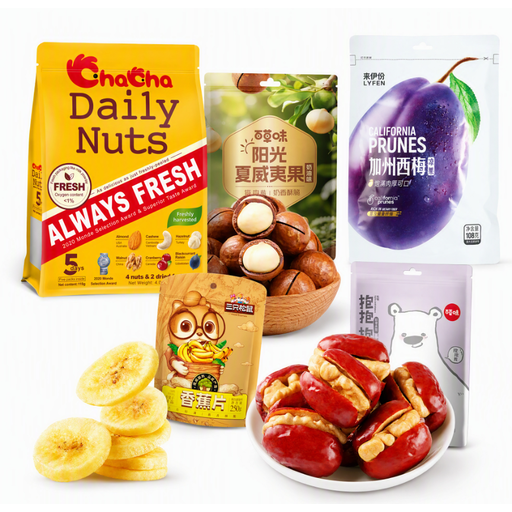 Image unavailable
Worth considering if you’d like to hand out separately packaged products rather than serve a shared mix. The pack of 5 weighs 691 g in total, so check the weight and ingredients of each item before dividing it up. Some recipes in the pack are seasoned or sweetened; check the allergens on each pack, too.
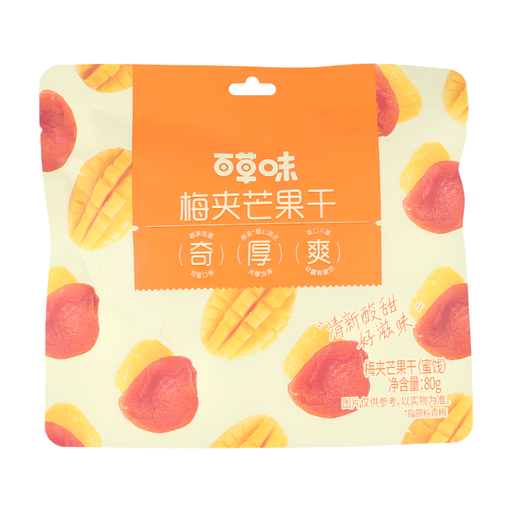 Image unavailable
The 12 small sachets can be shared between several lunchboxes; 80 g is the weight of the whole pack, not each sachet. This dried fruit recipe isn’t the same as a mix of plain nuts. If sugar or salt content matters to you, check the nutritional information on the pack.
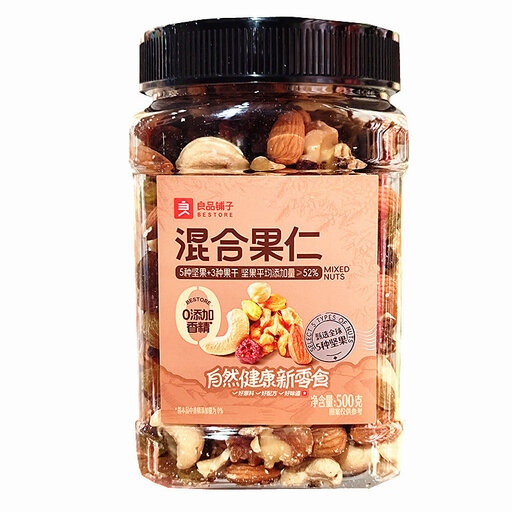 Image unavailable
This 500 g pack is suitable for sharing or for making up your own portions; it doesn’t come in individual sachets. The mix also contains dried fruit, so if these details matter to you, check the ingredients, allergens and sugar content on the label.
Check the ingredients and allergens in each recipe, then look at the net weight and number of individual packs. To compare the ingredients in two recipes, use the nutritional information per 100 g before checking how much is in each sachet.
Don’t give whole nuts to a child under 6, as they pose a choking risk. Also check the allergens in the recipe you’re giving to each child.
No, they don’t necessarily contain the same ingredients. A mix may combine dried fruit and nuts in different proportions, so check the ingredients list and the sugar content per 100 g on the specific product.
Check the ingredients list: the DGCCRF says that allergenic ingredients must be highlighted. If an assortment contains different recipes, check the label of each product before handing out the sachets.