For a nursery snack, don’t assume dried fruit is low in calories: Carrefour says its Carrefour Bio dried apricots contain 232 kcal per 100 g. If energy content is your main priority, compare their label with that of a fruit compote or purée with no added sugar, taking the serving size and storage requirements into account. Nuts raise a different question: Manger Bouger recommends not giving them whole to children under 6 because of the risk of choking.
Who are these options for?
Parents comparing snack energy content
If you’re looking for a lower-energy fruit snack, check the kcal per 100 g and how much will actually be served. The term “dried fruit” can refer to dehydrated fruit or nuts, so it isn’t enough to help you choose.
Parents of children under 6
The form of nuts matters just as much as their ingredients. Manger Bouger recommends not giving whole walnuts, almonds or hazelnuts to children under 6 because of the risk of choking. If you add them to a recipe in powdered form, you’ll also need to consider allergies and the nursery’s rules.
Parents who need to check allergens
For a prepacked snack, the label lets you check the ingredients and allergens before taking it in. The DGCCRF reminds shoppers that allergenic ingredients must be highlighted in the ingredients list.
What should you check for nursery?
First decide whether your priority is the snack’s energy content, an age-appropriate form, the ingredients or ease of serving. Then check the nursery’s rules for the product you’re considering.
| Criteria | What to check | Who is it for? |
|---|
| Energy and portion size |
Compare the kcal per 100 g, then check the amount actually served; compote is not the same as dried fruit. |
If I’m mainly looking for a lower-energy fruit snack, I should compare products in equal quantities rather than relying on the name of the aisle. Around 33% of consumers put this need first. |
| Age and form |
For children under 6, avoid whole nuts, in line with Manger Bouger’s recommendation. |
With a young child, I want to choose a form that avoids the choking risk associated with whole nuts. Age-related safety is the top priority for around 27% of consumers. |
| Ingredients and allergens |
Read the ingredients list, check which allergens are highlighted and review the nutritional information. “No added sugar” does not mean “sugar-free”. |
When I need to check the ingredients before nursery, I look for a label that lets me identify the ingredients and allergens. This is the main priority for around 20% of consumers. |
| Serving and storage |
Check the portion size, storage instructions and whether the nursery accepts that format. |
If the snack needs to be dropped off and handed out by the nursery, I mainly want a format that fits its routine. For around 20% of consumers, ease of serving comes first. |
Mistakes to avoid
-
Assuming “dried fruit” means “low in calories”
The category covers different products. For example, Carrefour says its soft Carrefour Bio dried apricots contain 232 kcal per 100 g; this figure does not apply to all dried fruit.
Before choosing between dried fruit and a fruit-based alternative, compare the energy per 100 g and then per planned serving.
-
Choosing a mix without checking what’s in it
A dried-fruit mix may also contain nuts or peanuts. Manger Bouger advises against whole nuts for children under 6 because of the risk of choking.
Read the ingredients and allergen information, then ask the nursery whether this type of snack is allowed.
-
Confusing “no added sugar” with “sugar-free”
A compote with no added sugar still contains sugars that occur naturally in fruit. This claim alone doesn’t tell you how much energy it contains.
Check the ingredients and nutritional information, comparing quantities expressed in the same units.
-
Forgetting how to store a fruit product
The Andros fruit product listed by Auchan has a storage instruction of +6 °C. This matters if you can’t keep it chilled on the journey or at nursery.
Before buying, check the storage instructions for the product you’ve chosen and how the snack will be kept.
Retailers to explore
Carrefour
Carrefour lists soft Carrefour Bio dried apricots and Carrefour Bio apple compote with no added sugar: two categories to compare separately.
- The dried apricot listing gives an energy value of 232 kcal per 100 g.
- This figure does not apply to every product in the range.
E.Leclerc
The retailer lists Douceur du Verger pouches with no added sugar in a pack of 12 × 90 g, as well as a Tokapi mix of nuts and dried fruit.
- The pouches come in individual portions with the weight clearly stated.
- The mix and pouches differ in both ingredients and serving format, so compare their labels to suit your needs.
Auchan
Auchan lists, among other products, an Andros fruit snack with no added sugar in individual pots.
- The pot format gives you an alternative to dried fruit to consider.
- The Andros product in question has a storage instruction of +6 °C.
Lidl
Lidl’s Alesto range includes nuts, dried fruit and snacks, so identify the exact product category before comparing items.
- The range makes it easy to look for several types of product under one brand.
- Manger Bouger advises that whole nuts are not suitable for children under 6.
Aldi
Aldi lists raisins, soft pitted fruit and ALL SEASONS apple compote with no added sugar in a pack of 4 × 100 g.
- These products let you consider either dried fruit or compote in individual portions.
- Check the nutritional information for each product before comparing their energy content.
Monoprix
Monoprix Courses lists several compotes with no added sugar, including packs of 4 × 100 g.
- The stated pack sizes make it easy to compare the amount in each portion.
- Check that the format you choose follows the nursery’s guidelines.
Compotes and fruit purées on Joybuy
These products offer compotes and fruit purées in portion sizes suitable for a nursery snack. Check the label and the nursery’s guidelines before choosing a format.
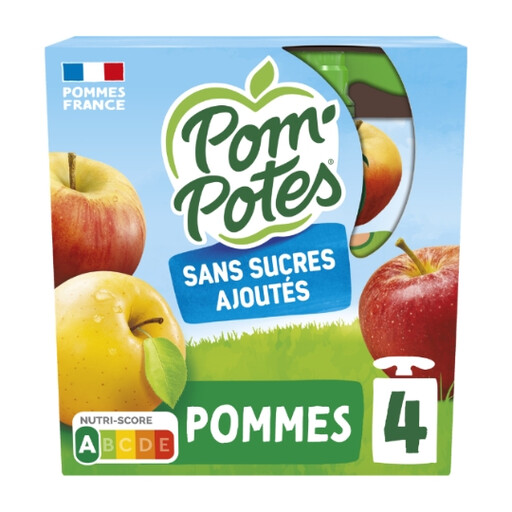 Image unavailable
POM'POTES plain apple compote with no added sugar, 4 × 90 g
Worth considering if the nursery accepts individual pouches and you’d prefer compote to dried fruit.
- Four 90 g pouches; the product name states “no added sugar”.
- Check the nutritional information and storage instructions on the packaging.
View on Joybuy
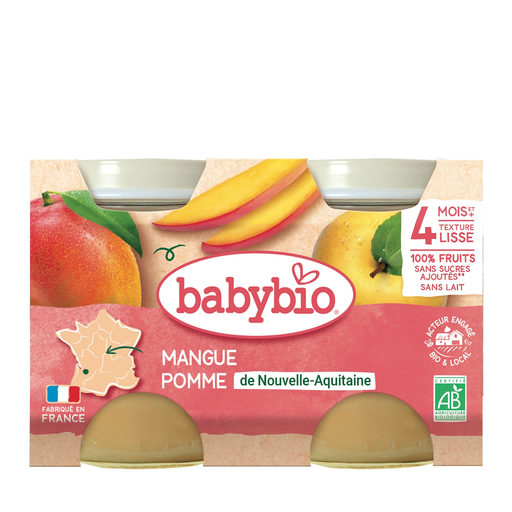 Image unavailable
BABYBIO organic apple and mango compote with no added sugar, 2 × 130 g
Worth considering if individual pots fit in with the nursery’s routine.
- Two 130 g pots; age guidance: from 4 months.
- Check the ingredients, nutritional information and storage instructions on the packaging.
View on Joybuy
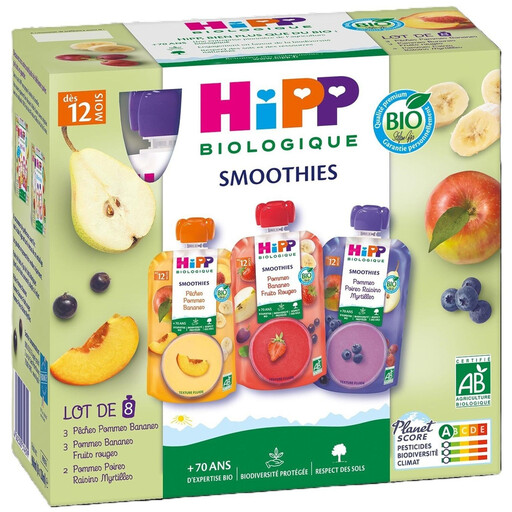 Image unavailable
HIPP organic apple, banana, red fruit and peach compote, 8 × 120 g
Worth considering if individual portions are accepted and the age guidance is suitable for your child.
- Eight 120 g portions; age guidance: from 12 months.
- Before comparing products, read the serving and storage instructions and check the units used for the nutritional information.
View on Joybuy
Frequently asked questions
Is dried fruit low in calories for a nursery snack?
Not necessarily: Carrefour says its soft Carrefour Bio dried apricots contain 232 kcal per 100 g. Compare the energy per 100 g and per planned serving with that of a compote or fruit purée. Don’t assume that every product in a category is the same.
Can I bring walnuts or almonds for a child under 6?
Not whole: Manger Bouger recommends avoiding whole nuts before the age of 6 because of the risk of choking. The same source mentions adding them to a recipe in powdered form. You should also take allergies into account and ask the nursery what it allows.
Is a compote with “no added sugar” sugar-free?
No. Fruit contains naturally occurring sugars, so “no added sugar” means neither “sugar-free” nor “low in calories”. Check the ingredients and nutritional information for the compote you choose.
What should I check before taking a snack to nursery?
Check the ingredients, allergens, serving size and storage instructions. For prepacked food, the DGCCRF reminds shoppers that allergenic ingredients must be highlighted. Also ask the nursery which foods and formats it accepts, and whether it can keep the snack chilled.


