If fat content is a key factor when choosing what to pack in your child’s school lunchbox, start by comparing plain raisins or dried apricots with mixes containing nuts: the products reviewed at Carrefour, Auchan and E.Leclerc contain no more than 0.8 g of fat per 100 g, compared with 27 g per 100 g for the Seeberger mix listed by Monoprix. Then check the sugar content, allergens, sulphites, any stones or kernels, and age-related warnings.
Who are these criteria useful for?
Parents comparing fat content
When packing a lunchbox, you may want to distinguish plain dried fruit from a mix containing nuts or peanuts. The raisin and dried apricot product details reviewed at Carrefour, Auchan and E.Leclerc show less than 1 g of fat per 100 g; the Seeberger mix listed by Monoprix contains 27 g.
Parents mindful of allergens and age
If your child needs to avoid certain ingredients or is still very young, check the ingredients, possible traces, sulphites, any stones or kernels, and the product’s warnings before comparing nutritional values.
Parents preparing separate portions
You may want to compare the nutritional information per 100 g, then divide a bag between several lunchboxes. Auchan’s dried apricot product details also give values per 25 g portion.
What should you check before choosing?
For a school lunchbox, first check any precautions relating to your child, then compare the nutritional information per 100 g. The Directorate-General for Competition Policy, Consumer Affairs and Fraud Control states that nutritional declarations for prepacked foods are based on values per 100 g.
| What matters |
What to check |
Who this is for |
| Fat |
Compare the fat content per 100 g and look for walnuts, almonds, cashews or peanuts in the ingredients list. |
If I’m looking for plain dried fruit rather than a mix containing nuts for the lunchbox, this distinction helps me choose; around 40% of consumers prioritise reducing fat. |
| Allergens and age |
Read the ingredients, check for possible traces and look for sulphite information. Also check for warnings about stones or kernels and age. |
If an ingredient needs to be avoided or the child is young, I want to rule out unsuitable products before comparing their nutritional values. This precaution is a priority for around 30% of consumers. |
| Sugars and portions |
Compare carbohydrates and sugars per 100 g, then check the storage instructions after opening. |
When preparing several lunchboxes from one bag, I prefer to be able to portion out the dried fruit while keeping its sugar content in mind; portion size is the main criterion for around 30% of consumers. |
Mistakes to avoid
-
Assuming every “dried fruit” mix is plain dried fruit
The Seeberger mix listed by Monoprix contains nuts and peanuts and has 27 g of fat per 100 g. It doesn’t meet the same criteria as the plain raisin and dried apricot products reviewed.
Check the ingredients and the “fat” line before choosing a mix for the lunchbox.
-
Looking at fat content alone
A low figure on this line doesn’t tell you how much sugar the product contains. For example, the Couleurs Vives golden raisins listed by E.Leclerc contain 63.7 g of sugars per 100 g.
Also compare the “carbohydrates” and “of which sugars” figures per 100 g, then prepare a separate portion rather than putting the whole bag in the lunchbox.
-
Forgetting about sulphites, traces and possible stones or kernels
Some of the raisin and dried apricot products reviewed mention sulphites or possible traces of allergens. Auchan’s dried apricot product details also warn that stones or fragments may be present.
Check the ingredients and product warnings every time you buy, especially if your child needs to avoid an ingredient.
-
Packing whole nuts in a young child’s lunchbox
Manger Bouger advises against giving whole nuts to children under 6 because of the risk of choking. The Seeberger mix product details also include a warning about young children.
For a child under 6, don’t pack whole nuts in their lunchbox. For dried fruit, follow the warnings for the specific product you choose.
Retailers to check
Carrefour
Check the product details for its raisins to compare ingredients, nutritional values and allergen information for each product.
- The Carrefour Original raisins reviewed contain 0.8 g of fat per 100 g and are made with 99.5% raisins.
- The product details mention possible traces of several allergens, including peanuts, sulphites and nuts. Another raisin product checked at Carrefour contains sulphite E220.
Auchan
The product details for the pitted dried apricots reviewed show nutritional values per 100 g and per 25 g portion.
- This product contains less than 0.5 g of fat per 100 g.
- It contains sulphur dioxide and carries warnings about possible stones or fragments and the risk of choking for young children.
E.Leclerc
The product details for Couleurs Vives golden raisins show both fat and sugar content per 100 g.
- The product reviewed contains 0.7 g of fat per 100 g.
- It also contains 63.7 g of sugars per 100 g and includes sulphur dioxide.
Monoprix
The product details for the Seeberger Nuts ’n’Berries mix help you distinguish a mix containing nuts from a bag of plain dried fruit.
- The ingredients list makes it easy to spot cashews, almonds, hazelnuts and peanuts.
- This mix contains 27 g of fat per 100 g and carries a warning about young children.
Dried fruit available on Joybuy
These pitted jujubes and dried apricots give you a way to explore dried fruit for a lunchbox without confusing it with mixes containing nuts. Check each product’s label before choosing it for a child.
 Image unavailable
Haoxiangni Grade 2 Fresh-Locked, pitted red dates, Original Flavour 280 g
A handy way to portion jujubes, also known as red dates, between several lunchboxes instead of packing a nut mix. The bag contains 280 g. Check the label for sugar content, allergens and any instructions relevant to your child and their school.
View on Joybuy
 Image unavailable
Haoxiangni Grade 2, pitted red dates 500 g
A 500 g pack to portion out if you’re preparing several lunchboxes. Compare its nutritional information per 100 g with other dried fruit, and check the allergen information and storage instructions on the packaging.
View on Joybuy
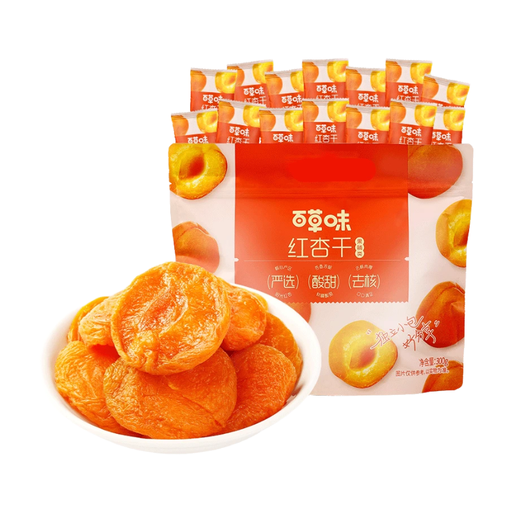 Image unavailable
Be&Cheery dried red apricots 300 g
An alternative to jujubes for your lunchbox. The bag contains 300 g. Before serving these apricots to a child, check the packaging to see whether they are pitted, and read the warnings about stones, sulphites and allergens.
View on Joybuy
Frequently asked questions
Is low fat content enough to choose a dried fruit?
No. Compare the sugar content per 100 g too, and pack a separate portion for the lunchbox. For example, the Couleurs Vives golden raisins listed by E.Leclerc contain 0.7 g of fat and 63.7 g of sugars per 100 g.
How do you compare two bags of dried fruit?
Compare their nutritional information on the same basis, per 100 g, then check the ingredients and warnings. The Directorate-General for Competition Policy, Consumer Affairs and Fraud Control states that nutritional declarations for prepacked foods are expressed per 100 g or 100 ml.
What should you do if your child needs to avoid sulphites?
Check the ingredients and allergen information for the product you’re considering before packing it in the lunchbox. The products reviewed at Auchan and E.Leclerc show that dried apricots or raisins can contain sulphur dioxide even when their fat content is low.
Is a mix of dried fruit and nuts suitable for a young child?
Don’t give whole nuts to a child under 6: Manger Bouger highlights the risk of choking before this age. Also check the warnings on the specific mix.
How should you store an opened bag of dried fruit?
Follow the instructions for the specific product. The product details for the Auchan dried apricots reviewed advise sealing the bag tightly, keeping it in a cool place after opening and consuming its contents within 15 days.


