People keeping an eye on their fat intake
If your priority is to choose a lower-fat dried fruit or mix to go with lunch, the nutritional values per 100 g will tell you more than the general label “dried fruit”.


To find a lower-fat option, compare the fat per 100 g in products of the same type, then check the sugars, salt and ingredients. Dried fruit may suit this priority, but a lower fat content alone does not make it the right choice for every lunch. Unsalted nuts meet a different need and are not necessarily low in fat.
If your priority is to choose a lower-fat dried fruit or mix to go with lunch, the nutritional values per 100 g will tell you more than the general label “dried fruit”.
You may be looking for unsalted, unsweetened almonds, walnuts, hazelnuts or pistachios to enjoy by the handful, without assuming these foods are low in fat. This distinction is in line with Manger Bouger’s recommendation on nuts.
A pack to keep by your desk is handy, but it’s worth checking the recipe: depending on the mix, it may contain added sugars or oils, as well as allergenic ingredients.
For a working-from-home lunch, start with your main priority: reducing fat, checking other ingredients, looking for allergens or choosing a convenient format. The Directorate-General for Competition Policy, Consumer Affairs and Fraud Control (DGCCRF) notes that the nutrition declaration on prepacked foods is given per 100 g or 100 ml. Here, using the per-100 g figures makes it easy to compare packs side by side.
| Criteria | What to check | Who it’s for |
|---|---|---|
| Fat | Compare the per-100 g figures for products of the same type, then check the mix’s ingredients. | If my main aim is to reduce fat, I want to compare two packs without relying on their names. Around 36% of consumers put this measurable reduction first. |
| Sugars, salt and added ingredients | Check the sugars and salt per 100 g, as well as the ingredients list, particularly for added sugar and oils. | A lower-fat mix won’t necessarily suit me if its recipe doesn’t match what I want to eat for lunch. Checking sugars, salt and added ingredients is the priority for around 29% of consumers. |
| Allergens | Check which allergenic ingredients are highlighted and look for any “may contain” warnings on the pack you choose. | If I need to avoid an ingredient, the general term “dried fruit” doesn’t tell me enough about that specific pack. Ingredient suitability is the main concern for around 21% of consumers. |
| Pack size and use | Check the pack size and any storage instructions for after opening. | For a break during the working day, I want a pack I can use without making it my entire lunch. Convenience comes first for around 14% of consumers. |
Dried fruit and mixes containing nuts don’t have the same nutritional profile. Product listings checked at Auchan and Carrefour show fat levels ranging from 11 g to 36 g per 100 g for specific mixes.
Compare products of the same type per 100 g, and check the ingredients before choosing a pack.
Auchan’s listing for the Profruit mix shows 11 g of fat and 49 g of sugars per 100 g. Its recipe includes sugar, sunflower oil and sulphites.
After checking the fat content, look at the sugars, salt and ingredients according to what you’re looking for.
The Vico mix listed by Auchan as unsalted contains sugar and sunflower oil. A claim about salt doesn’t tell you everything about the recipe.
Read each claim for what it actually tells you, then check the full ingredients list.
A mix can contain several ingredients and carry “may contain” warnings. The DGCCRF says that allergenic ingredients must be highlighted on the labels of prepacked foods.
If you need to avoid an ingredient, check the label of the specific product you’re buying, including any “may contain” warnings.
Carrefour’s range includes dried fruit, nuts and mixes, making it easier to spot the differences between products before checking their labels.
The mix listings checked at Auchan make it possible to compare the nutrition figures and ingredients of specific products.
Monoprix offers mixes combining dried fruit and nuts, including a 125 g pack containing, among other ingredients, sultanas, hazelnuts, cashews and almonds.
The Trader Joe’s products featured by Aldi include raisins and roasted almonds with no added salt.
Lidl’s Alesto range includes nuts, dried fruit and savoury snacks.
This selection features a pack of dried mandarins for a break while working from home. If your priority is the fat content, check the product’s nutrition figures and recipe before comparing it with another dried fruit.
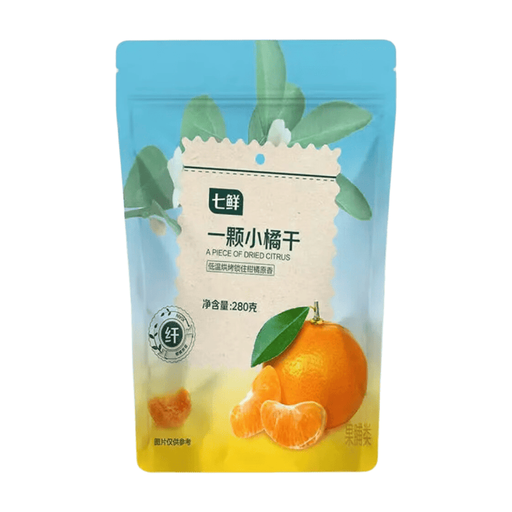 Image unavailable
This 280 g pack of dried mandarins is ideal for a break while working from home. If you’re looking for a lower-fat option, check the fat and sugars per 100 g, as well as the ingredients list.
No. Check what the packaging actually says and compare the fat per 100 g in products of the same type. Also look at the sugars, salt and ingredients. The DGCCRF gives the nutrition declaration per 100 g as a basis for comparing prepacked foods.
Not necessarily. Manger Bouger recommends a small handful of unsalted, unsweetened nuts without chocolate each day, but doesn’t describe them as low-fat foods. Check the figures on the pack if reducing fat is your priority.
Start with their nutrition figures per 100 g, ideally comparing products of the same type and intended for the same use. Then check the ingredients list: two mixes with similar names may contain different proportions of dried fruit and nuts.
Read the list for highlighted allergenic ingredients and check any “may contain” warnings on the specific pack you’re choosing. Depending on the recipe, you may need to check for nuts, peanuts, sesame or sulphites. Don’t assume another size or flavour has the same ingredients.
Manger Bouger recommends a small daily handful of unsalted, unsweetened nuts without chocolate; it doesn’t say they make a complete lunch. If you plan to have them at lunchtime, think of them as one part of your meal rather than assuming the recommendation means they’re enough on their own.